Type 2 diabetes: normal glucose levels should be the goal
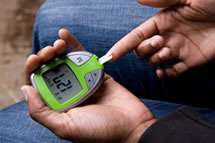
(Medical Xpress) -- Emory University researchers say normal glucose levels should be the goal for management of patients with early type 2 diabetes mellitus (T2DM) and prediabetes.
In a commentary published online today in Nature Reviews Endocrinology, Lawrence S. Phillips, MD, and Darin E. Olson, MD, PhD write that although T2DM is a major public health problem, few clinicians screen routinely to detect this problem early or manage hyperglycemia (high blood sugar) aggressively if it is found. They say there is now evidence these practices should change.
The researchers based their statement on several pieces of evidence: A recent report from the Diabetes Prevention Program Outcomes Study (DPPOS) in The Lancet which showed there was less development of T2DM in those patients with prediabetes who were able to reduce their blood glucose to normal levels.
How the normal glucose levels were achieved did not seem to matter, says Phillips, a professor at the Atlanta VA Medical Center and in the division of endocrinology at Emory University School of Medicine.
The benefit was comparable if patients used diet and exercise or took a diabetes drug but there was more benefit if normal glucose was achieved several times compared to just once.
Additional evidence included observations that T2DM and prediabetes adversely impact individuals and the healthcare system; progression from prediabetes to T2DM can be prevented or delayed by lifestyle changes or pharmacotherapy; preventing or delaying progression to T2DM is likely to improve important health outcomes; there are plausible biological mechanisms for the benefit to the bodys insulin-producing cells of maintaining normal glucose levels; and targeting normal glucose levels can be undertaken at little risk of harm to patients.
From the combined evidence, the researchers are making three recommendations for clinicians and healthcare systems:
1) Screen to identify patients with early T2DM and high-risk prediabetes (fasting glucose ≥110 mg/dl or two‑hour oral glucose tolerance test glucose ≥140 mg/dl). This screening would identify an estimated 22 percent of adults in the United States based on data from the National Health and Nutrition Examination Survey 20052006. Screening should be systematic and aimed at patients who are at risk on the basis of age, weight or other characteristics and testing should be repeated, if negative, at a cost-effective frequencyabout every three years.
2) Treat high-risk patients aggressively, beginning with an intensive lifestyle intervention (diet and exercise), and intensifying treatment progressively with addition of drug therapy as needed to achieve normal glucose levels.
3) Conduct a randomized, controlled trial in patients with early T2DM and high-risk prediabetes to evaluate the benefits, risks and costs of patient management aimed at achieving normal glucose levels.
The trial we call for is needed to provide optimal evidence, but we believe that the time to begin changing medical practice is now, says Olson, an assistant professor at the Atlanta VA Medical Center and in the division of endocrinology at Emory University School of Medicine.
Prediabetes and T2DM are metabolic disorders that are due to inability of the bodys insulin-producing cells to make enough insulin to keep blood glucose levels in the normal range. Over time, these disorders can lead to blindness, kidney failure, nerve damage, heart attacks and strokes.
Pre-diabetes is a condition that occurs when a person's blood glucose levels are higher than normal but not high enough for a diagnosis of type 2 diabetes. Many patients with prediabetes go on to develop T2DM.
More information: www.nature.com/nre… 012.139.html
Journal reference:
Nature Reviews: Endocrinology
Provided by
Emory University
-
Absolute incretin effect reduced in type 2 diabetes
Jun 25, 2012 |
not rated yet |
0
-
Glucose challenge test is accurate and economical for diabetes and prediabetes screening
Jun 25, 2009 |
not rated yet |
0
-
Treating prediabetes might prevent full-blown disease
Jun 10, 2012 |
not rated yet |
0
-
Sleep apnea with polycystic ovary syndrome raises risk of prediabetes
Jun 26, 2012 |
not rated yet |
0
-
People with prediabetes not taking adequate precautions to avoid diabetes
Mar 02, 2010 |
not rated yet |
0
-
Motion perception revisited: High Phi effect challenges established motion perception assumptions
Apr 23, 2013 |
3 / 5 (2) |
2
-
Anything you can do I can do better: Neuromolecular foundations of the superiority illusion (Update)
Apr 02, 2013 |
4.5 / 5 (11) |
5
-
The visual system as economist: Neural resource allocation in visual adaptation
Mar 30, 2013 |
5 / 5 (2) |
9
-
Separate lives: Neuronal and organismal lifespans decoupled
Mar 27, 2013 |
4.9 / 5 (8) |
0
-
Sizing things up: The evolutionary neurobiology of scale invariance
Feb 28, 2013 |
4.8 / 5 (10) |
14
-
Assumptions of Griffith's fracture theory
9 hours ago
-
Current leading voltage or vice versa concept
10 hours ago
-
Angular Frequency of AC voltage
14 hours ago
-
Modeling Rigid Body - Unsure about Euler angles and angular velocity
14 hours ago
-
Function for a bullet's path
15 hours ago
-
Elementary questions relating to Newton's laws of motion
17 hours ago
- More from Physics Forums - Classical Physics
More news stories
Study shows that women who smoke during pregnancy increase the risk of both obesity and gestational diabetes in their da
Women who smoke during pregnancy increase the risk of both obesity and gestational diabetes, in their daughters, concludes research published in Diabetologia, the journal of the European Association for the Study of Diabet ...
Diabetes
17 hours ago |
not rated yet |
0
Rise in type 2 diabetes amongst young
The number of young people diagnosed with type 2 diabetes has seen the sharpest rise over the last twenty years compared to a background of a general increase across the board, new University research has ...
Diabetes
May 20, 2013 |
not rated yet |
0
Research uncovers a potential role of two proteins in diabetes
(Medical Xpress)—Flinders University researchers are breaking new ground in a decade-long journey to pinpoint the function of two closely related proteins.
Diabetes
May 20, 2013 |
5 / 5 (2) |
0
|
Exercise prevents fructose-induced hypertriglyceridemia
(HealthDay)—Moderate aerobic exercise prevents fructose-induced hypertriglyceridemia in healthy males, according to a study published online May 14 in Diabetes.
Diabetes
May 17, 2013 |
5 / 5 (1) |
0
|
DNA variant affects diabetes risk and treatment response
A DNA variant near a digestive enzyme does not only affect risk of developing diabetes but also affects the response to treatment, an international consortium of researchers including the University of Dundee has found.
Diabetes
May 17, 2013 |
not rated yet |
0
|
If you can remember it, you can remember it wrong
(Medical Xpress)—Native peoples in regions where cameras are uncommon sometimes react with caution when their picture is taken. The fear that something must have been stolen from them to create the photo ...
Insight into the dazzling impact of insulin in cells
Australian scientists have charted the path of insulin action in cells in precise detail like never before. This provides a comprehensive blueprint for understanding what goes wrong in diabetes.
Study finds vitamin C can kill drug-resistant TB (w/ video)
In a striking, unexpected discovery, researchers at Albert Einstein College of Medicine of Yeshiva University have determined that vitamin C kills drug-resistant tuberculosis (TB) bacteria in laboratory culture. The finding ...
New search engine finds rare diagnoses
Doctors are trained to think "common disease" when they meet patients in their practices, and as they rarely or never meet a rare disease, it often takes many years to reach the right diagnosis. A new search tool called FindZebra ...
Inflammation is associated with depression in COPD patients
Depression is common in patients with chronic obstructive pulmonary disease (COPD) and has been linked with disease severity and impaired quality of life. Now, for the first time, researchers at the University of Pittsburgh ...
Challenges encountered in surgical management of spine trauma in morbidly obese patients
Physicians at Monash University and The Alfred Hospital in Melbourne, Australia describe the logistic, medical, and societal challenges faced in treating spine trauma in morbidly obese patients. Based on a case series of ...
Aug 01, 2012
Rank: not rated yet
No one needs a drug to reverse type 2 diabetes. All of this information was taken from the Spirit Happy Diet people in Denmark.
Diabetes has been reversed in over 10,000 people by using a specialized diabetes diet. The diet also reversed body fat in people trying to lose weight. Scientists showed food chemicals is the cause of almost all diabetes. They also showed how to reverse your own diabetes without medications. The diabetes drug caused cancer
just google SPIRIT HAPPY DIET