Vaccinations belong on parents' back-to-school checklists
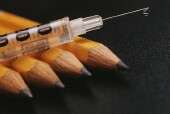
(HealthDay) -- Vaccinations among school-aged children can save lives and parents should be sure their children are fully immunized as part of their back-to-school preparations, according to a pediatric infectious disease specialist.
"These vaccines save children's lives; parents interested in keeping their child alive should have them vaccinated," Dr. David Kimberlin, a University of Alabama at Birmingham professor of pediatrics, said in a university news release. "At any given time, all of these vaccine-preventable diseases are at most 18 hours away. For example, one of the few remaining places where polio circulates is Afghanistan, and U.S. troops return home from there daily; anyone exposed could inadvertently pass polio to a child."
Kimberlin is also president-elect of the Pediatric Infectious Diseases Society.
The U.S. Centers for Disease Control and Prevention reports there are 16 diseases currently preventable with childhood vaccines, including chickenpox (varicella), diphtheria, seasonal flu, Haemophilus influenza type b, hepatitis A, hepatitis B, human papillomavirus, measles, meningococcal, mumps, pneumococcal, rotavirus, rubella, tetanus, whooping cough (pertussis) and polio.
During his medical training, Kimberlin recalled, he witnessed a 10-year-old girl suffering from polio because she was never immunized against the viral infection. Vaccinations, he noted, could also prevent the spread of illnesses to others who are more vulnerable, such as infants.
"School-age children don't die from pertussis, but babies do. If an unvaccinated 12-year-old vacations in Washington and comes in contact with the disease, they can bring it home and inadvertently kill a baby under 12 months old," Kimberlin explained.
"People do have all sorts of fears of things they don't understand, but there is no rational reason for not vaccinating a child," Vivian Friedman, a clinical psychologist and professor in the University of Alabama at Birmingham's department of psychiatry and behavioral neurobiology, said in the release.
She added that small incentives could help reluctant children cooperate and receive the necessary shots.
"My own daughter was seriously ill from the ages of 4 to 10; she not only had painful shots but also painful procedures. So for every bad thing that happened to her, we made a good thing happen," Friedman said. "For every blood test my daughter got, we took her to the dollar store to choose anything she wanted. It's inexpensive and varied enough that it can work as a motivator and reward."
More information:
Visit the U.S. Centers for Disease Control and Prevention to learn more about vaccines.
Copyright © 2012 HealthDay. All rights reserved.


