Disabled athletes face segregation in coaching researchers say
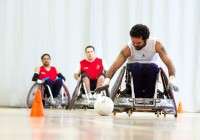
Researchers from our Department of Education say attitudes in coaching towards disabled people need to change in order for more people to engage in sport.
The researchers said the current view that disabled athletes need to be trained by specialist coaches results in segregation between disabled and able-bodied sport participants.
In their paper, "Politics, power & the podium: coaching for Paralympic performance," Dr Anthony Bush and Dr Mike Silk say that sports participants should be trained -irrespective of their ability – according to their individual needs.
Dr Bush said: "To work with particular groups, such as Paralympic athletes, it is assumed that you need to have specialist knowledge and skills to be able to do this effectively. Coaches get pigeon-holed or labelled as participation coaches or coaches of children, athletes with a disability or elite athletes.
"This means that people with disabilities are not getting a fair share of training. There is a feeling that there needs to be special coaches for people with disabilities but everyone is an individual with individual needs. This raises challenges to the way that coaches are trained and the way we think about disabled participation."
The Active People Survey (2008-2009) found that only 6.5 per cent of disabled people regularly participate in sport. With specialist sporting wheelchairs costing up from £4,000 cost is also a barrier for disabled people who want to engage with sport.
Dr Bush said: "A central tenet of the government's 2012 legacy is to encourage the whole population to be more physically active.
"There are many reasons why disabled people face barriers to participating in sport, for example equipment costs, accessibility, transportation and perceptions on coaching expertise. In addition disabled people who wish to coach face barriers such as lack of accessible training resources, opportunities to practice or appropriate coach mentors."
As part of their research Drs Bush and Silk interviewed Robert Ellchuck, a coach based at the University's Sports Training Village who trains Paralympic gold medalists Katrina Hart and Ben Rushgrove.
He said: "You can have a really big impact with sport by including disabled people in a general sense. Not in a special sense, where you run disability specific things because that is still segregation. Segregation doesn't work. You don't have to do anything special. You just include them as an individual."


