Pediatricians' group urges flu shot for kids aged six months and up
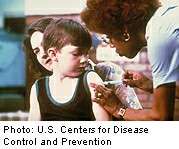
September 10, 2012 in Diseases, Conditions, Syndromes
Parents, daycare workers also should be immunized, AAP guidelines say
(HealthDay)—The leading pediatricians' group in the United States is again urging parents to get all children aged 6 months or over immunized in preparation for the coming flu season.
The American Academy of Pediatrics noted that young children are especially vulnerable to influenza.
"The risk of influenza-associated hospitalization in healthy children aged under 24 months has been shown to be greater than the risk of hospitalization in previously recognized high-risk groups, such as the elderly," according to the AAP's Committee on Infectious Diseases.
In its updated guidelines published online Sept. 10 in the journal Pediatrics, the AAP also urged that anyone charged with regular care of a young child—a parent or daycare-center worker, for example—also be immunized, a strategy aimed at protecting kids called "cocooning."
"The concept of cocooning is particularly important to help protect infants less than 6 months of age because they are too young to be immunized with influenza vaccine," the AAP explained. Cocooning can also greatly help shield older babies and toddlers, as well as prevent the spread of influenza between children and the wider community, according to the group.
Certain high-risk groups also were singled out for vaccination, including children with medical problems such as asthma, diabetes, suppressed immune systems or neurologic disorders. The AAP also urged that all women who are pregnant, have just delivered or are breast-feeding be immunized against flu.
The vaccine can be delivered either via an injection (for children 6 months of age or older) or a nasal spray (for kids aged 2 years or older). If a child between the ages of 6 months and 8 years already received at least two doses of flu vaccine since July 1, 2010, they need only receive one dose of vaccine this season, according to the AAP. If they have not received two or more doses in that time frame, however, they require two doses of this year's vaccine to be properly immunized.
"Influenza infection is a potentially serious infection for all of us, and universal immunization is recommended for everyone 6 months of age and older," said Dr. Leonard Krilov, chief of pediatric infectious disease and vice chairman of the department of pediatrics at Winthrop University Hospital in Mineola, N.Y.
He stressed that "annual immunization is necessary because the virus strains change from year to year—two of the three strains in this year's vaccine are different from last year."
Parents should immunize their children "as soon as the vaccine becomes available each year," Krilov said. "The side effects from the vaccine are generally mild. Most important, you cannot get the flu from the flu vaccine."
Another expert agreed.
Dr. Kenneth Bromberg, chairman of pediatrics at the Brooklyn Hospital Center in New York City, noted that the AAP's recommendations are in accordance with those from the U.S. Centers for Disease Control and Prevention's Advisory Committee on Immunization Practices.
"One particular group to focus on is health care workers," he added. "Consumers should ask their providers if they are immunized against influenza, especially in hospitals."
More information: There's more on protecting children from influenza at the U.S. Centers for Disease Control and Prevention.
Journal reference:
Pediatrics
Copyright © 2012 HealthDay. All rights reserved.
-
Flu shot not effective in preventing flu-related hospitalizations in asthmatic children
May 19, 2009 |
not rated yet |
0
-
Influenza vaccination during pregnancy protects newborns
Jun 23, 2011 |
not rated yet |
0
-
Four works better than three: An enhanced flu vaccine does the trick
Apr 04, 2012 |
not rated yet |
0
-
Vaccinating children against flu helps protect wider community: study
Mar 09, 2010 |
not rated yet |
0
-
FDA approves first 4-in-1 flu vaccine
Feb 29, 2012 |
not rated yet |
0
-
Motion perception revisited: High Phi effect challenges established motion perception assumptions
Apr 23, 2013 |
3 / 5 (2) |
2
-
Anything you can do I can do better: Neuromolecular foundations of the superiority illusion (Update)
Apr 02, 2013 |
4.5 / 5 (11) |
5
-
The visual system as economist: Neural resource allocation in visual adaptation
Mar 30, 2013 |
5 / 5 (2) |
9
-
Separate lives: Neuronal and organismal lifespans decoupled
Mar 27, 2013 |
4.9 / 5 (8) |
0
-
Sizing things up: The evolutionary neurobiology of scale invariance
Feb 28, 2013 |
4.8 / 5 (10) |
14
-
Classical and Quantum Mechanics via Lie algebras
Apr 15, 2011
- More from Physics Forums - Independent Research
More news stories
New case of SARS-like virus in Saudi: ministry
A new case of the deadly coronavirus has been detected in Saudi Arabia where 15 people have already died after contracting it, the health ministry announced on Saturday on its Internet website.
Diseases, Conditions, Syndromes
9 hours ago |
not rated yet |
0
Little evidence for prediction rules for low back pain
(HealthDay)—Few randomized clinical trials have been done to assess clinical prediction rules for patients with lower back pain, and the trials that have been done are of low quality and do not provide ...
Diseases, Conditions, Syndromes
May 17, 2013 |
not rated yet |
0
|
New malaria test kit gives a boost to elimination efforts worldwide
A new, highly sensitive blood test that quickly detects even the lowest levels of malaria parasites in the body could make a dramatic difference in efforts to tackle the disease in the UK and across the world, according to ...
Diseases, Conditions, Syndromes
May 17, 2013 |
not rated yet |
0
WHO says single yellow fever shot is enough
(AP)—The World Health Organization says a yellow fever booster vaccination given 10 years after the initial shot isn't necessary.
Diseases, Conditions, Syndromes
May 17, 2013 |
not rated yet |
0
23 dead in initiation rites in South Africa
(AP)—Twenty-three youths have died in the past nine days at initiation ceremonies that include circumcisions and survival tests, South African police said Friday.
Diseases, Conditions, Syndromes
May 17, 2013 |
5 / 5 (1) |
3
New research identifies risks, interventions for children's GI health
An increasing number of U.S. children are experiencing gastrointestinal issues that require interventions to resolve, according to research presented at Digestive Disease Week (DDW).
US psychiatry gets makeover in new manual
The latest makeover to a massive psychiatric tome honored by some, reviled by others and even called the "Bible" of mental disorders is being released Saturday with a host of new changes.
AIDS science at 30: 'Cure' now part of lexicon
Big names in medicine are set to give an upbeat assessment of the war on AIDS on Tuesday, 30 years after French researchers identified the virus that causes the disease.
For combat veterans suffering from post-traumatic stress disorder, 'fear circuitry' in the brain never rests
Chronic trauma can inflict lasting damage to brain regions associated with fear and anxiety. Previous imaging studies of people with post-traumatic stress disorder, or PTSD, have shown that these brain regions can over-or ...
New colonoscope provides ground-breaking view of colon
A ground-breaking advance in colonoscopy technology signals the future of colorectal care, according to research presented today at Digestive Disease Week(DDW). Additional research focuses on optimizing the minimal withdrawal ...
Flesh-eating disease victim gets prosthetic hands
(AP)—A woman who lost both hands, her left leg and right foot after contracting a flesh-eating disease has been fitted with prosthetic hands.
Sep 13, 2012
Rank: 1 / 5 (1)