Less bystander CPR done in poor, black neighborhoods, study shows
October 24, 2012 by Maureen Salamon, Healthday Reporter in Other

Less bystander CPR done in poor, black neighborhoods, study shows

Lack of training, safety concerns may deter would-be Good Samaritans.

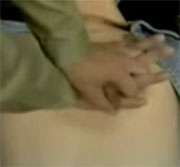
(HealthDay)—People whose hearts stop abruptly are only half as likely to be given bystander-initiated CPR in poor black neighborhoods as they are in higher-income white areas, a new study indicates.

Analyzing the link between median income and neighborhood with the performance of bystander CPR, researchers also noted the odds for such CPR were also reduced for those suffering cardiac arrest in low-income white and integrated neighborhoods along with high-income black ones. The bystander CPR rate in high-income integrated enclaves, however, was comparable to that in high-income white ones.

"Location, location, location is crucial in real estate, and I would say the same for cardiac arrest," said study co-author Dr. Comilla Sasson, an assistant professor in the department of at the University of Colorado School of Medicine. "Working as an for more than 10 years now, I realized that time and again I'd see patients in black and lower-income neighborhoods not have anyone start CPR. It's completely dependent on where you have a heart episode."

The study is published Oct. 25 in the .

More than 300,000 out-of-hospital cardiac arrests occur each year in the United States, according to the study, with varying markedly by region but typically below 10 percent. Some of this variation can be explained by different rates of bystander-initiated CPR, which is administered, on average, during fewer than one-third of all cardiac arrests.

Researchers looked at surveillance data submitted from 29 U.S. sites over four years to the Cardiac Arrest Registry to Enhance Survival (CARES). Of 14,225 recorded cardiac arrests, bystander CPR was provided to slightly more than 4,000 patients, 8 percent of whom survived to be discharged from the hospital.

Neighborhoods were defined as high- versus low-income based on a median income threshold of $40,000 and as white or black if more than 80 percent of the census tract was predominantly of one race. Neighborhoods without a predominant racial/ethnic composition were defined as integrated.

"There's always been some concern that underserved, poor, racial and ethnic minority areas are places where you don't want to have a ," said Dr. Gordon Tomaselli, chief of the division of cardiology at Johns Hopkins University and immediate past president of the American Heart Association. "I think this is an important study in that it has brought forth, in one large data repository, something we thought was the case from multiple smaller studies."

Sasson and Tomaselli agreed that financial and cultural factors can explain the disparities found in the study. Conventional CPR classes can cost hundreds of dollars, leaving them out of reach for lower-income folks, they said, and bystanders may worry for their own safety in certain neighborhoods, making them less likely to help others.

"People may not be sure if someone is lying down [on the street] because they're homeless, drunk or pretending," Sasson said. "It puts them at risk for doing a good deed."

But newer CPR techniques, including a hands-only option that's easy and inexpensive to teach, may help more residents of lower-income areas to learn CPR, Tomaselli and Sasson said.

"You push fast and push hard to the tune of 'Staying Alive,'" Sasson said, explaining the basis for the hands-only technique. "I think the idea of breathing in someone else's mouth was also [a deterrent] for folks."

More information: The American Heart Association has information on its online and in-person CPR courses.

Journal reference: New England Journal of Medicine search and more info website

Copyright © 2012 HealthDay. All rights reserved.

5 /5 (1 vote)  

Filter


Move the slider to adjust rank threshold, so that you can hide some of the comments.


Display comments: newest first

mateo_enrique_CARE
Oct 28, 2012

Rank: 5 / 5 (1)
Everyone needs to know CPR - and it is not expensive to learn. American CPR Training teaches group classes at your location from as low as $16.50 per Student for full 2 year Adult, Child & Infant CPR - any where in the USA!
Rank 5 /5 (1 vote)
Relevant PhysicsForums posts

More news stories

ACP issues recommendations for management of high blood glucose in hospitalized patients

High blood glucose is associated with poor outcomes in hospitalized patients, and use of intensive insulin therapy (IIT) to control hyperglycemia is a common practice in hospitals. But the recent evidence does not show a ...

Other created 17 hours ago | popularity not rated yet | comments 0

Future doctors unaware of their obesity bias

Two out of five medical students have an unconscious bias against obese people, according to a new study by researchers at Wake Forest Baptist Medical Center. The study is published online ahead of print in the Journal of ...

Other created 23 hours ago | popularity not rated yet | comments 0

Plastic realistic: Medical students to use plastinated human bodies for anatomy learning

Nanyang Technological University's (NTU) new medical school will be pioneering the use of plastinated bodies for medical education in Singapore.

Other created May 23, 2013 | popularity not rated yet | comments 0

Survey points out deficiencies in addictions training for medical residents

A 2012 survey of internal medicine residents at Massachusetts General Hospital (MGH) – one of the nation's leading teaching hospitals – found that more than half rated the training they had received in addiction and other ...

Other created May 22, 2013 | popularity 5 / 5 (1) | comments 0

Early use of tracheostomy for mechanically ventilated patients not associated with improved survival

For critically ill patients receiving mechanical ventilation, early tracheostomy (within the first 4 days after admission) was not associated with an improvement in the risk of death within 30 days compared to patients who ...

Other created May 21, 2013 | popularity not rated yet | comments 0


Engineered cytomegalovirus protects monkeys from HIV equivalent

(Medical Xpress)—A new study by researchers in the US has shown that an ancient virus can be modified to help in the fight against the simian immunodeficiency virus SIV, which is the equivalent in monkeys ...

Researchers identify first drug targets in childhood genetic tumor disorder

Two mutations central to the development of infantile myofibromatosis (IM)—a disorder characterized by multiple tumors involving the skin, bone, and soft tissue—may provide new therapeutic targets, according to researchers ...

Hormone levels may provide key to understanding psychological disorders in women

Women at a particular stage in their monthly menstrual cycle may be more vulnerable to some of the psychological side-effects associated with stressful experiences, according to a study from UCL.

Going live: Immune cell activation in multiple sclerosis

Biological processes are generally based on events at the molecular and cellular level. To understand what happens in the course of infections, diseases or normal bodily functions, scientists would need to ...

Controlling mood through the motions of mitochondria

(Medical Xpress)—Regulating the distribution of power in neurons is done by a system that makes the national electric grid look simple by comparison. Each neuron has several thousand mitochondria confined ...

Driving and hands-free talking lead to spike in errors, study shows

Talking on a hands-free device while behind the wheel can lead to a sharp increase in errors that could imperil other drivers on the road, according to new research from the University of Alberta.