Study documents high incidence of Pica in Madagascar
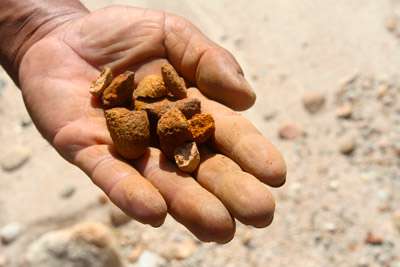
(Medical Xpress)—Pica—craving and intentionally consuming nonfood substances, such as earth—and amylophagy, eating raw starches—are widespread among people around the world, including the U.S. Some 180 species of animals are also known to engage in pica, possibly to rid themselves of toxins.
A study appearing Oct. 17 in the online journal Public Library of Science One (PLoS ONE) provides the first population-level data of pica in Madagascar. It is one of only a few studies to assess the consumption of earths, raw starches, chalk, ash and other nonfoods across men, women and children.
Pica has been documented throughout history; it was first referenced by Hippocrates in 400 B.C. Since then, there have been hundreds of ethnographic descriptions of pica and dozens of epidemiologic studies, mostly among pregnant women, with a few studies among children.
In contrast to prior studies, this one in northeastern Madagascar found a high prevalence of pica and amylophagy among men, with some 63 percent of adult males engaging in the behavior among the 760 participants from the Makira Protected Area. Also contrary to other findings, this survey, made in 2009, found no peak in pica and amylophagy among pregnant women, though only four pregnant women were sampled. Local taboos against talking about pregnancy prior to birth may have led to underreporting, according to the authors.
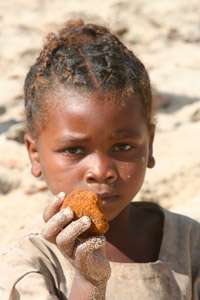
The findings for men and pregnant women in Madagascar "fly against much of what I know in terms of distribution" among members of a population, said Sera Young, Ph.D. '08, a research scientist in the Division of Nutritional Sciences and the paper's senior author. Young is also the author of the book, "Craving Earth: Understanding Pica—the Urge to Eat Clay, Starch, Ice and Chalk" (2011). Christopher Golden, a postdoctoral researcher at Harvard University, is the study's lead author.
Across the entire sample in the prior year, 53.4 percent engaged in geophagy, eating specific types of earth, including a fine white clay subsoil, fine sand and red river sediment; 85.2 percent ate such raw starches as raw cassava, raw sweet potato, uncooked rice and another local wild root; and 19 percent ate other items considered locally to be nonfood, including rock salt, used coffee grounds, charcoal, rice chaff, blackboard chalk and ash.
Pica has positive and negative consequences, making it an important public health concern, said Young.
On the positive side, clay-based pica may be protective, by coating the intestines or binding directly to toxins and pathogens, thereby preventing them from entering the blood, Young added. Clay also acts as an anti-diarrheal. Such protections may be especially beneficial to vulnerable populations like pregnant women and children. Another potential benefit is that earth-based pica may act like a multivitamin, adding micronutrients like iron or calcium to the diet, which may help explain why men consume it. However, the bioavailability of these micronutrients has been shown to be very low.
On the negative side, earth, starch or other pica substances could bind to iron in the diet, leading to or worsening anemia. Also, some raw starches are high in calories but are not nutritious. And some substances may contain pathogens or harmful chemicals.
"It could be a really harmful behavior, which causes anemia, for example, or it could be a low-tech protective behavior," said Young.
Future research will analyze nutrients and chemical properties of pica and amylophagy substances, examine which toxins occur in local diets, and distinguish between nonfood items that are craved versus items that are locally considered food or are used as medicines, Young said.
More information: bit.ly/RIhM4L


