Warning: After Hurricane Sandy, food-safety a concern
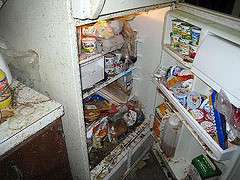
After Hurricane Sandy ravaged the Northeast, people and businesses face the daunting task of recovery. One of the biggest questions they confront is what to do with food, according to a food safety expert in Penn State's College of Agricultural Sciences.
In some cases, food may have been exposed to contaminated water; in other cases, electrical power outages may have jeopardized the safety of refrigerated and frozen food, noted Martin Bucknavage, extension food-safety specialist.
"In general, if food has been exposed to flood waters, dispose of it," he said. "Flood waters can carry a wide variety of hazardous materials—everything from poisonous chemicals to pathogenic bacteria. It can contaminate every food item it touches.
"Never eat food that has come into contact with flood waters. Even food in jars with screw-cap lids should be thrown out because materials can get under the lid area and can be very difficult to clean. It is never worth the risk of trying to salvage a jar of relish or a bottle of ketchup."
Undamaged, commercially prepared foods in all-metal cans or sealed pouches may be salvaged if needed, but only after the containers have been washed thoroughly in hot, soapy water, rinsed and then sanitized in a chlorine bleach solution. Before washing these cans, the labels should be removed, and then after washing, sanitizing and air drying, the containers should be relabeled, Bucknavage advised.
"But use these products immediately," he said. "And throw out any metal containers that are damaged, rusted, swollen or uncleanable. Also throw out all baby food, no matter the type of container. "
If you have food in an unaffected refrigerator or freezer, but that unit has lost power, Bucknavage recommends checking the temperature of the products inside. If the refrigerated food is below 40 degrees F, or the frozen food is still frozen or at a temperature below 40 F, it still should be safe.
Check the temperatures of each item. Slightly thawed frozen food with a temperature lower than 40 F can be refrozen if needed, but that may result in a loss in texture.
"But if that temperature for refrigerated foods has been over 40 F for two or more hours, discard those foods," he said. "There are a few exceptions—foods that still will be safe could include acidic items, such as some vinegar-based dressings with no cream, or dry foods like peanut butter."
Bucknavage said if frozen foods are thawed and have been at a temperature of 40 F for two or more hours, those items should be discarded. "A few exceptions would be concentrated juice and frozen bakery items. Also, discard any packages of food if meat juices from thawed meat or poultry drip on them."
No produce from a garden that has been exposed to flood waters should be consumed, Bucknavage noted.
The safety of drinking water in flood-affected areas also is a serious concern. Bucknavage advises using only bottled water that has not been exposed to flood waters. "If bottled water is not available, water should be boiled for at least one minute," he cautioned. "If it has an off odor or is cloudy, avoid using it.
"If your water comes from a well that you suspect has been contaminated with flood water, that well should be disinfected and tested before resuming use."
Bucknavage recommends washing thoroughly with hot, soapy water and rinsing with clean water any pots, pans, ceramic dishes and metal utensils that came into contact with flood water. "Then sanitize these items by boiling in clean water or immersing them in water with chlorine bleach," he said. "Use one tablespoon of unscented bleach per gallon of water."
Countertops should be washed and sanitized as well. Affected plastic and wooden containers should be thrown away.
"Remember, never taste food to determine if it is safe," Bucknavage said. "If there is any question about the safety of a food item, throw it out."
More information: agsci.psu.edu/news/spotlight/flood-resources


