Nursing research suggests mild electrical pulses may aid fibromyalgia sufferers
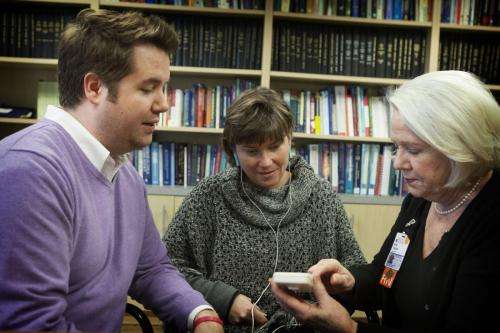
(Medical Xpress)—If mild cranial electrical stimulation helps lessen fibromyalgia pain, as studies seem to suggest, does it do this by changing activity in certain brain regions?
Initial findings by a University of Virginia School of Nursing research team point to yes.
Led by nursing professors Ann Gill Taylor and Joel Anderson of the school's Center for the Study of Complementary and Alternative Therapies, the team divided 46 participants with physician-confirmed diagnoses of fibromyalgia into three groups: a control group that received usual care; a group that received usual care, plus a sham device that emitted no electrical stimulation; and a third group that received usual care, plus a device that delivered a dose of electrical stimulation well below the level of sensation.
The Alpha-Stim devices, manufactured by Electromedical Products International, attach to each earlobe and emit a current below the threshold of detection. They are FDA-approved and suitable for at-home use. The two device groups used the Alpha-Stim device for 60 minutes a day, and answered questionnaires about their pain levels, fatigue, sleep patterns and ability to function day-to-day. As the functionality of the devices was pre-set at the factory, neither the participants nor the researchers knew which devices were active until the end of the eight-week study.
As documented in an upcoming issue of the journal Pain Management Nursing, the researchers found that regular mild cranial electrical stimulation offered a statistically significant change in terms of pain, fatigue, sleep disturbances and functional status.
What's new about Taylor and Anderson's latest report, however, is the cumulative effects that cranial electrical stimulation appears to have on the pain-processing regions of the brain.
Small subsets of the two device groups – both those who used the sham device and the real cranial electrical stimulation device – underwent functional MRIs to determine the effect the cranial electrical stimulation had on activity in brain pain-processing regions. While the study participants were inside the MRI scanner, the researchers introduced a painful stimulus – pressure to the thumbnail – and then watched what parts of the brain showed changes in activity between the two groups.
Taylor and Anderson found that those using the real cranial electrical stimulation device showed a decrease in activity in selected pain-processing regions of the brain compared to the sham device users.
Fibromyalgia is characterized by widespread pain and hypersensitivity to pain, and is also often associated with other ailments, including headaches, depression and irritable bowel syndrome. Some research indicates that fibromyalgia might be caused by reduced levels of neurotransmitters such as dopamine, but the mechanism of cause and effect isn't completely understood.
Fibromyalgia affects about 2 percent of Americans, and impacts a dramatically higher proportion of women than men (at a ratio of 7:1). Of the 5 million American adults with physician-diagnosed fibromyalgia in 2005, the vast majority of diagnoses occurred among those who were middle-aged and older.
Previous studies have suggested that fibromyalgia may be linked to overactive pain sensitivity in the brain. But "exploring deactivation in response to pain may yield a better understanding of the mechanisms involved in central pain processing, particularly as it relates to chronic pain," Anderson and Taylor write in the journal EXPLORE.
"This study reflects our earliest understanding of what the cumulative effects of cranial electrical stimulation might be," said Anderson, an assistant professor of nursing. "And given the lack of understanding about the mechanism of relief, expanding our research to larger studies might confirm that cranial electrical stimulation may change the symptoms experienced by persons with fibromyalgia."
Also given that the cranial electrical stimulation devices are suitable for at-home use and are FDA-approved, the device used in Taylor and Anderson's study – which attaches to patients' ear lobes and emits tiny electrical pulses – may become an effective complement to care for some of the 5 million Americans who suffer from fibromyalgia.
"These pilot data are the beginning of a line of study," Taylor added, "and early evidence of a novel, unobtrusive and non-invasive way to complement the treatment of a disease that challenges the quality of life for millions. We are hopeful that someday we might really change lives with this technology."


