News tagged with cardiac failure
Study suggests new role for ECMO in treating patients with cardiac arrest and profound shock
Extracorporeal membrane oxygenation (ECMO), a procedure traditionally used during cardiac surgeries and in the ICU that functions as an artificial replacement for a patient's heart and lungs, has also been used to resuscitate ...
Cardiology
May 17, 2013 |
not rated yet |
0
Nephrologist follow-up improves mortality of severe acute kidney injury patients
Patients with acute kidney injury who see a nephrologist within 90 days of being discharged from a hospital have a 24 per cent lower risk of dying than those who do not see a kidney specialist, a new study has found.
Diseases, Conditions, Syndromes
Apr 30, 2013 |
not rated yet |
0
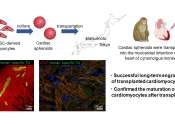
Scientists turn patients' skin cells into heart muscle cells to repair their damaged hearts
For the first time scientists have succeeded in taking skin cells from heart failure patients and reprogramming them to transform into healthy, new heart muscle cells that are capable of integrating with existing heart tissue.
Cardiology
May 23, 2012 |
5 / 5 (2) |
0
|
Research links circadian rhythms to sudden cardiac death
A fundamental discovery reported in the March 1st issue of the journal Nature, uncovers the first molecular evidence linking the body's natural circadian rhythms to sudden cardiac death (SCD). Ventricular arrhythmias, or abn ...
Cardiology
Feb 22, 2012 |
5 / 5 (2) |
0
|
New injectable hydrogel encourages regeneration, improves functionality after heart attack
University of California, San Diego bioengineers have demonstrated in a study in pigs that a new injectable hydrogel can repair damage from heart attacks, help the heart grow new tissue and blood vessels, ...
Medical research
Feb 20, 2013 |
5 / 5 (7) |
0
|
Researchers prevent heart failure in mice
(Medical Xpress)—Cardiac stress, for example a heart attack or high blood pressure, frequently leads to pathological heart growth and subsequently to heart failure. Two tiny RNA molecules play a key role ...
Cardiology
Sep 25, 2012 |
5 / 5 (6) |
0
|
Stem cells entering heart can be tracked with nano-'hitchhikers'
The promise of repairing damaged hearts through regenerative medicine—infusing stem cells into the heart in the hope that these cells will replace worn out or damaged tissue—has yet to meet with clinical success. But ...
Medical research
Mar 20, 2013 |
5 / 5 (2) |
0
|
Study shows that blocking an inflammation pathway prevents cardiac fibrosis
(Medical Xpress)—New research from UC Davis published in the Proceedings of the National Academy of Sciences shows that blocking an enzyme that promotes inflammation can prevent the tissue damage following a heart attack ...
Medical research
Mar 22, 2013 |
5 / 5 (5) |
0
|
Scar tissue turned into heart muscle without using stem cells
Scientists at Duke University Medical Center have shown the ability to turn scar tissue that forms after a heart attack into heart muscle cells using a new process that eliminates the need for stem cell transplant.
Cardiology
Apr 26, 2012 |
4.9 / 5 (10) |
2
|
Researchers discover key to heart failure, new therapies on horizon
Some 5.8 million Americans suffer from heart failure, a currently incurable disease. But scientists at Temple University School of Medicine's (TUSM) Center for Translational Medicine have discovered a key biochemical step ...
Medical research
Mar 05, 2013 |
5 / 5 (3) |
0
|
Study: Heart damage after chemo linked to stress in cardiac cells
Blocking a protein in the heart that is produced under stressful conditions could be a strategy to prevent cardiac damage that results from chemotherapy, a new study suggests.
Cardiology
May 21, 2012 |
not rated yet |
1
|
Promising target in treating and preventing the progression of heart failure identified
Researchers at Mount Sinai School of Medicine have identified a new drug target that may treat and/or prevent heart failure. The team evaluated failing human and pig hearts and discovered that SUMO1, a so-called "chaperone" ...
Cardiology
Sep 07, 2011 |
5 / 5 (1) |
0
|
Researchers find how specialized pacemaker works at biological level to strengthen failing hearts
Heart specialists at Johns Hopkins have figured out how a widely used pacemaker for heart failure, which makes both sides of the heart beat together to pump effectively, works at the biological level. Their findings, published ...
Cardiology
Sep 14, 2011 |
4.3 / 5 (3) |
0
|
Rapamycin effective in mouse model of inherited heart disease and muscular dystrophies
Rapamycin, an immunosuppressant drug used in a variety of disease indications and under study in aging research labs around the world, improved function and extended survival in mice suffering from a genetic mutation which ...
Medical research
Jul 25, 2012 |
not rated yet |
0
|
Highly active antiretroviral therapies may be cardioprotective in HIV-infected children, teens
Long-term use of highly active antiretroviral therapies (HAART) does not appear to be associated with impaired heart function in children and adolescents in a study that sought to determine the cardiac effects of prolonged ...
Pediatrics
Apr 22, 2013 |
not rated yet |
0
Heart failure
Heart failure (HF) is a condition in which a problem with the structure or function of the heart impairs its ability to supply sufficient blood flow to meet the body's needs. It should not be confused with cardiac arrest (see Terminology, below).
Common causes of heart failure include myocardial infarction and other forms of ischemic heart disease, hypertension, valvular heart disease and cardiomyopathy. Heart failure can cause a large variety of symptoms such as shortness of breath (typically worse when lying flat, which is called orthopnea), coughing, ankle swelling and reduced exercise capacity. Heart failure is often undiagnosed due to a lack of a universally agreed definition and challenges in definitive diagnosis. Treatment commonly consists of lifestyle measures (such as decreased salt intake) and medications, and sometimes devices or even surgery.
Heart failure is a common, costly, disabling and deadly condition. In developing countries, around 2% of adults suffer from heart failure, but in those over the age of 65, this increases to 6—10%. Mostly due to costs of hospitalization, it is associated with a high health expenditure; costs have been estimated to amount to 2% of the total budget of the National Health Service in the United Kingdom, and more than $35 billion in the United States. Heart failure is associated with significantly reduced physical and mental health, resulting in a markedly decreased quality of life. With the exception of heart failure caused by reversible conditions, the condition usually worsens with time. Although some patients survive many years, progressive disease is associated with an overall annual mortality rate of 10%.
For more information about Heart failure, read the full article at
Wikipedia.
This text uses material from Wikipedia and is available under the GNU Free Documentation License.