Researchers track auditory perception across brain regions
Sounds you consciously perceive affect your brain differently than sounds you don't, a recent Yale study found.
Mar 12, 2025
0
27
Sounds you consciously perceive affect your brain differently than sounds you don't, a recent Yale study found.
Mar 12, 2025
0
27

In hospital operating rooms and intensive care units, propofol is a drug of choice, widely used to sedate patients for their comfort or render them fully unconscious for invasive procedures.
Sep 9, 2024
0
401

A study appearing in Journal of Bioethical Inquiry explored the legal and ethical challenges expected to arise in human brain organoid research.
Aug 22, 2024
0
38

On 19 August 1874, the Irish physicist John Tyndall—now better known as the co-founder of climate science—spoke to 2,000 people for nearly two hours in Belfast's Ulster Hall. What he said generated one of the most intense ...
Aug 17, 2024
0
41

Why did the experience of consciousness evolve from our underlying brain physiology? Despite being a vibrant area of neuroscience, current research on consciousness is characterized by disagreement and controversy—with several ...
Jul 11, 2024
0
40
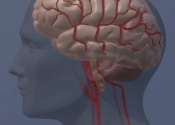
Babies blink, cry, and yawn—and a few weeks into their lives, they might smile. But do these movements mean that newborns have conscious experiences of perceiving the world around them? Or are these processes happening unconsciously?
Jun 12, 2024
1
30

Academics are proposing a new and improved way to help researchers discover when consciousness emerges in human infancy.
Mar 22, 2024
0
112

With advances in neuroscience and the development of new technologies, new ethical considerations have emerged. This is particularly true for human brain organoids, which are three-dimensional tissues grown from stem cells ...
Feb 28, 2024
0
33

A study reveals that experienced meditators are able to voluntarily modulate their state of consciousness during meditation. In other words, they have the unusual ability, without the use of drugs, to induce a momentary void ...
Dec 11, 2023
2
357

Babies as young as four months old can make sense of how their bodies interact with the space around them, according to new research from the University of Birmingham.
Nov 21, 2023
0
156

