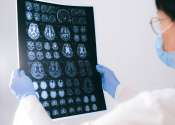
Glioblastoma

New drug enhances radiation treatment for brain cancer in preclinical studies

A novel drug may help increase the effectiveness of radiation therapy for the most deadly form of brain cancer, report scientists at Virginia Commonwealth University Massey Cancer Center. In mouse models of human glioblastoma ...

Cancer created May 14, 2013 | popularity 5 / 5 (2) | comments 0

Scientists find mutation driving pediatric brain tumors

A type of low-grade but sometimes lethal brain tumor in children has been found in many cases to contain an unusual mutation that may help to classify, diagnose and guide the treatment of the tumors, report scientists at ...

Genetics created Apr 30, 2013 | popularity 5 / 5 (1) | comments 0 | with audio podcast

Scientists make brain tumours glow

Stereotactic needle biopsies are an established standard procedure in the diagnostic identification of brain lymphomas and certain brain tumours (gliomas). Up until now the tissue samples removed had to be ...

Cancer created Apr 24, 2013 | popularity 5 / 5 (2) | comments 0

Healing hormone provides hope for brain injury

If Don Stein were the kind of man who listened to what others said, he would have shut down his lab years ago. The Emory neuroscientist spent more than two decades investigating progesterone as a treatment ...

Medical research created Apr 24, 2013 | popularity 4.3 / 5 (4) | comments 0

Hundreds of alterations and potential drug targets to starve cancer tumors identified

A massive study analyzing gene expression data from 22 tumor types has identified multiple metabolic expression changes associated with cancer. The analysis, conducted by researchers at Columbia University Medical Center, ...

Cancer created Apr 21, 2013 | popularity 5 / 5 (4) | comments 0 | with audio podcast

Genetic master controls expose cancers' Achilles' heel

In a surprising finding that helps explain fundamental behaviors of normal and diseased cells, Whitehead Institute scientists have discovered a set of powerful gene regulators dubbed "super-enhancers" that control cell state ...

Cancer created Apr 11, 2013 | popularity 4.8 / 5 (6) | comments 0 | with audio podcast

Gauging brain cancer survival time may get easier, study says

(HealthDay)—Life expectancy of people with aggressive brain cancer may be easier to determine with a new method under development at the University of Alabama at Birmingham, researchers say.

Cancer created Apr 10, 2013 | popularity 5 / 5 (1) | comments 0

Insights into an abnormally edited RNA molecule may yield new weapons against a hard-to-kill cancer

Diagnosis of the brain cancer glioblastoma multiforme (GBM) is particularly bad news for patients due to limited available medical options and poor outcomes. Even treatments that can eliminate other malignancies, ...

Cancer created Apr 10, 2013 | popularity 4.5 / 5 (2) | comments 0

A hijacking of healthy cellular circuits

Proteins that control cell growth are often mutated in cancer, and their aberrant signaling drives the wild proliferation of cells that gives rise to tumors. One such protein, the epidermal growth factor receptor (EGFR), ...

Cancer created Apr 08, 2013 | popularity not rated yet | comments 0

'Extracellular vesicles' may open new opportunities for brain cancer diagnosis and treatment

The recent discovery of circulating "nano-sized extracellular vesicles" (EVs) carrying proteins and nucleic acids derived from brain tumors may lead to exciting new avenues for brain cancer diagnosis, monitoring, and treatment, ...

Surgery created Apr 08, 2013 | popularity not rated yet | comments 0

KDM1 may represent a new therapeutic target for glioma

Researchers have generated preclinical data demonstrating that the protein KDM1, which functions as a lysine demethylase, is a potential target for glioma treatment, according to Gangadhara R. Sareddy, Ph.D., a postdoctoral ...

Cancer created Apr 08, 2013 | popularity not rated yet | comments 0

New minimally invasive, MRI-guided laser treatment for brain tumor found to be promising in study

The first-in-human study of the NeuroBlate Thermal Therapy System finds that it appears to provide a new, safe and minimally invasive procedure for treating recurrent glioblastoma (GBM), a malignant type of brain tumor. The ...

Surgery created Apr 05, 2013 | popularity not rated yet | comments 0

Immortality gene mutation identifies brain tumors, other cancers

Newly identified mutations in a gene that makes cells immortal appear to play a pivotal role in three of the most common types of brain tumors, as well as cancers of the liver, tongue and urinary tract, according to research ...

Cancer created Mar 18, 2013 | popularity 5 / 5 (3) | comments 0 | with audio podcast

Researchers use a type of stem cells from human adipose tissue to chase migrating cancer cells

In laboratory studies, Johns Hopkins researchers say they have found that stem cells from a patient's own fat may have the potential to deliver new treatments directly into the brain after the surgical removal of a glioblastoma, ...

Cancer created Mar 12, 2013 | popularity 5 / 5 (2) | comments 0 | with audio podcast

Hope in stopping melanoma from spreading: Study shows that inhibiting key protein prevents metastasis to lungs in mice

(Medical Xpress)—Researchers have identified a critical protein role in the metastasis of melanoma, the most serious form of skin cancer. Inhibition of the protein known as adenosine diphosphate ribosylation ...

Cancer created Mar 05, 2013 | popularity 5 / 5 (1) | comments 0 | with audio podcast


Glioblastoma multiforme (GBM) is the most common and most aggressive malignant primary brain tumor in humans, involving glial cells and accounting for 52% of all functional tissue brain tumor cases and 20% of all intracranial tumors. Despite being the most prevalent form of primary brain tumor, GBMs occur in only 2–3 cases per 100,000 people in Europe and North America. According to the WHO classification of the tumors of the central nervous system‎, the standard name for this brain tumor is "glioblastoma"; it presents two variants: giant cell glioblastoma and gliosarcoma. Glioblastomas are also an important brain tumor in canines, and research continues to use this as a model for developing treatments in humans.

Treatment can involve chemotherapy, radiation, radiosurgery, corticosteroids, antiangiogenic therapy, surgery and experimental approaches such as gene transfer.

With the exception of the brainstem gliomas, glioblastoma has the worst prognosis of any central nervous system (CNS) malignancy, despite multimodality treatment consisting of open craniotomy with surgical resection of as much of the tumor as possible, followed by concurrent or sequential chemoradiotherapy, antiangiogenic therapy with bevacizumab, gamma knife radiosurgery, and symptomatic management with corticosteroids. Prognosis is poor, with a median survival time of approximately 14 months.

This text uses material from Wikipedia and is available under the GNU Free Documentation License.

Latest Spotlight News

Researchers identify a potential new risk for sleep apnea: Asthma

Researchers at the University of Wisconsin have identified a potential new risk factor for obstructive sleep apnea: asthma. Using data from the National Institutes of Health (Heart, Lung, and Blood Institute)-funded Wisconsin ...

Study finds that sleep apnea and Alzheimer's are linked

A new study looking at sleep-disordered breathing (SDB) and markers for Alzheimer's disease (AD) risk in cerebrospinal fluid (CSF) and neuroimaging adds to the growing body of research linking the two.

Computational tool translates complex data into simplified 2-dimensional images

In their quest to learn more about the variability of cells between and within tissues, biomedical scientists have devised tools capable of simultaneously measuring dozens of characteristics of individual ...

New theory on genesis of osteoarthritis comes with successful therapy in mice

Scientists at Johns Hopkins have turned their view of osteoarthritis (OA) inside out. Literally. Instead of seeing the painful degenerative disease as a problem primarily of the cartilage that cushions joints, ...

'Gap' for HIV vaccine efforts after latest setback

The hunt for an HIV vaccine has gobbled up $8 billion in the past decade, and the failure of the most recent efficacy trial has delivered yet another setback to 26 years of efforts.

Ketamine shows significant therapeutic benefit in people with treatment-resistant depression

Patients with treatment-resistant major depression saw dramatic improvement in their illness after treatment with ketamine, an anesthetic, according to the largest ketamine clinical trial to-date led by researchers from the ...

Consuming coffee linked to lower risk of detrimental liver disease, study finds

Regular consumption of coffee is associated with a reduced risk of primary sclerosing cholangitis (PSC), an autoimmune liver disease, Mayo Clinic research shows. The findings were being presented at the Digestive Disease ...

Returning genetic incidental findings without patient consent violates basic rights, experts say

Informed consent is the backbone of patient care. Genetic testing has long required patient consent and patients have had a "right not to know" the results. However, as 21st century medicine now begins to use the tools of ...

Vicious cycle: Obesity sustained by changes in brain biochemistry

With obesity reaching epidemic levels in some parts of the world, scientists have only begun to understand why it is such a persistent condition. A study in the Journal of Biological Chemistry adds substantially to the st ...

White matter imaging provides insight into human and chimpanzee aging

(Medical Xpress)—The instability of "white matter" in humans may contribute to greater cognitive decline during the aging of humans compared with chimpanzees, scientists from Yerkes National Primate Research ...