Study finds benefit of low-intensity exercise for walking in Parkinson's patients
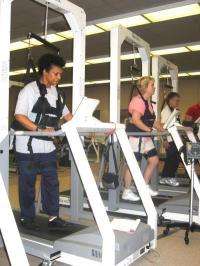
Researchers from the University of Maryland School of Medicine and the Baltimore VA Medical Center found that Parkinson's patients who walked on a treadmill at a comfortable speed for a longer duration (low-intensity exercise) improved their walking more than patients who walked for less time but at an increased speed and incline (high-intensity exercise). The investigators also found benefits for stretching and resistance exercises. The study results will be presented April 12 at the 63rd Annual Meeting of the American Academy of Neurology meeting in Honolulu.
"Our study showed that low-intensity exercise performed for 50 minutes three times a week was the most beneficial in terms of helping participants improve their mobility. Walking difficulty is the major cause of disability in Parkinson's disease. These results show that exercise in people with Parkinson's disease can make a difference in their function. Exercise may, in fact, delay disability and help to preserve independence," says Lisa Shulman, M.D., principal investigator and professor of neurology at the University of Maryland School of Medicine.
"Many patients ask us what kind of exercise they should be doing. Now we can tell them that this research shows that low-intensity walking, which most people with Parkinson's can do, combined with stretching and resistance training may be the best option," adds Dr. Shulman, who is also co-director of the Maryland Parkinson's Disease and Movement Disorders Center at the University of Maryland Medical Center.
The study compared 67 people with Parkinson's disease who were randomly assigned to one of three exercise groups: walking on a treadmill at low intensity for 50 minutes, higher-intensity treadmill training to improve cardiovascular fitness for 30 minutes, and using weights (leg presses, extensions and curls) and stretching exercises to improve muscle strength and range of motion. Participants exercised three times a week for three months under the supervision of exercise physiologists at the Baltimore VA Medical Center.
"We saw positive effects with all three types of exercise, but the low-intensity training showed the most consistent improvement in gait and mobility," adds Dr. Shulman.
"To maintain the best possible quality of life, people with Parkinson's disease need practical, evidence-based advice about what kind of exercise will most benefit them over the long term. The Michael J. Fox Foundation has aimed to answer this question in its exercise funding to investigators such as Dr. Lisa Shulman and her team," says Todd Sherer, PhD, chief program officer of The Michael J. Fox Foundation for Parkinson's Research.
The Maryland research team measured participants' cardiovascular fitness before and after training, and found cardiovascular improvement in both the low- and high-intensity groups. Other measurements included the distance covered in a six-minute walk and timed tests of walking short distances, such as 50 feet.
"The results of this study provide practical information to people with Parkinson's disease to make decisions about managing their health and well-being. Our University of Maryland faculty members are committed to testing new approaches, such as exercise, to help patients," says E. Albert Reece, M.D., Ph.D., M.B.A, vice president for medical affairs, University of Maryland, and dean, University of Maryland School of Medicine.
Parkinson's disease affects about 1 million people in the United States and Canada. Most people begin to develop symptoms in their late 50s or early 60s, although it can occur in younger people. Parkinson's disease affects the brain's ability to produce dopamine, the neurotransmitter involved in the communication between the brain cells for motor control. Physical symptoms include tremor, muscle rigidity, slowness of movement and gait impairment. There are also non-motor symptoms such as changes in cognitive function, sleep disturbance and depressed mood.


