Changes in brain circuitry play role in moral sensitivity as people grow up
May 27, 2011 By William Harms in Neuroscience

Changes in brain circuitry play role in moral sensitivity as people grow up

Enlarge

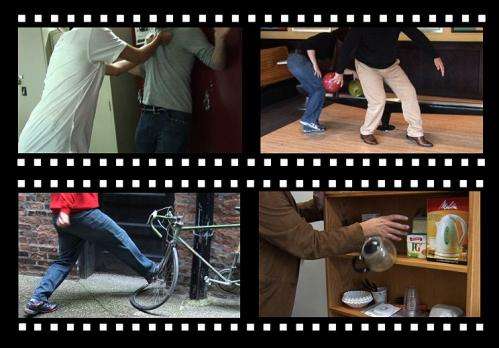
Researchers showed video clips that portrayed intentional and accidental harm, and found that all participants, irrespective of their age, paid more attention to people being harmed and to objects being damaged than they did to the perpetrators. Courtesy of Jean Decety

(Medical Xpress) -- People's moral responses to similar situations change as they age, according to a new study at the University of Chicago that combined brain scanning, eye-tracking and behavioral measures to understand how the brain responds to morally laden scenarios.

Both and adults distinguish between damage done either intentionally or accidently when assessing whether a had done something wrong. Nonetheless, adults are much less likely than children to think someone should be punished for damaging an object, especially if the action was accidental, said study author Jean Decety, the Irving B. Harris Professor in Psychology and Psychiatry at the University of Chicago and a leading scholar on affective and social neuroscience.

The different responses correlate with the various stages of development, Decety said, as the brain becomes better equipped to make reasoned judgments and integrate an understanding of the mental states of others with the outcome of their actions. alert people to the moral nature of a situation by bringing on discomfort that can precede , and such an is stronger in , he explained.

"This is the first study to examine brain and behavior relationships in response to moral and non-moral situations from a neurodevelopmental perspective," wrote Decety in the article, "The Contribution of Emotion and Cognition to Moral Sensitivity: A Neurodevelopmental Study," published in the journal . The study provides strong evidence that moral reasoning involves a complex integration between affective and that gradually changes with age.

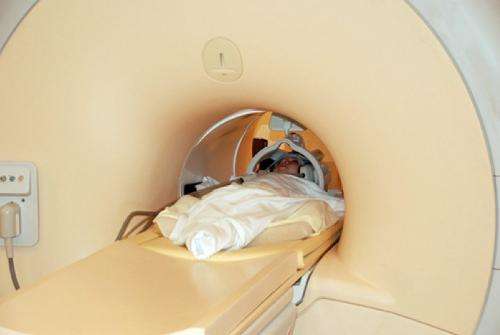
For the research, Decety and colleagues studied 127 participants, aged 4 to 36, who were shown short video clips while undergoing an scan. The team also measured changes in the dilation of the people's pupils as they watched the clips.

The participants watched a total of 96 clips that portrayed intentional harm, such as someone being shoved, and accidental harm, such as someone being struck accidentally, such as a golf player swinging a club. The clips also showed intentional damage to objects, such as a person kicking a bicycle tire, and accidental damage, such as a person knocking a teapot off the shelf.
Changes in brain circuitry play role in moral sensitivity as people grow up
Enlarge

For their research, Prof. Jean Decety and his colleagues showed 127 participants, aged 4 to 36, short video clips while they underwent an functional MRI (fMRI) scan. Courtesy of Jean Decety

in the scanner revealed that all of the participants, irrespective of their age, paid more attention to people being harmed and to objects being damaged than they did to the perpetrators. Additionally, an analysis of pupil size showed that "pupil dilation was significantly greater for intentional actions than accidental actions, and this difference was constant across age, and correlated with activity in the amygdala and anterior cingulate cortex," Decety said.

The study revealed that the extent of activation in different areas of the brain as participants were exposed to the morally laden videos changed with age. For young children, the amygdala, which is associated the generation of emotional responses to a social situation, was much more activated than it was in adults.

In contrast, adults' responses were highest in the dorsolateral and ventromedial prefrontal cortex — areas of the brain that allow people to reflect on the values linked to outcomes and actions.

In addition to viewing the video clips, participants were asked to determine, for instance, how mean was the perpetrator, and how much punishment should he receive for causing damage or injury. The responses showed a clear connection between moral judgments and the activation the team had observed in the brain.

"Whereas young children had a tendency to consider all the perpetrator malicious, irrespective of intention and targets (people and objects), as participants aged, they perceived the perpetrator as clearly less mean when carrying out an accidental action, and even more so when the target was an object," Decety said.

When recommending punishments, adults were more likely to make allowances for actions that were accidental, he said. The response showed that they had a better developed prefrontal cortex and stronger functional connectivity between this region and the amygdala than children. Adults were better equipped to make moral judgments.

"In addition, the ratings of empathic sadness for the victim, which were strongest in young children, decreased gradually with age, and correlated with the activity in the insula and subgenual prefrontal cortex," which area areas associated with emotional behavior and automatic response to stresses, Decety said. Together, the results are consistent with the view that morality is instantiated by functionally integrating several distributed areas/networks.

Provided by University of Chicago search and more info website

5 /5 (4 votes)  

Filter


Move the slider to adjust rank threshold, so that you can hide some of the comments.


Display comments: newest first

David_Wishengrad
May 28, 2011

Rank: 2.3 / 5 (3)
They missed something very important, the effects of the surrounding environment. Man is not supposed to eat flesh, as his genetically current natural diet is fruit and plants. The only way this test can really produce usable data is for special applied attention to babies raised to adulthood, as complete vegetarians, as baseline control set. If scientists want to do research science on people, lets get the all facts straight that we already know, and use them. Maybe they will do better the next time.
cmn
May 28, 2011

Rank: 1 / 5 (1)
Can I buy pot from you, David?
KBK
May 28, 2011

Rank: 3 / 5 (2)
They missed something very important, the effects of the surrounding environment. Man is not supposed to eat flesh, as his genetically current natural diet is fruit and plants. The only way this test can really produce usable data is for special applied attention to babies raised to adulthood, as complete vegetarians, as baseline control set. If scientists want to do research science on people, lets get the all facts straight that we already know, and use them. Maybe they will do better the next time.


Absolutely correct.

There have been recent studies that have noted how the bacteria in the gut changes with diet and that the gut bacteria denotes the psychological outlook and behavior of the given person.

no guff, no bull. look it up. Just like you were told once by wise people: You are what you eat.

David_Wishengrad
May 28, 2011

Rank: not rated yet
Thanks KBK :) I read that article too. Here it is: http://medicalxpr...gut.html We are getting there ...
Rank 5 /5 (4 votes)
Related Stories
Relevant PhysicsForums posts

More news stories

For combat veterans suffering from post-traumatic stress disorder, 'fear circuitry' in the brain never rests

Chronic trauma can inflict lasting damage to brain regions associated with fear and anxiety. Previous imaging studies of people with post-traumatic stress disorder, or PTSD, have shown that these brain regions can over-or ...

Neuroscience created May 18, 2013 | popularity 5 / 5 (1) | comments 0 | with audio podcast

Temporal processing in the olfactory system

The neural machinery underlying our olfactory sense continues to be an enigma for neuroscience. A recent review in Neuron seeks to expand traditional ideas about how neurons in the olfactory bulb might encode information about ...

Neuroscience created May 17, 2013 | popularity 4 / 5 (1) | comments 0 | with audio podcast report

Melon focus headband turns to Kickstarter for rollout plans

(Medical Xpress)—What if the quality of your work depends more on your focus on the piano keys or canvas or laptop than your musical or painting or computing skills? If target users can be convinced, they ...

Neuroscience created May 17, 2013 | popularity 3.7 / 5 (3) | comments 0 | with audio podcast weblog

Deep brain stimulation: A fix when the drugs don't work

Neurological disorders can have a devastating impact on the lives of sufferers and their families.

Neuroscience created May 17, 2013 | popularity 5 / 5 (1) | comments 0 | with audio podcast

Brain makes call on which ear is used for cell phone

If you're a left-brain thinker, chances are you use your right hand to hold your cell phone up to your right ear, according to a newly published study from Henry Ford Hospital in Detroit.

Neuroscience created May 16, 2013 | popularity 2 / 5 (2) | comments 0 | with audio podcast


Consuming coffee linked to lower risk of detrimental liver disease, study finds

Regular consumption of coffee is associated with a reduced risk of primary sclerosing cholangitis (PSC), an autoimmune liver disease, Mayo Clinic research shows. The findings were being presented at the Digestive Disease ...

Ketamine shows significant therapeutic benefit in people with treatment-resistant depression

Patients with treatment-resistant major depression saw dramatic improvement in their illness after treatment with ketamine, an anesthetic, according to the largest ketamine clinical trial to-date led by researchers from the ...

Research examines new methods for managing digestive health

Research presented at Digestive Disease Week (DDW) explores new methods for managing digestive health through diet and lifestyle.

New smartphone application improves colonoscopy preparation

The use of a smartphone application significantly improves patients' preparation for a colonoscopy, according to new research presented today at Digestive Disease Week (DDW). The preparation process, which begins days in ...

New research identifies practice changes to improve value and quality of GI procedures

There are significant cost and risk factors associated with two procedures commonly used to diagnose or treat gastrointestinal problems, according to research presented at Digestive Disease Week (DDW).

New research identifies risks, interventions for children's GI health

An increasing number of U.S. children are experiencing gastrointestinal issues that require interventions to resolve, according to research presented at Digestive Disease Week (DDW).