Purdue takes prostate cancer treatment from concept to clinical trial
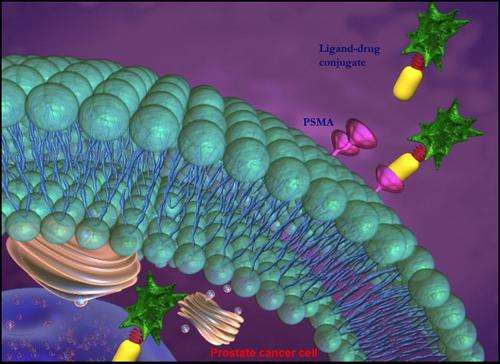
(Medical Xpress) -- A clinical trial for a new technology to diagnose and treat prostate cancer marks the first time Purdue University has directed the entire pathway of a therapeutic product from early research to patient treatment.
Therapeutics developed from research at the university are typically licensed to a pharmaceutical company that takes it through the pipeline of preclinical studies, manufacturing and then clinical trials, said Timothy Ratliff, the Robert Wallace Miller Director of the Purdue University Center for Cancer Research who is leading the project.
"Purdue has a long history of research that has been the basis of life-saving treatments, and now we've shown that we can take a therapeutic drug or technology through every step from concept to clinical trial," Ratliff said. "By managing the process all the way through to a clinical trial, the scientists behind the advancement maintain control of its development as it goes through the trials and get the satisfaction of seeing their discovery impact patients and improve lives."
Eventually most therapeutic treatments developed at Purdue will have to be sold to a company in order to be manufactured and widely distributed. The further along in the process a product is, the better it is for the university and the state, he said.
"The value of a potential treatment increases as it makes its way through each step of the process, which means the scientists and the university will receive more revenue to continue the research process," he said. "Managing the design, development and testing also means more money stays in the state and more Indiana workers are involved in the process."
The ongoing clinical trial is testing the combination of a radioimaging agent and a prostate cancer-targeting molecule developed by Philip Low, Purdue's Ralph C. Corley Distinguished Professor of Chemistry.
Low and his research team designed a targeting molecule that seeks out and attaches to prostate-specific membrane antigen, or PSMA, a protein that is found on the outer membrane of the cells of more than 90 percent of all prostate cancers.
"The targeting molecule is in essence a homing device for prostate cancer that can link to a variety of therapeutic agents, including imaging agents and drugs," said Low, who also is a member of the Purdue Center for Cancer Research. "PSMA acts as the homing signal for the molecule, which binds to the protein and then is carried inside the cancer cell. The molecule and its cargo go only to cancerous tissue and leave healthy tissue unharmed."
Ratliff and Low are working with scientists and physicians at the Indiana University School of Medicine and the Indiana University Melvin and Bren Simon Cancer Center to perform the clinical trial.
The clinical trial is the first to test the technology in humans and will evaluate the targeting molecule's ability to recognize prostate cancer and deliver an imaging agent. The patients included in the study have prostate cancer that can be seen by computerized tomography scan, or CT scan, so that it can easily be determined how well the radioimaging agent is reaching the cancerous tissue.
"If the new technology picks up the cancer that we know and can see, we will have more confidence that it can also pick up cancer that can't be seen by a CT scan," Low said. "If the trial goes well, we will begin a new imaging trial to determine if we can image prostate cancer well enough to help physicians stage the disease."
Dr. Thomas Gardner, the urologist at the Indiana University Melvin and Bren Simon Cancer Center who treats the patients involved in the trial, said the technology may help reduce unnecessary procedures and allow other treatments to be given earlier.
"Treatment of prostate cancer depends on how far we think the disease has progressed, or its stage," Gardner said. "If the cancer is confined to the prostate, we aggressively treat the organ itself, but if it has spread beyond the prostate a more systemic approach is necessary. It doesn't make sense to put someone through focused treatments of their prostate and the side effects that go along with it if they will need to go through systemic treatments. Better detection would allow physicians to know that the cancer had spread at a much earlier point."
There is currently only one radioimaging agent for prostate cancer approved by the Food and Drug Administration.
"The current imaging capabilities available for prostate cancer are very poor," Low said. "The existing imaging agent is limited because of its large size, which is difficult to get into a solid tumor. Also, it seeks out a target located inside the cancer cell, so it is only able to mark injured cells that are falling apart as opposed to actively growing cancer cells."
The targeting molecule and radioimaging agent combination designed by Low's group is more than 150 times smaller than the existing agent and can much more easily penetrate a solid tumor to reach all of the cells inside, he said.
Three patients currently have been treated in the clinical trial that will include around 25 patients. The trial should be complete in about a year, Low said.
Dr. Song-Chu Ko, in the Department of Radiation Oncology at the IU School of Medicine and a member of the IU Melvin and Bren Simon Cancer Center, leads the clinical trial. In addition to Gardner and Ko, the IU team also includes Noah Hahn of the Department of Hematology and Oncology, Peter Johnstone of the Department of Radiation Oncology, James Fletcher of the Department of Nuclear Medicine, Michael Koch of the Department of Urology and Gary Hutchins of the Department of Radiology.


