Protein switch controls how stem cells turn into new heart tissue
July 13, 2011 in Medical research

Protein switch controls how stem cells turn into new heart tissue

Enlarge

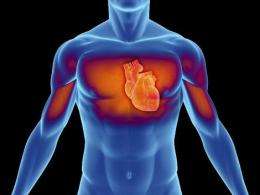
Stem cell research may indicate how heart tissue could be repaired after heart attacks.

(Medical Xpress) -- Oxford University researchers have identified a protein that can direct stem cells to become either new heart muscle or blood vessels.

The research, which was carried out in zebrafish, offers insight into how it might be possible one day to generate tissues to repair the after damage inflicted by a heart attack.

The scientists, based at the MRC Molecular Haematology Unit at the University of Oxford, identified a called ‘fibroblast growth factor’ (Fgf) as the controlling factor which determines whether developing heart cells become heart muscle or blood vessels.

They showed that manipulating levels of Fgf in zebrafish embryos could determine how much of each cell type was made.

The research, funded by the Medical Research Council and British Heart Foundation, is published in the journal Development.

Dr. Filipa Simoes, one of the first authors of the study, said: "Our study shows how having the correct concentrations of Fgf in the developing zebrafish heart ensures that the different cell types form properly.

"Crucially, we were able to convert blood and blood vessel cells into heart muscle cells by flipping genetic switches controlled by Fgf. The important next step to this research will be to identify the relevant cells in the human heart and take this finding to the next level."

Professor Roger Patient, who led the research at the University of Oxford, explained: "If we can manipulate these heart cells in fish embryos, in the longer term we can look to try and do the same in human hearts – even adult hearts – if we can identify the equivalent cells. This could bring significant benefit to heart attack patients or people with heart defects."

Professor Patient adds that early-stage studies in the lab like this are crucial in turning the potential of stem cells into effective treatments that can help patients recover from heart attacks.

"At the very least, our research will help the production of these cells in the laboratory for use in heart repair. Mending a damaged heart requires new muscle and associated . Therefore there is great interest in identifying and manipulating cells that make both."

The researchers also propose that these cells in the fish, with the potential to make both and vessels, may represent which played an important role in evolution. Over millions of years they may have been responsible for an increase the amount of cardiac muscle, enabling the heart to grow in size from two chambers in the zebrafish to four chambers in humans.

Professor Jeremy Pearson, associate medical director at the British Heart Foundation, who co-funded the study, said: "This excellent study throws new light on how our four-chambered hearts evolved from the simpler structures we see in other animals. The results significantly increase our understanding of the origins of found in the adult heart. This provides important clues to researchers working towards the goal of mending broken hearts after ."

Provided by Oxford University search and more info website

5 /5 (2 votes)  

Rank 5 /5 (2 votes)
Related Stories
Relevant PhysicsForums posts

More news stories

Common food supplement fights degenerative brain disorders

Widely available in pharmacies and health stores, phosphatidylserine is a natural food supplement produced from beef, oysters, and soy. Proven to improve cognition and slow memory loss, it's a popular treatment for older ...

Medical research created 4 hours ago | popularity 5 / 5 (1) | comments 0 | with audio podcast

Finding a family for a pair of orphan receptors in the brain

Researchers at Emory University have identified a protein that stimulates a pair of "orphan receptors" found in the brain, solving a long-standing biological puzzle and possibly leading to future treatments for neurological ...

Medical research created 4 hours ago | popularity not rated yet | comments 0 | with audio podcast

Insight into the dazzling impact of insulin in cells

Australian scientists have charted the path of insulin action in cells in precise detail like never before. This provides a comprehensive blueprint for understanding what goes wrong in diabetes.

Medical research created 5 hours ago | popularity 4.5 / 5 (2) | comments 0 | with audio podcast

Do men's and women's hearts burn fuel differently?

Researchers at the University of Illinois at Chicago College of Medicine will study gender differences in how the heart uses and stores fat—its main energy source—and how changes in fat metabolism play ...

Medical research created 7 hours ago | popularity not rated yet | comments 0

Study suggests new source of kidneys for transplant

Nearly 20 percent of kidneys that are recovered from deceased donors in the U.S. are refused for transplant due to factors ranging from scarring in small blood vessels of the kidney's filtering units to the organ going too ...

Medical research created May 20, 2013 | popularity 5 / 5 (2) | comments 0 | with audio podcast


Antidepressant reduces stress-induced heart condition

A drug commonly used to treat depression and anxiety may improve a stress-related heart condition in people with stable coronary heart disease, according to researchers at Duke Medicine.

Americans still making unhealthy choices, CDC reports

(HealthDay)—The overall health of Americans isn't improving much, with about six in 10 people either overweight or obese and large numbers engaging in unhealthy behaviors like smoking, heavy drinking or ...

CDC presents recent trends in health behaviors of US adults

(HealthDay)—In 2008 to 2010, the prevalence of key health behaviors among U.S. adults varied, with about one in five adults current smokers and 62.1 percent overweight or obese, according to a report presented ...

Study examines outbreak of spinal infections in Michigan

(HealthDay)—Factors such as increased case finding may explain why Michigan had half of the total spinal infections associated with contaminated methylprednisolone acetate in the recent fungal meningitis ...

Early use of tracheostomy for mechanically ventilated patients not associated with improved survival

For critically ill patients receiving mechanical ventilation, early tracheostomy (within the first 4 days after admission) was not associated with an improvement in the risk of death within 30 days compared to patients who ...

CDC says high number of public pools contain microbes

(HealthDay)—Three-quarters of public schools in the metro Atlanta area contain microbes, including bacteria indicating the presence of fecal matter, according to research published in the May 17 issue of ...