Different methods can reduce hospital fear in children
December 20, 2011 in Health
Different methods can reduce hospital fear in children

Enlarge

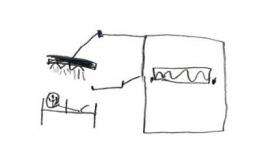
Drawings can be used to facilitate dialogue with children who are to undergo day surgery, and as a way for the children to make themselves understood and communicate questions and feelings. Credit: Photo: University of Gothenburg

Undergoing surgery can be a terrifying experience for a child. But stress and fear, and the use of pain relief after the procedure, can be reduced with simple means: drawings, continuity and dialogue. This has been shown by research at the Sahlgrenska Academy at the University of Gothenburg, Sweden.

Berith Wennström presents in her thesis interviews with describing how they experienced being in and undergoing surgery. The thesis also presents work in which, for example, saliva samples from 93 children aged between 5 and 11 years have been analysed, to measure the concentration of the stress hormone cortisol.

Special model

The children were assigned to one of three groups: children in the first group were taken care of in a conventional manner before the surgery, those in the second group received additional information of what was to happen on the day of the operation, and those in the third group were taken care of according to a special model known as "the perioperative dialogue" (PD).

Lower levels of stress

"The research showed than children who received care according to the PD model had lower levels of stress after the surgery and required less pain relieving morphine that children who had received conventional care", says Berith Wennström.

Unique experiment

The thesis presents also a unique experiment using a method based on analysing children's fear of hospital through drawings. Comparing the drawings of children in school with those in hospital allowed such features as a weak pen pressure, the use of few colours and poor use of the area on the page to be coupled with an increased anxiety in children who were to undergo day surgery.

Unpredictable situation

Interviews with children aged 6-9 years before and after day surgery are presented in the thesis. These interviews show that the children often feel compelled into an unpredictable situation in which they meet an unfamiliar world and must withstand hospital stress imposed on them. 

"The children initially attempt to gain control of the situation, and then they experience that they loose this when they become dizzy, for example, from sedatives."

Using the children´s language

In order to prevent fear and anxiety about the surgery, it is important to carry out a continuous dialogue with the children, and it is important that this takes place using the children's own language. Sedatives should not be routinely given: this must be the subject of careful individual assessment.

Important to minimise stress

"The thesis concludes that Swedish perioperative healthcare functions relatively well and supports children and their parents", says Berith Wennström. "But it is important to minimise and the of hospital in children before the surgery, and we must view the hospital situation from a child's perspective, if we are to succeed."

The thesis "Experiences, symptoms and signs in 3-11 year-old children undergoing day surgery in the context of the perioperative dialogue" was successfully defended on 11 November 2011.

The perioperative dialogue. The PD model is based on giving the child time to reflect on the impending surgery through continuity and dialogue, and allowing the nurse anaesthetist "sufficient" time and resources to be able to support the child and the family. The model includes, for example, preparative visits to the clinic such that the child meets a familiar face on the day of the procedure. can be used to facilitate dialogue with children who are to undergo day , and as a way for the children to make themselves understood and communicate questions and feelings.

Provided by University of Gothenburg search and more info website

not rated yet  

Rank not rated yet
Relevant PhysicsForums posts

More news stories

Most occupational injury and illness costs are paid by the government and private payers

UC Davis researchers have found that workers' compensation insurance is not used nearly as much as it should be to cover the nation's multi-billion dollar price tag for workplace illnesses and injuries. Instead, almost 80 ...

Health created May 25, 2012 | popularity not rated yet | comments 0

Early physical therapist treatment associated with reduced risk of healthcare utilization and reduced overall healthcare

A new study published in Spine shows that early treatment by a physical therapist for low back pain (LBP), as compared to delayed treatment, was associated with reduced risk of subsequent healthcare utilization and lower ...

Health created May 25, 2012 | popularity not rated yet | comments 0 | with audio podcast

Cancer patients share web info with docs for insight, advice

(HealthDay) -- Cancer patients' primary goal in talking with their doctors about information they've found on the Internet is to get more insight and advice on the online information, new research indicates.

Health created May 25, 2012 | popularity not rated yet | comments 0

P&G to add latches to make detergent packs safer

(AP) -- Procter & Gamble says it will change the design of packaging for its miniature laundry detergent product to deter children from eating the brightly colored packets that look like candy.

Health created May 25, 2012 | popularity not rated yet | comments 0

In Spain, 70 percent of women use contraceptives during their first sexual encounter

Contraceptive use in Spain during the first sexual encounter is similar to other European countries. However, there are some geographical differences between Spanish regions: women in Murcia use contraceptives ...

Health created May 25, 2012 | popularity not rated yet | comments 0


Travel to high altitudes tied to Crohn's, colitis flare-ups

(HealthDay) -- People with inflammatory bowel disease, which includes Crohn's disease and colitis, may be at increased risk for flare-ups when they fly or travel to high altitudes for skiing or mountain climbing, ...

Family history of Alzheimer's affects functional connectivity

(HealthDay) -- Cognitively normal individuals with a family history of late-onset Alzheimer's disease (AD) may display lower resting state functional connectivity in the default mode network (DMN) of the brain, ...

Transvaginal mesh op restores pelvic organ prolapse at price

(HealthDay) -- Transvaginal mesh (TVM) procedures are effective for anatomical restoration of pelvic organ prolapse (POP), but patients report a worsening of sexual function following surgery, according to ...

Of mice and mental models: Neuroscientific implications of risk-optimized behavior in the mouse

(Medical Xpress) -- Regardless of an organism’s biological complexity, every encephalized animal continuously makes under-informed behavioral choices that can have serious consequences. Despite its ubiquity, ...

Weight struggles? Blame new neurons in your hypothalamus

New nerve cells formed in a select part of the brain could hold considerable sway over how much you eat and consequently weigh, new animal research by Johns Hopkins scientists suggests in a study published in the May issue ...

Thioridazine kills cancer stem cells in human while avoiding toxic side-effects of conventional cancer treatments

A team of scientists at McMaster University has discovered a drug, thioridazine, successfully kills cancer stem cells in the human while avoiding the toxic side-effects of conventional cancer treatments.