Moveable magnets used to forge gastric bypass in pigs
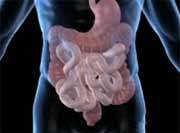
(HealthDay) -- In a scenario reminiscent of the film Fantastic Voyage, researchers have found a way to perform nearly surgery-free gastric bypass procedures in pigs using only a local anesthetic.
The procedure, done with moveable magnets, is completed in less than a half-hour, the researchers said, and reroutes the digestive tract without leaving behind any foreign material.
Although pigs may not seem to be "the best model for looking at resolution of obesity and diabetes," porkers who were treated with the new system gained less weight than did the controls, said the study's senior author, Dr. Christopher Thompson.
Thompson, an assistant professor at Brigham and Women's Hospital in Boston, is presenting his findings at the Digestive Disease Week meeting of gastroenterologists in San Diego. He spoke to reporters at a Monday press conference.
Gastric or intestinal bypass surgery is effective treatment against obesity, diabetes and even some cancers and involves rerouting different parts of the intestine so that certain areas of the digestive tract are no longer needed.
The procedure typically involves invasive surgery, with all its attendant complications and risks.
However, the procedure used in this study is called SAMSEN (for Self-Assembling Magnets for Endoscopy). Here, researchers inserted two magnets via a catheter into the foregut and the hindgut of five pigs. Once inside the intestine, the magnets were manipulated to find each other and "mate" -- squeezing on the unneeded tissue until it died and shriveled away.
Within a few days this method worked to create a surgical bypass (formally called an anastomosis) that connected two previously separate parts of the gastrointestinal tract. Three months after the procedures, these bypasses were still large and open.
The procedure, if validated in other animal models and in humans, might someday aid in the fight against obesity, diabetes and even some forms of cancer, the authors stated.
Similar procedures have been tried before but they involved just one magnet, meaning that only small bypasses could be performed. This new system would allow for larger bypasses.
This study was funded by the U.S. Department of Defense as well as Beacon Endoscopic, which developed the SAMSEN system.
A second study, also being presented at Digestive Disease Week, showed that a tiny endoscope nicknamed the "mermaid" that is propelled by a magnet and a fin could safely travel the entire human digestive tract and provide accurate images of the stomach as well as the small and large intestines.
Currently, capsule endoscopies rely on the digestive tract's natural movements to move it through the system. Not only does this process take time, but doctors also cannot control the direction of the camera.
The human volunteer in this study was the study's senior author, 69-year-old Naotake Ohtsuka, president of Mu Ltd., which developed the device. He is also professor emeritus at Ryukoku University in Seta, Japan.
"The device moved safely by itself without injuring our volunteer subject and it took more images than the conventional capsule endoscope," Ohtsuka said in the press briefing. "We conclude that the mermaid will be applied in the clinical diagnosis of the whole digestive tract in the future."
In a third and final study being presented at the meeting, researchers determined that a new high-definition, dual-focus colonoscope may enable doctors to diagnose during a colonoscopy whether small polyps in the colon are benign or malignant.
With such a technology, "doctors would feel certain enough in real practice to do this and not have to send the specimen to a pathology lab," said study senior author Dr. Roy Soetikno, a physician with Palo Alto Veteran's Hospital in Palo Alto, Calif.
That study was funded by Olympus America, which makes the device and is currently marketing it.
Findings presented at medical meetings are typically considered preliminary until published in a peer-reviewed journal.
More information: The U.S. National Institute of Diabetes and Digestive and Kidney Diseases has more on colonoscopies.
Copyright © 2012 HealthDay. All rights reserved.


