Brain discovery sheds light on link between vision and emotion
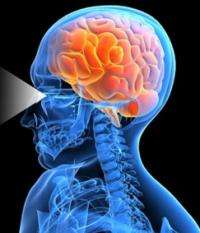
(Medical Xpress) -- Neuroscientists have discovered a new area of the brain that is uniquely specialized for peripheral vision and could be targeted in future treatments for panic disorders and Alzheimers disease.
Published today in high impact journal Current Biology, researchers led by Dr. Hsin-Hao Yu and Professor Marcello Rosa from Monash Universitys Department of Physiology found that a brain area, known as prostriata, was specialised in detecting fast-moving objects in peripheral vision.
This area, located in a primitive part of the cerebral cortex, has characteristics unlike any other visual area described before, including a direct line of communication to brain areas controlling emotion and quick reactions.
Dr. Yu said the discovery, identified during the development of the Monash Vision Groups bionic eye, funded through the ARC Research in Bionic Vision Science and Technology Initiative, could lead to new treatments for panic disorders such as agoraphobia (fear of open spaces) and may extend into other medical areas including Alzheimers treatment.
The brain is the most complex organ in the human body and perhaps the most remarkable. These findings change how we think of the brain in terms of how visual information is processed, Dr. Yu said.
This area is likely to be hyperactive in panic disorder, with agoraphobia. This knowledge could lead to treatment options for the hyperactivity, and therefore sensitivity to such disorders, particularly the fear of open spaces.
Correlation with previous studies also shows that prostriata is one of the first areas affected in Alzheimers disease. This knowledge helps to explain spatial disorientation and the tendency to fall, which are among the earliest signs of a problem associated with Alzheimers.
Professor Rosa said this area had ultra-fast responses to visual stimuli, simultaneously broadcasting information to brain areas that control attention, emotional and motor reactions. This challenges current conceptions of how the brain processes visual information.
This suggests a specialised brain circuit through which stimuli in peripheral vision can be fast-tracked to command quickly coordinated physical and emotional responses, Professor Rosa said.
Journal reference:
Current Biology
Provided by
Monash University
-
Mouse brains keyed to speed
Jan 25, 2012 |
not rated yet |
0
-
New discovery in Alzheimer's protein puzzle
May 14, 2012 |
not rated yet |
0
-
Researchers develop new test for children with vision loss (w/ video)
Oct 12, 2011 |
not rated yet |
0
-
Scientists keep their eyes on peripheral vision
Jan 20, 2012 |
not rated yet |
0
-
Structural brain changes in people at risk for Alzheimer’s disease
Nov 17, 2010 |
not rated yet |
0
-
Motion perception revisited: High Phi effect challenges established motion perception assumptions
Apr 23, 2013 |
3 / 5 (2) |
2
-
Anything you can do I can do better: Neuromolecular foundations of the superiority illusion (Update)
Apr 02, 2013 |
4.5 / 5 (11) |
5
-
The visual system as economist: Neural resource allocation in visual adaptation
Mar 30, 2013 |
5 / 5 (2) |
9
-
Separate lives: Neuronal and organismal lifespans decoupled
Mar 27, 2013 |
4.9 / 5 (8) |
0
-
Sizing things up: The evolutionary neurobiology of scale invariance
Feb 28, 2013 |
4.8 / 5 (10) |
14
-
How can there be villous adenoma in colon, if there are no villi there
5 hours ago
-
How can there be a term called "intestinal metaplasia" of stomach
May 21, 2013
-
Pressure-volume curve: Elastic Recoil Pressure don't make sense
May 18, 2013
-
If you became brain-dead, would you want them to pull the plug?
May 17, 2013
-
MRI bill question
May 15, 2013
-
Ratio of Hydrogen of Oxygen in Dessicated Animal Protein
May 13, 2013
- More from Physics Forums - Medical Sciences
More news stories
Taming suspect gene reverses schizophrenia-like abnormalities in mice
Scientists have reversed behavioral and brain abnormalities in adult mice that resemble some features of schizophrenia by restoring normal expression to a suspect gene that is over-expressed in humans with ...
Neuroscience
45 minutes ago |
not rated yet |
0
|
Scientists uncover molecular roots of cocaine addiction in the brain
Researchers at Johns Hopkins have unraveled the molecular foundations of cocaine's effects on the brain, and identified a compound that blocks cravings for the drug in cocaine-addicted mice. The compound, already proven safe ...
Neuroscience
45 minutes ago |
not rated yet |
0
|
Addiction as a disorder of decision-making
New research shows that craving drugs such as nicotine can be visualized in specific regions of the brain that are implicated in determining the value of actions, in planning actions and in motivation. Dr. Alain Dagher, from ...
Neuroscience
2 hours ago |
not rated yet |
0
Reducing caloric intake delays nerve cell loss
Activating an enzyme known to play a role in the anti-aging benefits of calorie restriction delays the loss of brain cells and preserves cognitive function in mice, according to a study published in the May ...
Neuroscience
19 hours ago |
5 / 5 (6) |
0
|
B vitamins could delay dementia
(Medical Xpress)—Despite spending billions of dollars on research and development, drug companies have been unable to come up with effective treatments for dementia and Alzheimer's Disease (AD). Now, A. ...
Neuroscience
23 hours ago |
4.9 / 5 (15) |
0
|
Costs to treat stroke in America may double by 2030
Costs to treat stroke are projected to more than double and the number of people having strokes may increase 20 percent by 2030, according to the American Heart Association/American Stroke Association.
Acne treatment: Natural substance-based formula is more effective than artificial compounds
University of Granada scientists have patented a new treatment for acne that is based on completely natural substances and is much more effective than artificial formulas because it does not create resistance ...
Study finds new pneumococcal vaccine appears to be as safe as previously used vaccine
The new 13-valent pneumococcal conjugate vaccine (PCV13) appears to be as safe as the previous version used prior to 2010, the 7-valent pneumococcal conjugate vaccine (PCV7), according to a Kaiser Permanente study published ...
A molecular explanation for age-related fertility decline in women
(Medical Xpress)—Scientists supported by the National Institutes of Health have a new theory as to why a woman's fertility declines after her mid-30s. They also suggest an approach that might help slow ...
Addiction to unhealthy foods could help explain the global obesity epidemic
Research presented today shows that high-fructose corn syrup can cause behavioural reactions in rats similar to those produced by drugs of abuse such as cocaine. These results, presented by addiction expert Francesco Leri, ...
Medical researchers discover new ways to target, develop and design drugs to prevent and treat viral infection
Researchers at the University of Alberta have discovered a new drug target, developed a new drug and identified a new way to design drugs—all of which could be a winning combination in the battle against viruses.
Jul 25, 2012
Rank: not rated yet
Isn't loss of olfactory acuity and specificity the most common precursor to symptoms? When did spatial disorientation and the tendency to fall become important among the earliest signs of a problem associated with Alzheimers?