Study shows early brain changes predict which patients develop chronic pain
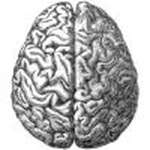
When people have similar injuries, why do some end up with chronic pain while others recover and are pain free? The first longitudinal brain imaging study to track participants with a new back injury has found the chronic pain is all in their heads - quite literally.
A new Northwestern Medicine study shows for the first time that chronic pain develops the more two sections of the brain --- related to emotional and motivational behavior --- talk to each other. The more they communicate, the greater the chance a patient will develop chronic pain.
The finding provides a new direction for developing therapies to treat intractable pain, which affects 30 to 40 million adults in the United States.
Researchers were able to predict, with 85 percent accuracy at the beginning of the study, which participants would go on to develop chronic pain based on the level of interaction between the frontal cortex and the nucleus accumbens.
The study is published in the journal Nature Neuroscience.
"For the first time we can explain why people who may have the exact same initial pain either go on to recover or develop chronic pain," said A. Vania Apakarian, senior author of the paper and professor of physiology at Northwestern University Feinberg School of Medicine.
"The injury by itself is not enough to explain the ongoing pain. It has to do with the injury combined with the state of the brain. This finding is the culmination of 10 years of our research."
The more emotionally the brain reacts to the initial injury, the more likely the pain will persist after the injury has healed. "It may be that these sections of the brain are more excited to begin with in certain individuals, or there may be genetic and environmental influences that predispose these brain regions to interact at an excitable level," Apkarian said.
The nucleus accumbens is an important center for teaching the rest of the brain how to evaluate and react to the outside world, Apkarian noted, and this brain region may use the pain signal to teach the rest of the brain to develop chronic pain.
"Now we hope to develop new therapies for treatment based on this finding," Apkarian added.
Chronic pain participants in the study also lost gray matter density, which is likely linked to fewer synaptic connections or neuronal and glial shrinkage, Apkarian said. Brain synapses are essential for communication between neurons.
"Chronic pain is one of the most expensive health care conditions in the U. S. yet there still is not a scientifically validated therapy for this condition," Apkarian said. Chronic pain costs an estimated $600 billion a year, according to a 2011 National Academy of Sciences report. Back pain is the most prevalent chronic pain condition.
A total of 40 participants who had an episode of back pain that lasted four to 16 weeks --- but with no prior history of back pain --- were studied. All subjects were diagnosed with back pain by a clinician. Brain scans were conducted on each participant at study entry and for three more visits during one year.
More information: DOI: 10.1038/nn.3153
Journal reference:
Nature Neuroscience
Provided by
Northwestern University
-
Old memory traces in brain may trigger chronic pain
Jun 04, 2007 |
not rated yet |
0
-
Hurts so good: Chronic pain changes brain response to acute pain
Apr 14, 2010 |
not rated yet |
0
-
Treatment of chronic low back pain can reverse abnormal brain activity and function
May 17, 2011 |
not rated yet |
0
-
Chronic Pain Harms the Brain
Feb 06, 2008 |
not rated yet |
0
-
New imaging technique captures brain activity in patients with chronic low back pain
Jul 27, 2011 |
not rated yet |
0
-
Motion perception revisited: High Phi effect challenges established motion perception assumptions
Apr 23, 2013 |
3 / 5 (2) |
2
-
Anything you can do I can do better: Neuromolecular foundations of the superiority illusion (Update)
Apr 02, 2013 |
4.5 / 5 (11) |
5
-
The visual system as economist: Neural resource allocation in visual adaptation
Mar 30, 2013 |
5 / 5 (2) |
9
-
Separate lives: Neuronal and organismal lifespans decoupled
Mar 27, 2013 |
4.9 / 5 (8) |
0
-
Sizing things up: The evolutionary neurobiology of scale invariance
Feb 28, 2013 |
4.8 / 5 (10) |
14
-
Why is zone 1 in liver more prone to ischemic injury?
5 hours ago
-
How can there be villous adenoma in colon, if there are no villi there
May 22, 2013
-
How can there be a term called "intestinal metaplasia" of stomach
May 21, 2013
-
Pressure-volume curve: Elastic Recoil Pressure don't make sense
May 18, 2013
-
If you became brain-dead, would you want them to pull the plug?
May 17, 2013
-
MRI bill question
May 15, 2013
- More from Physics Forums - Medical Sciences
More news stories
Common brain processes of anesthetic-induced unconsciousness identified
A study from the June issue of Anesthesiology found feedback from the front region of the brain is a crucial building block for consciousness and that its disruption is associated with unconsciousness when the anesthetics ketami ...
Neuroscience
24 minutes ago |
not rated yet |
0
Having both migraines, depression may mean smaller brain
(HealthDay)—Migraines and depression can each cause a great deal of suffering, but new research indicates the combination of the two may be linked to something else entirely—a smaller brain.
Neuroscience
16 hours ago |
4.3 / 5 (3) |
0
|
Researchers analyse hunting behaviour of fish larvae in virtual reality
Moving objects attract greater attention – a fact exploited by video screens in public spaces and animated advertising banners on the Internet. For most animal species, moving objects also play a major ...
Neuroscience
19 hours ago |
not rated yet |
0
|
Signs of motor disorders can appear years before disease manifestation
It is known that signs of neurological disorders such as Alzheimer's and Huntington's disease can appear years before the disease becomes manifest; these signs take the form of subtle changes in the brain and behavior of ...
Neuroscience
19 hours ago |
not rated yet |
0
Taming suspect gene reverses schizophrenia-like abnormalities in mice
Scientists have reversed behavioral and brain abnormalities in adult mice that resemble some features of schizophrenia by restoring normal expression to a suspect gene that is over-expressed in humans with ...
Neuroscience
21 hours ago |
5 / 5 (2) |
0
|
Cold plasma successful against brain cancer cells
For the first time, physicists from the Max Planck Institute for Extraterrestrial Physics (MPE), biologists and physicians demonstrated the synergistic effect of cold atmospheric plasma - a partly ionized ...
Can you put a price on health?
As health services strive to improve quality and reduce costs, researchers study the benefits – and the pitfalls – of 'pay for performance' in hospitals.
Study reveals active site of enzyme linked to stuttering
(Medical Xpress)—Scientists from the Joint Center for Structural Genomics (JCSG) at SLAC National Accelerator Laboratory have determined the 3-D structure of the chemically active part of an enzyme involved ...
Researchers develop sperm-sorting design that may aid couples undergoing in vitro fertilization
(Medical Xpress)—According to the World Health Organization, approximately 70 million couples experience infertility worldwide. Current data suggests that nearly one third of infertility disorders are due ...
Air travel during pregnancy poses no significant risk, say experts
(Medical Xpress)—There is no significant risk directly associated with air travel during pregnancy, even at advanced gestation, says report by the University of Liverpool.
Parents can help preteens with abduction concerns
Parents naturally are concerned for their children's safety, particularly when there is news of a child abduction that happens close to home. Finding the balance between emotions and the "teachable moment" as parents talk ...