Flu cases from county fair traced to pigs
July 26, 2012 By Steven Reinberg, HealthDay Reporter in Diseases, Conditions, Syndromes

Flu cases from county fair traced to pigs

But this strain isn't very contagious, CDC says.

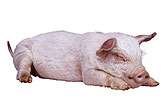
(HealthDay) -- Four people attending an Indiana county fair this month came down with flu traced to pigs, U.S. health officials report.

This outbreak of influenza A (H3N2) brings the total number of people infected with this flu to 17 since last August, the U.S. said.

This strain of flu, commonly carried by swine, can infect humans who come into contact with infected animals. But transmission to humans has been rare, according to the agency.

"Transmission of the virus happens," said Dr. Michael Jhung, a medical officer in CDC's influenza division. "But if you think about the numbers, if you think about in general, these are uncommon events."

These strains of flu have only a limited ability to be passed from person to person, Jhung said. So far, this strain only passes from one person to one other person, so it is not very contagious.

"What we worry about is this virus or any getting the ability to transmit efficiently from person to person," Jhung said. "If that happens, you get sustained transmission and we would be worried about that."

Because flu activity is unpredictable, the CDC keeps tabs on new strains and cases as they arise, to guard against widespread contagion, Jhung explained.

A previous case of this flu was seen in March, but these four new cases are the first reported since then, he said.

The report was published in the July 27 issue of the CDC's .

confirmed that all those infected had the same flu. None of the four infected people needed hospitalization and all recovered, according to Jhung.

The flu's severity was about as bad as regular seasonal flu, he noted.

The four patients were either exhibiting pigs or were family members in close contact with the pigs.

To avoid contracting this flu, the CDC advises people to limit their contact with pigs and avoid contact with sick swine. People who have contact with these animals should take precautions such as washing their hands, not eating or drinking in areas with swine and controlling their cough.

Most flu starts in swine or birds and spreads to people. In 2009, a type of H1N1 flu from swine resulted in a worldwide pandemic.

More information: For more information on flu, visit the U.S. Centers for Disease Control and Prevention.

Journal reference: Morbidity and Mortality Weekly Report search and more info website

Copyright © 2012 HealthDay. All rights reserved.

not rated yet  

Rank not rated yet
Related Stories
Relevant PhysicsForums posts

More news stories

Little evidence for prediction rules for low back pain

(HealthDay)—Few randomized clinical trials have been done to assess clinical prediction rules for patients with lower back pain, and the trials that have been done are of low quality and do not provide ...

Diseases, Conditions, Syndromes created 18 hours ago | popularity not rated yet | comments 0 | with audio podcast

New malaria test kit gives a boost to elimination efforts worldwide

A new, highly sensitive blood test that quickly detects even the lowest levels of malaria parasites in the body could make a dramatic difference in efforts to tackle the disease in the UK and across the world, according to ...

Diseases, Conditions, Syndromes created 23 hours ago | popularity not rated yet | comments 0

WHO says single yellow fever shot is enough

(AP)—The World Health Organization says a yellow fever booster vaccination given 10 years after the initial shot isn't necessary.

Diseases, Conditions, Syndromes created 23 hours ago | popularity not rated yet | comments 0

23 dead in initiation rites in South Africa

(AP)—Twenty-three youths have died in the past nine days at initiation ceremonies that include circumcisions and survival tests, South African police said Friday.

Diseases, Conditions, Syndromes created 23 hours ago | popularity 5 / 5 (1) | comments 3

Expert questions US public health agency advice on influenza vaccines

The United States government public health agency, the CDC, pledges "To base all public health decisions on the highest quality scientific data, openly and objectively derived." But Peter Doshi, a postdoctoral fellow at Johns ...

Diseases, Conditions, Syndromes created May 16, 2013 | popularity not rated yet | comments 0


AIDS science at 30: 'Cure' now part of lexicon

Big names in medicine are set to give an upbeat assessment of the war on AIDS on Tuesday, 30 years after French researchers identified the virus that causes the disease.

For combat veterans suffering from post-traumatic stress disorder, 'fear circuitry' in the brain never rests

Chronic trauma can inflict lasting damage to brain regions associated with fear and anxiety. Previous imaging studies of people with post-traumatic stress disorder, or PTSD, have shown that these brain regions can over-or ...

Melon focus headband turns to Kickstarter for rollout plans

(Medical Xpress)—What if the quality of your work depends more on your focus on the piano keys or canvas or laptop than your musical or painting or computing skills? If target users can be convinced, they ...

Temporal processing in the olfactory system

The neural machinery underlying our olfactory sense continues to be an enigma for neuroscience. A recent review in Neuron seeks to expand traditional ideas about how neurons in the olfactory bulb might encode information about ...

Now we know why old scizophrenia medicine works on antibiotics-resistant bacteria

In 2008 researchers from the University of Southern Denmark showed that the drug thioridazine, which has previously been used to treat schizophrenia, is also a powerful weapon against antibiotic-resistant bacteria such as ...

Individuals who drink heavily and smoke may show 'early aging' of the brain

Treatment for alcohol use disorders works best if the patient actively understands and incorporates the interventions provided in the clinic. Multiple factors can influence both the type and degree of neurocognitive abnormalities ...