Simple measures may curb excessive weight gain in pregnancy
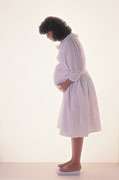
July 20, 2012 in Overweight and Obesity
A walking program and healthy meal plan kept moms-to-be from gaining extra pounds during study.
(HealthDay) -- Healthy eating and low or moderate levels of exercise during pregnancy can help a woman avoid excessive weight gain and may reduce her infant's risk of being overweight or obese later in life, new research indicates.
The study included 49 women at 16 to 20 weeks of pregnancy who were assigned to either a low- or moderate-intensity walking program. Both groups also followed a meal plan based on guidelines given to expectant mothers with gestational diabetes.
The women were compared with another group of pregnant women who were not assigned to any exercise or diet programs (the "control" group).
All the women in the study were deemed to have a normal, healthy weight before their pregnancy, the researchers noted in the report, which was published in the August issue of the journal Medicine & Science in Sports & Exercise.
Compared to the women in the control group, those in the two exercise/healthy-eating groups gained less weight during pregnancy and were less likely to gain excessive weight, the investigators found. Within two months of delivery, 28 percent of women in the moderate-intensity exercise program were within about 4.4 pounds of their pre-pregnancy weight, compared with 7 percent of those in the control group.
Babies born to women in all the groups had similar birth weights, which suggests that preventing excessive weight gain during pregnancy does not influence infant birth weight, the study authors noted in a news release from the American College of Sports Medicine.
The researchers pointed out, however, that pregnancy is an important period in determining a child's health later in life and preventing excessive weight gain in pregnancy may reduce a child's long-term risk for obesity.
"Women benefit greatly from being active throughout their pregnancies and physical activity is strongly recommended by professional organizations," lead author Stephanie-May Ruchat, a postdoctoral fellow at the University of Western Ontario in Canada, said in the news release. "However, most pregnant women remain inactive and this may be contributing to excessive gestational weight gain, which is associated with an increased risk for future obesity in both the mother and offspring."
"Myths about nutrition in pregnancy can also be misleading. For example, mothers-to-be should be warned that 'eating for two' does not mean they need to eat twice as much, but that they should eat twice as healthy," Ruchat noted. "An increase of only 200 to 500 kilocalories per day in the second and third trimester is recommended, depending on the body-mass index of the women prior to pregnancy. The heavier the woman is, the fewer extra calories per day she will need during pregnancy."
Before beginning any new diet or exercise regimen, experts recommend discussing it with your doctor or other health professional.
More information: The Nemours Foundation offers tips for staying healthy during pregnancy.
Copyright © 2012 HealthDay. All rights reserved.
-
Gaining too much weight during pregnancy nearly doubles risk of having a heavy baby
Oct 31, 2008 |
not rated yet |
0
-
Revise guidelines for weight gain during pregnancy, says obstetrician
Mar 11, 2008 |
not rated yet |
0
-
Pregnant women can prevent excess weight gain with simple steps, study finds
Jun 06, 2011 |
not rated yet |
0
-
Excessive pregnancy weight gain raises the risk of having a fat baby
Jun 07, 2011 |
not rated yet |
0
-
It's safe for obese moms-to-be to lose weight during pregnancy
Jun 05, 2007 |
not rated yet |
0
-
Motion perception revisited: High Phi effect challenges established motion perception assumptions
Apr 23, 2013 |
3 / 5 (2) |
2
-
Anything you can do I can do better: Neuromolecular foundations of the superiority illusion (Update)
Apr 02, 2013 |
4.5 / 5 (11) |
5
-
The visual system as economist: Neural resource allocation in visual adaptation
Mar 30, 2013 |
5 / 5 (2) |
9
-
Separate lives: Neuronal and organismal lifespans decoupled
Mar 27, 2013 |
4.9 / 5 (8) |
0
-
Sizing things up: The evolutionary neurobiology of scale invariance
Feb 28, 2013 |
4.8 / 5 (10) |
14
-
Question in reflection and transmission at oblique incidence.
1 hour ago
-
Is this plasma (picture in thread)
1 hour ago
-
Basic physics understanding. Could someone explain?
4 hours ago
-
Change in flux of a transformer
4 hours ago
-
Electric field between parallel plate capacitor
5 hours ago
-
Why angle of projectile has 2 solutions?
5 hours ago
- More from Physics Forums - Classical Physics
More news stories
Children of married parents less likely to be obese
Children living in households where the parents are married are less likely to be obese, according to new research from Rice University and the University of Houston.
Overweight and Obesity
May 22, 2013 |
not rated yet |
0
Overeating learned in infancy, study suggests
In the long run, encouraging a baby to finish the last ounce in their bottle might be doing more harm than good.
Overweight and Obesity
May 22, 2013 |
not rated yet |
0
|
Addiction to unhealthy foods could help explain the global obesity epidemic
Research presented today shows that high-fructose corn syrup can cause behavioural reactions in rats similar to those produced by drugs of abuse such as cocaine. These results, presented by addiction expert Francesco Leri, ...
Overweight and Obesity
May 22, 2013 |
4 / 5 (1) |
0
Genetic risk for obesity found in many Mexican young adults
As many as 35 percent of Mexican young adults may have a genetic predisposition for obesity, said a University of Illinois scientist who conducted a study at the Universidad Autónoma de San Luis Potosί.
Overweight and Obesity
May 21, 2013 |
not rated yet |
0
'Doctor shopping' by obese patients negatively affects health
Overweight and obese patients are significantly more likely than their normal-weight counterparts to repeatedly switch primary care doctors, a practice that disrupts continuity of care and leads to more emergency room visits, ...
Overweight and Obesity
May 21, 2013 |
not rated yet |
0
Researchers identify first drug targets in childhood genetic tumor disorder
Two mutations central to the development of infantile myofibromatosis (IM)—a disorder characterized by multiple tumors involving the skin, bone, and soft tissue—may provide new therapeutic targets, according to researchers ...
Engineered cytomegalovirus protects monkeys from HIV equivalent
(Medical Xpress)—A new study by researchers in the US has shown that an ancient virus can be modified to help in the fight against the simian immunodeficiency virus SIV, which is the equivalent in monkeys ...
Hormone levels may provide key to understanding psychological disorders in women
Women at a particular stage in their monthly menstrual cycle may be more vulnerable to some of the psychological side-effects associated with stressful experiences, according to a study from UCL.
Driving and hands-free talking lead to spike in errors, study shows
Talking on a hands-free device while behind the wheel can lead to a sharp increase in errors that could imperil other drivers on the road, according to new research from the University of Alberta.
Going live: Immune cell activation in multiple sclerosis
Biological processes are generally based on events at the molecular and cellular level. To understand what happens in the course of infections, diseases or normal bodily functions, scientists would need to ...
Pollen count apps for smartphones are nothing to sneeze at
Kate O'Reilly's spring allergy survival kit includes the usual stuff - nasal sprays, allergy pills and a box of tissues. This season, she's added a new weapon to her line of defense: an app on her smartphone.