Smartphone can be a new tool in emergency department diagnosis
July 23, 2012 By Joy Bell in Ophthalmology

Smartphone can be a new tool in emergency department diagnosis

The study shows digital fundus photography cameras in the emergency department are helpful in triaging patients who come in with headaches, neurological disturbances, visual changes or severe high blood pressure. 

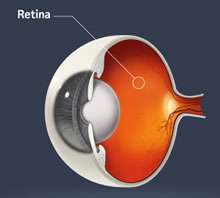
(Medical Xpress) -- Emory Eye Center investigators have found that smartphone displays are as good, and may be better, for reading fundus photographs of the back of the eye (retina and optic nerve) than desktop computer monitors.  

The new technology has been an added finding in a multi-year study examining the use of non-dilated photography of the back of the eye in the . Emory researchers published this finding within the “Research Letters” section of the Archives of Ophthalmology, July 2012.  

The findings follow up on a study published recently: “Quality of nonmydriatic digital fundus photography obtained by nurse practitioners in the emergency department” (Ophthalmology, March 2012).  

The method studied allows specialized consultations within the emergency department that would not otherwise have been obtainable. Emergency rooms do not staff ophthalmologists, so having the ability to send readily-obtained photographs of the back of the eye, taken by nurse practitioners, to an ophthalmologist outside the hospital setting can be a critical tool. It helps emergency room practitioners assess the severity of their patients’ medical conditions and decide when further ophthalmological consultation is necessary.  

 “We expected equal- or lower-quality images displayed on the iPhone compared with the , but instead found that the iPhone images seem to be superior despite its small size and lower resolution,” says Beau Bruce, MD, a neuro-ophthalmologist at Emory Eye Center. “We believe that the phone’s higher dot pitch and brightness helped. This finding warrants further investigation, and should enable smartphones of all types to be used in a telemedicine network.”  

Because of the prevalence of iPhone technology, the ready access of obvious high-quality images joins the many other applications of smartphones within medicine, such as electronic medical records, books, guidelines and other diagnostic tools. Its portability can provide access to any ophthalmologist with a smartphone.  

The study conducted by Emory titled Fundus Photography vs. Ophthalmoscopy Trial Outcomes in the Emergency Department (FOTO-ED) has shown that non-mydriatic (no dilation required) digital fundus photography cameras in the emergency department are helpful in triaging patients who come in with headaches, neurological disturbances, visual changes or severe high blood pressure. Emergency room practitioners need a timely and accurate assessment of the patient’s condition. Certain conditions can be overlooked when an eye exam is not a part of the overall evaluation. Most patients would not guess that a look inside the eye is what they need for a complete diagnosis.  

“The is a strong indicator of whole-body health,” says Bruce. “Patients who come to us with hypertensive retinopathy, for example, show us how far their hypertension has progressed by the condition of their retinas.”  

Regarding use of the smartphone technology in more subtle conditions such as diabetic retinopathy, Bruce says, “We are not suggesting using the iPhone or any smartphone to screen for these conditions or as a replacement for a patient and doctor consultation. Nothing will take the place of a one-on-one exam, particularly for certain conditions.”

Journal reference: JAMA Ophthalmology search and more info website Ophthalmology search and more info website

Provided by Emory University search and more info website

5 /5 (1 vote)  

Rank 5 /5 (1 vote)
Relevant PhysicsForums posts

More news stories

Glucosamine supplements tied to risk of eye condition

(HealthDay)—Glucosamine supplements that millions of Americans take to help treat hip and knee osteoarthritis may have an unexpected side effect: They may increase risk for developing glaucoma, a small ...

Ophthalmology created 14 hours ago | popularity not rated yet | comments 0

Glaucoma drug can cause droopy eyelids

Prostaglandin analogues (PGAs), drugs which lower intraocular pressure, are often the first line of treatment for people with glaucoma, but their use is not without risks. PGAs have long been associated with blurred vision, ...

Ophthalmology created May 21, 2013 | popularity not rated yet | comments 0

Eyes on the sun: Child sunshine exposure and eye development

(Medical Xpress)—Exposure to sunshine as a small child is crucial to the development of a healthy eye according to results of long-term myopia study conducted by University of Sydney researchers.

Ophthalmology created May 21, 2013 | popularity 5 / 5 (1) | comments 0

New study pinpoints biochemical mechanism underlying fibrosis following glaucoma surgery

The most common cause of failure after glaucoma surgery is scarring at the surgical site, so researchers are actively looking for ways to minimize or prevent scar formation. Previous work had suggested that vascular endothelial ...

Ophthalmology created May 17, 2013 | popularity not rated yet | comments 0 | with audio podcast

Early screenings key to diagnosing glaucoma

New research is emphasizing the importance of regular screenings for glaucoma, a disease that deteriorates the optic nerve over time and is a leading cause of irreversible blindness worldwide. The onset of glaucoma is associated ...

Ophthalmology created May 17, 2013 | popularity not rated yet | comments 0 | with audio podcast


Engineered cytomegalovirus protects monkeys from HIV equivalent

(Medical Xpress)—A new study by researchers in the US has shown that an ancient virus can be modified to help in the fight against the simian immunodeficiency virus SIV, which is the equivalent in monkeys ...

Help at hand for people with schizophrenia

How can healthy people who hear voices help schizophrenics? Finding the answer for this is at the centre of research conducted at the University of Bergen.

Scientists put bowel cancer under the microscope

Researchers from London's Kingston University have begun a two-year study which could help prolong the lives of people with colorectal tumours.

New neuron formation could increase capacity for new learning, at the expense of old memories

New research presented today shows that formation of new neurons in the hippocampus - a brain region known for its importance in learning and remembering - could cause forgetting of old memories by causing a reorganization ...

Are there atheists in foxholes? Study says they're the minority

Ernie Pyle – an iconic war correspondent in World War II – reportedly said "There are no atheists in foxholes." A new joint study between two brothers at Cornell and Virginia Wesleyan found that only ...

Do doctors understand the individualisation of treatments?

The individualisation of drug treatments to support patients to self-manage their conditions is a concept that sits at the heart of policy, but a recent study in BMJ Open shows that there is no concrete defini ...