Sleep apnea tied to insulin resistance in young, lean men
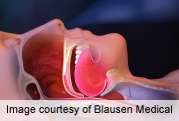
In healthy, lean, young men, the presence of obstructive sleep apnea correlates with insulin resistance and compensatory hyperinsulinemia to maintain normal glucose levels, according to a study published online Aug. 21 in Diabetes Care.
(HealthDay)—In healthy, lean, young men, the presence of obstructive sleep apnea (OSA) correlates with insulin resistance and compensatory hyperinsulinemia to maintain normal glucose levels, according to a study published online Aug. 21 in Diabetes Care.
Sushmita Pamidi, M.D., from the University of Chicago, and colleagues conducted a prospective study involving healthy men (age 18 to 30 years; body mass index [BMI], 18 to 25 kg/m²) who underwent laboratory polysomnogram followed by a morning oral glucose tolerance test. Participants were stratified according to the presence or absence of ethnicity-based diabetes risk and family history of diabetes. Twelve men with OSA were selected and matched with 20 controls without OSA.
The researchers found that age, BMI, ethnicity-based diabetes risk, family history of diabetes, and level of exercise were similar for men with OSA and controls. Normal systolic and diastolic blood pressure and fasting lipid levels were seen in both groups. Despite having comparable glucose levels, men with OSA had 27 percent lower insulin sensitivity (estimated by Matsuda index) and 37 percent higher total insulin secretion, compared with control subjects, after ingestion of glucose load.
"In young, lean, and healthy men who are free of cardiometabolic disease, the presence of OSA is associated with insulin resistance and a compensatory rise in insulin secretion to maintain normal glucose tolerance," the authors write. "OSA may increase the risk of type 2 diabetes independently of traditional cardiometabolic risk factors."
More information: Abstract
Full Text (subscription or payment may be required)
Journal reference:
Diabetes Care
Copyright © 2012 HealthDay. All rights reserved.
-
Sleep apnea severity linked to glycated hemoglobin levels
Jun 18, 2012 |
not rated yet |
0
-
Obstructive sleep apnea, retinopathy linked in diabetes
May 19, 2009 |
not rated yet |
0
-
CPAP improves sleeping glucose levels in type 2 diabetes patients with OSA
Dec 15, 2008 |
not rated yet |
0
-
Liver insulin resistance correlates with cardiac risk
Apr 16, 2012 |
not rated yet |
0
-
Sleep apnea occurring during REM sleep is significantly associated with type 2 diabetes
Jun 15, 2009 |
not rated yet |
0
-
Motion perception revisited: High Phi effect challenges established motion perception assumptions
Apr 23, 2013 |
3 / 5 (2) |
2
-
Anything you can do I can do better: Neuromolecular foundations of the superiority illusion (Update)
Apr 02, 2013 |
4.5 / 5 (11) |
5
-
The visual system as economist: Neural resource allocation in visual adaptation
Mar 30, 2013 |
5 / 5 (2) |
9
-
Separate lives: Neuronal and organismal lifespans decoupled
Mar 27, 2013 |
4.9 / 5 (8) |
0
-
Sizing things up: The evolutionary neurobiology of scale invariance
Feb 28, 2013 |
4.8 / 5 (10) |
14
-
Lagrangian of object with air resistance
1 hour ago
-
Does electromagnetic waves are generated by dc current?
1 hour ago
-
Please check what's in the Ulaby book regarding reflection.
5 hours ago
-
Question in reflection and transmission at oblique incidence.
9 hours ago
-
Is this plasma (picture in thread)
10 hours ago
-
Basic physics understanding. Could someone explain?
12 hours ago
- More from Physics Forums - Classical Physics
More news stories
Youth with type 2 diabetes at much higher risk for heart, kidney disease
The news about youth and diabetes keeps getting worse. The latest data from the national TODAY diabetes study shows that children who develop Type 2 diabetes are at high risk to develop heart, kidney and eye problems faster ...
Diabetes
16 hours ago |
not rated yet |
0
Type 2 diabetes progresses faster in kids, study finds
(HealthDay)—Type 2 diabetes is more aggressive in children than adults, with signs of serious complications seen just a few years after diagnosis, new research finds.
Diabetes
May 23, 2013 |
not rated yet |
0
Statin use is linked to increased risk of developing diabetes, warn researchers
Treatment with high potency statins (especially atorvastatin and simvastatin) may increase the risk of developing diabetes, suggests a paper published today in BMJ.
Diabetes
May 23, 2013 |
not rated yet |
0
Diabetes' genetic underpinnings can vary based on ethnic background, studies say
Ethnic background plays a surprisingly large role in how diabetes develops on a cellular level, according to two new studies led by researchers at the Stanford University School of Medicine.
Diabetes
May 23, 2013 |
not rated yet |
0
|
Fish oil supplements may help fight against Type 2 diabetes
Widely-used fish oil supplements modestly increase amounts of a hormone that is associated with lower risk of diabetes and heart disease, according to a study accepted for publication in The Endocrine Society's Journal of ...
Diabetes
May 22, 2013 |
5 / 5 (2) |
1
Engineered cytomegalovirus protects monkeys from HIV equivalent
(Medical Xpress)—A new study by researchers in the US has shown that an ancient virus can be modified to help in the fight against the simian immunodeficiency virus SIV, which is the equivalent in monkeys ...
Researchers identify first drug targets in childhood genetic tumor disorder
Two mutations central to the development of infantile myofibromatosis (IM)—a disorder characterized by multiple tumors involving the skin, bone, and soft tissue—may provide new therapeutic targets, according to researchers ...
Hormone levels may provide key to understanding psychological disorders in women
Women at a particular stage in their monthly menstrual cycle may be more vulnerable to some of the psychological side-effects associated with stressful experiences, according to a study from UCL.
Going live: Immune cell activation in multiple sclerosis
Biological processes are generally based on events at the molecular and cellular level. To understand what happens in the course of infections, diseases or normal bodily functions, scientists would need to ...
Help at hand for people with schizophrenia
How can healthy people who hear voices help schizophrenics? Finding the answer for this is at the centre of research conducted at the University of Bergen.
Alzheimer's disease, the soft target of the euthanasia debate
(Medical Xpress)—The way Alzheimer's disease is portrayed by advocacy groups and the media is having undue influence on the euthanasia debate, according to a Deakin University nursing ethics professor.