Targeting inflammation to prevent, treat cancers
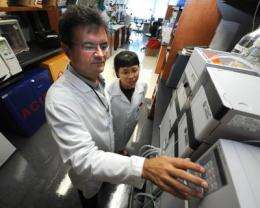
Researchers at the Georgia Health Sciences University Cancer Center have identified a gene that disrupts the inflammatory process implicated in liver cancer.
Laboratory mice bred without the gene lacked a pro-inflammatory protein called TREM-1 and protected them from developing liver cancer after exposure to carcinogens.
The study, published in Cancer Research, a journal for the American Association for Cancer Research, could lead to drug therapies to target TREM-1, said Dr. Anatolij Horuzsko, an immunologist at the GHSU Cancer Center and principal investigator on the study.
"We have long suspected that chronic inflammation is a very powerful tool in the initiation of cancer, and also in the progression or metastasis of cancer," said Horuzsko. "We [looked] at the molecules that control inflammatory responses to gain a better understanding of how this process works. One important triggering receptor for inflammation is TREM-1."
TREM-1's role in promoting inflammation is useful in cases such as battling viral or bacterial infections and in maintaining normal tissue function. But as Horuzsko's team discovered, in abnormal conditions—such as liver damage due to alcohol abuse or other irritants—production of TREM-1 goes haywire. A chronic, low-level state of inflammation is produced as TREM-1 leads to the development of other inflammatory agents, which causes more damage, increases cell production and creates mutated cells. These mutated cells then reproduce—planting the seeds that can lead to cancer.
During the 14-month study, Horuzsko and his team used mouse studies to gather data on the effect of TREM-1 in the liver cells and identify potential sources for therapies. Because a mouse's life span is about three years, the length of the study mimicked a similar 20- to 30-year cancer progression of liver cancer in humans.
Two sets of mice—one with the TREM-1 gene removed—were exposed to the cancer-causing agent diethylnitrosamine, or DEN, which is present in tobacco smoke, chemicals and other products. Within just 48 hours of DEN injection, the control mice were already showing signs of liver cell injury and death and high levels of TREM-1 expression in the liver's Kupffer cells. These specialized liver cells normally destroy bacteria and worn-out red blood cells. Eight months later, these mice also showed massive liver tumors.
But the mice with the gene removed remained healthy, showing very few changes—and very small, if any, tumors after eight months. The only difference between the two groups was the appearance of TREM-1 in the Kupffer cells.
Horuzko's team hopes the findings—and their potential in TREM-1-related cancer treatment—will be applicable to other cancers as well. "TREM-1 could be a target for any inflammation-associated cancer," said Horuzsko. "In the future, we could use a drug to target TREM-1 in the body. We are already working in this direction."
Horuzsko's team also identified another potential target for drug therapy during the study—a product of liver cell injury and death called HMGB1. HMGB1 is a previously unknown activating ligand, or agent, that stimulates Kupffer cells to produce the TREM-1 protein and start the inflammatory process.
"Advanced drug therapies for cancer are a growing field of research, and immune therapies are an important part of our mission," said Dr. Samir N. Khleif, Director of the GHSU Cancer Center. "Studies like Dr. Horuzsko's are leading the way to identify targeted therapies that will become our future standards of care. As we open the door to new scientific discoveries, this enables us to provide better care to patients and families with cancer. "


