Brain scans can predict children's reading ability, researchers say
October 11, 2012 in Psychology & Psychiatry

Brain scans can predict children's reading ability, researchers say

Enlarge

The study findings could eventually influence reading lessons for pre-elementary children, tailoring lesson plans to individual needs. Credit: Karen Struthers/iStock

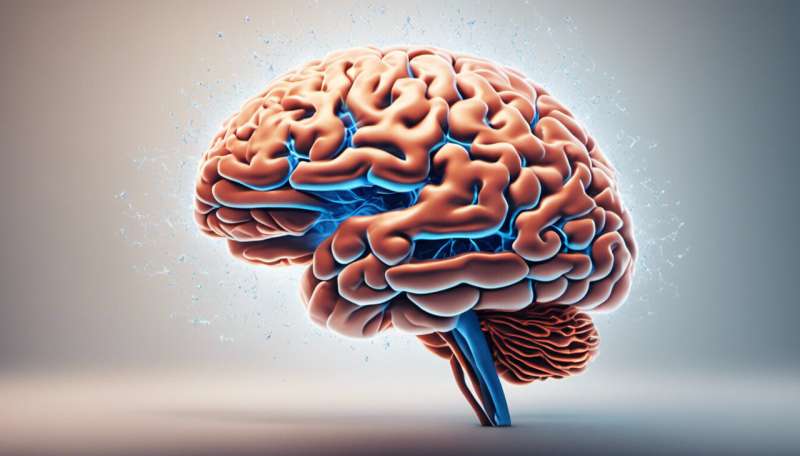
(Medical Xpress)—New research can identify the neural structures associated with poor reading skills in young children, and could lead to an early warning system for struggling students.

If a 7-year-old is breezing through the "Harry Potter" books, studies indicate that he or she will be a strong reader later in life. Conversely, if a 7-year-old is struggling with "The Cat in the Hat," that child will most likely struggle with reading going forward.

New research from Stanford shows that can identify the neural differences between these two children, and could one day lead to an for struggling students.

The researchers scanned the of 39 children once a year for three consecutive years. The students then took to gauge their cognitive, language and .

In each case, the rate of development (measured by fractional , or FA) in the regions of the brain, which are associated with reading, accurately predicted their test scores.

Specifically, children with above-average reading skills exhibit an FA value in two types of nerve bundles – the arcuate fasciculus and the left hemisphere inferior longitudinal fasciculus – that is initially low, but increases over time. Children with lower reading skills initially have a high FA, but it declines over time.

The findings could eventually influence reading lessons for pre-elementary children. Previous studies have shown that a child's reading skills at age 7 can accurately predict reading skills 10 years down the road. A child who is struggling at 7 will most likely be a poor reader at age 17.

"By the time kids reach elementary school, we're not great at finding ways of helping them catch up," said Jason D. Yeatman, a doctoral candidate in psychology at Stanford and the lead author on the study.

The good news: Early screening could reveal which students are at risk; at an early age, the brain is plastic, and genes, environment and experiences can affect FA values.

"Once we have an accurate model relating the maturation of the brain's reading circuitry to children's acquisition of reading skills, and once we understand which factors are beneficial, I really think it will be possible to develop early intervention protocols for children who are poor readers, and tailor individualized lesson plans to emphasize good development," Yeatman said. "Over the next five to 10 years, that's what we're really hoping to do."

The research was published in the current issue of the Proceedings of the National Academy of Science.

More information: www.pnas.org/conte… ull.pdf+html

Provided by Stanford University search and more info website

not rated yet  

Rank not rated yet
Relevant PhysicsForums posts

More news stories

'Boys will be boys' in US, but not in Asia

A new study shows there is a gender gap when it comes to behavior and self-control in American young children – one that does not appear to exist in children in Asia.

Psychology & Psychiatry created 7 hours ago | popularity not rated yet | comments 0

Brain can be trained in compassion, study shows

Until now, little was scientifically known about the human potential to cultivate compassion—the emotional state of caring for people who are suffering in a way that motivates altruistic behavior.

Psychology & Psychiatry created 8 hours ago | popularity 5 / 5 (2) | comments 2 | with audio podcast

Good marriage can buffer effects of dad's depression on young children

What effect does a father's depression have on his young son or daughter? When fathers report a high level of emotional intimacy in their marriage, their children benefit, said a University of Illinois study.

Psychology & Psychiatry created 9 hours ago | popularity not rated yet | comments 0

American, Nepalese kids a world apart on social duties

(Medical Xpress)—Preschoolers universally recognize that one's choices are not always free – that our decisions may be constrained by social obligations to be nice to others or follow rules set by parents ...

Psychology & Psychiatry created 16 hours ago | popularity not rated yet | comments 0

Ethicists' behavior not more moral, study finds

(Medical Xpress)—Do ethicists engage in better moral behavior than other professors? The answer is no. Nor are they more likely than nonethicists to act according to values they espouse, according to researchers from the ...

Psychology & Psychiatry created 16 hours ago | popularity 5 / 5 (1) | comments 0


Rate of bicycle-related fatalities significantly lower in states with helmet laws

Existing research shows that bicyclists who wear helmets have an 88 percent lower risk of brain injury, but researchers at Boston Children's Hospital found that simply having bicycle helmet laws in place showed a 20 percent ...

Slowing the aging process—only with antibiotics

Swiss scientists reveal the mechanism responsible for aging hidden deep within mitochondria—and dramatically slow it down in worms by administering antibiotics to the young.

Researchers complete largest genetic sequencing study of human disease

Researchers from Queen Mary, University of London have led the largest sequencing study of human disease to date, investigating the genetic basis of six autoimmune diseases.

Having both migraines, depression may mean smaller brain

(HealthDay)—Migraines and depression can each cause a great deal of suffering, but new research indicates the combination of the two may be linked to something else entirely—a smaller brain.

Novel approach for influenza vaccination shows promise in early animal testing

A new approach for immunizing against influenza elicited a more potent immune response and broader protection than the currently licensed seasonal influenza vaccines when tested in mice and ferrets. The vaccine ...

Calorie information in fast food restaurants used by 40 percent of 9-18 year olds when making food choices

A new study published online today (Thursday) in the Journal of Public Health has found that of young people who visited fast food or chain restaurants in the U.S. in 2010, girls and youth who were obese were more likely ...