DNA test shows promise in guiding advanced breast cancer care
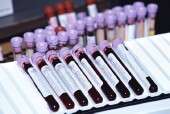
(HealthDay)—An experimental blood test could help show whether women with advanced breast cancer are responding to treatment, a preliminary study suggests.
The test detects abnormal DNA from tumor cells circulating in the blood. And the new findings, reported in the March 14 issue of the New England Journal of Medicine, hint that it could outperform existing blood tests at gauging some women's response to treatment for metastatic breast cancer.
That's an advanced form of breast cancer, where tumors have spread to other parts of the body—most often the bones, lungs, liver or brain. There is no cure, but chemotherapy, hormonal therapy or other treatments can slow disease progression and ease symptoms.
The sooner doctors can tell whether the treatment is working, the better. That helps women avoid the side effects of an ineffective therapy, and may enable them to switch to a better one.
Right now, doctors monitor metastatic breast cancer with the help of imaging tests, such as CT scans. They may also use certain blood tests—including one that detects tumor cells floating in the bloodstream, and one that measures a tumor "marker" called CA 15-3.
But imaging does not tell the whole story, and it can expose women to significant doses of radiation. The blood tests also have limitations and are not routinely used.
"Practically speaking, there's a huge need for novel methods" of monitoring women, said Dr. Yuan Yuan, an assistant professor of medical oncology at City of Hope cancer center in Duarte, Calif.
For the new study, researchers at the University of Cambridge in England took blood samples from 30 women being treated for metastatic breast cancer and having standard imaging tests. They found that the tumor DNA test performed better than either the CA 15-3 or the tumor cell test when it came to estimating the women's treatment response.
Of 20 women the researchers were able to follow for more than 100 days, 19 showed cancer progression on their CT scans. And 17 of them had shown rising tumor DNA levels. In contrast, only seven had a rising number of tumor cells, while nine had an increase in CA 15-3 levels.
For 10 of those 19 women, tumor DNA was on the rise an average of five months before CT scans showed their cancer was progressing.
"The take-home message is that circulating tumor DNA is a better monitoring biomarker than the existing Food and Drug Administration-approved ones," said senior researcher Dr. Carlos Caldas.
It all suggests that the test could help in monitoring women's treatment response, said Yuan, who was not involved in the study.
But while she said the findings are "exciting," she also stressed that a lot more work needs to be done.
"This is nowhere near being ready for clinical practice," Yuan said. "But this is one direction we're heading in."
There are other tests being developed for monitoring women with breast cancer, Yuan noted. One is a test that looks for abnormalities in DNA "copy number." A recent preliminary study found that this approach might help predict some women's risk of a breast cancer recurrence.
And researchers are still studying existing tests to see how they can best be used. The blood test that detects tumor cells—sold in the United States as the CellSearch system—can be used to help monitor women in treatment for metastatic breast cancer. In general, a higher number of tumor cells means a quicker progression.
But for now, professional guidelines do not recommend that doctors routinely use the test because its ultimate usefulness is still unclear, said Dr. Anthony Lucci, a surgical oncologist at the University of Texas M.D. Anderson Cancer Center in Houston.
The new findings suggest that the tumor DNA test is more sensitive than the existing tumor cell test, said Lucci, who was not involved in the research.
He said that in the future, it might be helpful in monitoring women with metastatic cancer or in helping to spot a breast cancer recurrence earlier.
Earlier detection of recurrences is the big hope, said Dr. Jorge Reis-Filho, an attending pathologist at Memorial Sloan-Kettering Cancer Center in New York City. "If changes in DNA happen before changes are seen in imaging," he said, "that could help us be more proactive in treatment."
But, Reis-Filho stressed, that's "crystal-ball gazing" for now.
Lucci said any real-world use of tumor DNA testing is a long way off.
"Number one, we need larger studies to confirm these findings," he said. But beyond that, researchers need to figure out how to do such DNA testing in a simpler, cheaper way, Lucci added.
"Currently, this would be way too expensive and time-consuming," he said. Only some academic cancer centers would have the resources to do this kind of testing as it stands, Lucci noted.
More information: Dawson, Sarah-Jane et al. Analysis of Circulating Tumor DNA to Monitor Metastatic Breast Cancer, New England Journal of Medicine 2013. DOI: 10.1056/NEJMoa1213261
Learn more about metastatic breast cancer from the Metastatic Breast Cancer Network.
Health News Copyright © 2013 HealthDay. All rights reserved.


