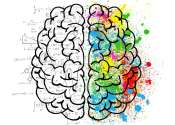
Every cell in our bodies runs on a 24-hour clock, tuned to the night-day, light-dark cycles that have ruled us since the dawn of humanity. The brain acts as timekeeper, keeping the cellular clock in sync ...
Prometheus, the mythological figure who stole fire from the gods, was punished for this theft by being bound to a rock. Each day, an eagle swept down and fed on his liver, which then grew back to be eaten again the next day.
GLYX-13, a molecular cousin to ketamine, induces similar antidepressant results without the street drug side effects, reported a study funded by the National Institute of Mental Health (NIMH) that was published ...
(Medical Xpress)—The first symptoms of major depression may be behavioral, but the common mental illness is based in biology—and not limited to the brain.
UCLA researchers now have the first evidence that bacteria ingested in food can affect brain function in humans. In an early proof-of-concept study of healthy women, they found that women who regularly consumed beneficial ...
Researchers from the Bonn University Hospital implanted pacemaker electrodes into the medial forebrain bundle in the brains of patients suffering from major depression with amazing results: In six out of ...
Patients with treatment-resistant major depression saw dramatic improvement in their illness after treatment with ketamine, an anesthetic, according to the largest ketamine clinical trial to-date led by researchers from the ...
Researchers at Washington University School of Medicine in St. Louis have described a missing link in understanding how damage to the body's cellular power plants leads to Parkinson's disease and, perhaps ...
Research from King's College London reveals the detailed mechanism behind how stress hormones reduce the number of new brain cells - a process considered to be linked to depression. The researchers identified a key protein ...
The birth of new neurons in the adult brain sharpens memory in rodents, but whether the same holds true for humans has long been debated. A study published today in the journal Cell reveals that a signif ...
The mantra that quality is more important than quantity is true when considering how social relationships influence depression, say U-M researchers in a new study.
(HealthDay)—Migraines and depression can each cause a great deal of suffering, but new research indicates the combination of the two may be linked to something else entirely—a smaller brain.
Sperm doesn't appear to forget anything. Stress felt by dad—whether as a preadolescent or adult—leaves a lasting impression on his sperm that gives sons and daughters a blunted reaction to stress, a response linked to ...
Mice that exercise in running wheels exhibit increased neurogenesis in the brain. Crucial to this process is serotonin signaling. These are the findings of a study by researchers at the Max Delbrück Center ...
Depression is a state of low mood and aversion to activity that can affect a person's thoughts, behaviour, feelings and physical well-being. Depressed people may feel sad, anxious, empty, hopeless, helpless, worthless, guilty, irritable, or restless. They may lose interest in activities that once were pleasurable, experience loss of appetite or overeating, or problems concentrating, remembering details or making decisions; and may contemplate or attempt suicide. Insomnia, excessive sleeping, fatigue, loss of energy, or aches, pains or digestive problems that are resistant to treatment may be present.
Depressed mood is a normal reaction to certain life events, a symptom of some medical conditions (e.g., Addison's disease, hypothyroidism), various medical treatments (e.g., hepatitis C drug therapy), and a feature of certain psychiatric syndromes.
Behind the common expression "you can't compare apples to oranges" lies a fundamental question of neuroscience: How does the brain recognize that apples and oranges are different? A group of neuroscientists ...
Inside each of us is our own internal timing device. It drives everything from sleep cycles to metabolism, but the inner-workings of this so-called "circadian clock" are complex, and the molecular processes behind it have ...
Recent research has shown that cancer cells have a much different – and more complex – metabolism than normal cells. Now, scientists at The University of Texas at Dallas have found that exploiting these differences might ...
Researchers have discovered and mapped the signaling network between two previously unconnected proteins, exposing a link that, if broken, could cut off cancer cell growth at its starting point.
(Medical Xpress)—A team of combined researchers from Columbia Business School and Singapore Management University has found that people who have learned a second language become less proficient at speaking ...
Aspirin is known to lower risk for some cancers, and a new study led by a UC San Francisco scientist points to a possible explanation, with the discovery that aspirin slows the accumulation of DNA mutations in abnormal cells ...
Men who lose sleep during the work week may be able to lower their risk of developing Type 2 diabetes by getting more hours of sleep, according to Los Angeles Biomedical Research Institute (LA BioMed) research findings presented ...
(Medical Xpress)—Calories in, calories out. Any dieter is familiar with the two sides of the equation for weight loss, usually reduced to eating less and exercising more. But what controls the body's balance ...
A research group has found that FGF21, an endocrine factor which reduces glucose levels, protects against cardiac diseases in mice. The research, published online on the journal Nature Communications, was led by Francesc Villar ...
(Medical Xpress)—When people think about genes and their relationship to cancer, most probably think about a person's hereditary cancer risk, especially after Angelina Jolie's recent news about her inherited ...