3-D movie shows, for the first time, what happens in the brain as it loses consciousness
June 11, 2011 in Neuroscience
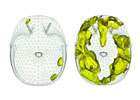
Image reconstructed from measurements recorded using fEITER during awake conditions (left) and during the onset of anaesthesia (right). Credit: University of Manchester.
For the first time researchers have been able to watch what happens to the brain as it loses consciousness. Using sophisticated imaging equipment they have constructed a 3-D movie of the brain as it changes while an anaesthetic drug takes effect.
Brian Pollard, Professor of Anaesthesia at The University of Manchester (UK), will tell the European Anaesthesiology Congress in Amsterdam that the real-time 3-D images seemed to show that losing consciousness involves a change in electrical activity deep within the brain, changing the activity of certain groups of nerve cells (neurons) and hindering communication between different parts of the brain.
He said the findings appear to support a hypothesis put forward by Professor Susan Greenfield, of the University of Oxford, about the nature of consciousness itself. Prof Greenfield suggests consciousness is formed by different groups of brain cells (neural assemblies), which work efficiently together, or not, depending on the available sensory stimulations, and that consciousness is not an all-or-none state but more like a dimmer switch, changing according to growth, mood or drugs. When someone is anaesthetised it appears that small neural assemblies either work less well together or inhibit communication with other neural assemblies.
"Our findings suggest that unconsciousness may be the increase of inhibitory assemblies across the brain's cortex. These findings lend support to Greenfield's hypothesis of neural assemblies forming consciousness," said Prof Pollard.
The team use an entirely new imaging method called "functional electrical impedance tomography by evoked response" (fEITER *), which enables high speed imaging and monitoring of electrical activity deep within the brain and is designed to enable researchers to measure brain function.
The new device was developed by a multidisciplinary team drawn from the Schools of Medicine and Electrical and Electronic Engineering at The University of Manchester (UK) led by Professor Hugh McCann and with support from a Wellcome Trust Translation Award.
The machine itself is a portable, light-weight monitor, which can fit on a small trolley. It has 32 electrodes that are fitted around the patient's head. A small, high-frequency electric current (too small to be felt or have any effect) is passed between two of the electrodes, and the voltages between other pairs of electrodes are measured in a process that takes less than one thousandth of a second.
An "electronic scan" is thus carried out and the machine does this whole procedure 100 times a second. By measuring the resistance to current flow (electrical impedance), a cross sectional image of the changing electrical conductivity within the brain is constructed. This is thought to reflect the amount of electrical activity in different parts of the brain. The speed of the response of fEITER is such that the evoked response of the brain to external stimuli, such as an anaesthetic drug, can be captured in rapid succession as different parts of the brain respond, thus tracking the brain's processing activity.
"We have looked at 20 healthy volunteers and are now looking at 20 anaesthetised patients scheduled for surgery," said Prof Pollard. "We are able to see 3-D images of the brain's conductivity change, and those where the patient is becoming anaesthetised are most interesting."
"We have been able to see a real time loss of consciousness in anatomically distinct regions of the brain for the first time. We are currently working on trying to interpret the changes that we have observed. We still do not know exactly what happens within the brain as unconsciousness occurs, but this is another step in the direction of understanding the brain and its functions."
The team at Manchester is one of many worldwide teams investigating electrical impedance tomography (EIT), but this is its first application to anaesthesia. Prof Pollard said that a huge amount of research still needed to be done to fully understand the role EIT could play in medicine.
"If its power can be harnessed, then it has the potential to make a huge impact on many areas of imaging in medicine. It should help us to better understand anaesthesia, sedation and unconsciousness, although its place in medicine is more likely to be in diagnosing changes to the brain that occur as a result of, for example, head injury, stroke and dementia.
"The biggest hurdle is working out what we are seeing and exactly what it means, and this will be an ongoing challenge," he concluded.
Provided by European Society of Anaesthesiology
-
Brain responses during anesthesia mimic those during natural deep sleep
Jan 27, 2010 |
not rated yet |
0
-
Brain energy use key to understanding consciousness
Jun 16, 2009 |
not rated yet |
0
-
Brain's 'radio stations' have much to tell scientists
Feb 07, 2011 |
not rated yet |
0
-
Discovery of 'alert status' area in brain opens door to treatment of impaired consciousness disorders
Sep 14, 2009 |
not rated yet |
0
-
Area of brain controlling the body’s response to exercise identified
Apr 30, 2007 |
not rated yet |
0
-
Limits to growth: Scientists identify key metastasis-enabling enzyme
May 22, 2012 |
5 / 5 (3) |
0
-
Seeing is as seeing does: Spatially-structured retinal input in early development of cortical maps
Apr 26, 2012 |
5 / 5 (4) |
1
-
Dreamless nights: Brain activity during nonrapid eye movement sleep
Apr 09, 2012 |
4.4 / 5 (12) |
0
-
Take your time: Neurobiology sheds light on the superiority of spaced vs. massed learning
Mar 28, 2012 |
4.5 / 5 (21) |
3
-
Your brain on 'shrooms: fMRI elucidates neural correlates of psilocybin psychedelic state
Feb 29, 2012 |
4.9 / 5 (42) |
45
-
A question about drug tolerance
22 hours ago
-
Poor nutrition leading to overeating?
May 23, 2012
-
Math and dyslexia?
May 21, 2012
-
portable metabolism meter?
May 21, 2012
-
Rare medical conditions on 20/20 tonight
May 18, 2012
-
"Good" Cholesterol in Doubt
May 17, 2012
- More from Physics Forums - Medical Sciences
More news stories
Persistent sensory experience is good for aging brain
Despite a long-held scientific belief that much of the wiring of the brain is fixed by the time of adolescence, a new study shows that changes in sensory experience can cause massive rewiring of the brain, even as one ages. ...
Neuroscience
4 hours ago |
not rated yet |
0
Boundary stops molecule right where it needs to be
A molecule responsible for the proper formation of a key portion of the nervous system finds its way to the proper place not because it is actively recruited, but instead because it can't go anywhere else.
Neuroscience
4 hours ago |
not rated yet |
0
|
Locating ground zero: How the brain's emergency workers find the disaster area
Like emergency workers rushing to a disaster scene, cells called microglia speed to places where the brain has been injured, to contain the damage by 'eating up' any cellular debris and dead or dying neurons. ...
Neuroscience
4 hours ago |
5 / 5 (2) |
0
|
Genetic 'reset switch' enables signaling pathway to induce multiple developmental outcomes for olfactory neurons
Within the nervous system, a handful of signaling pathways modulate development of a cornucopia of different neuronal subtypes. Even small alterations in neuron differentiation pathways can disrupt subsequent ...
Neuroscience
8 hours ago |
not rated yet |
0
The auditory cortex adapts agilely with concentration
The birth of sensory perception on the human cerebral cortex is yet to be fully explained. The different areas on the cortex function in cooperation, and no perception is the outcome of only one area working alone. In his ...
Neuroscience
9 hours ago |
not rated yet |
0
Gene discovery points towards non-hormonal male contraceptive
A new type of male contraceptive could be created thanks to the discovery of a key gene essential for sperm development.
Report: State tobacco prevention funding lacking
(AP) -- States have spent only about 3 percent of the billions they've received in tobacco taxes and legal settlements over the last decade to fund tobacco prevention programs, making it harder to reduce the death and disease ...
Low vitamin D in diet increases stroke risk in Japanese-Americans
Japanese-American men who did not eat foods rich in vitamin D had a higher risk of stroke later in life, according to results of a 34-year study reported in Stroke, an American Heart Association journal.
Doctors group warns EU health care access shrinking
Access to health care is declining in Europe, and Greece in particular faces a humanitarian crisis as it cuts health and social spending, aid group Doctors of the World warned Thursday.
Scotland sets minimum price for booze
Scotland on Thursday became the first part of Britain to introduce a minimum price for alcohol in an attempt to change its unhealthy relationship with booze.
Infections may be deadly for many dialysis patients
An infection called peritonitis commonly arises in the weeks before many dialysis patients die, according to a study appearing in an upcoming issue of the Journal of the American Society of Nephrology (JASN). The findings sugges ...
Jun 11, 2011
Rank: 5 / 5 (3)
Jun 11, 2011
Rank: not rated yet
Jun 11, 2011
Rank: not rated yet
Thats why I"m here. wtf?
Jun 11, 2011
Rank: not rated yet
Ditto!
Jun 12, 2011
Rank: not rated yet
Classified.
First 'edit', then upped.
Where do you think you are living? The U.S.?
Jun 12, 2011
Rank: not rated yet
Hypothesis:
Brain specific estrogen bounded molecules conduction disruption first. (Loss of hearing and touch) Non estrogen molecular bounded (sites)neurons ( of Sight) last to be disrupted (show reduce activity.)
Prediction:
Regions allotted to sound and touch signal processing show the first signs of inactivity. These regions are the first to "return" after anesthesia recedes.
Please, not all at once! Thank you. Thank you. Thank you.
Your welcome.
Jun 13, 2011
Rank: not rated yet
lol
That's a good feeling. Seeing supporting evidence for Hypothesis, theory (I'll write this if no one else wants to) and prediction.
Kudos to all. All of this belongs to you. Enjoy.