Stem cells could drive hepatitis research forward
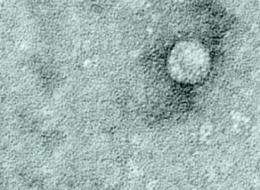
Hepatitis C, an infectious disease that can cause inflammation and organ failure, has different effects on different people. But no one is sure why some people are very susceptible to the infection, while others are resistant.
Scientists believe that if they could study liver cells from different people in the lab, they could determine how genetic differences produce these varying responses. However, liver cells are difficult to obtain and notoriously difficult to grow in a lab dish because they tend to lose their normal structure and function when removed from the body.
Now, researchers from MIT, Rockefeller University and the Medical College of Wisconsin have come up with a way to produce liver-like cells from induced pluripotent stem cells, or iPSCs, which are made from body tissues rather than embryos; the liver-like cells can then be infected with hepatitis C. Such cells could enable scientists to study why people respond differently to the infection.
This is the first time that scientists have been able to establish an infection in cells derived from iPSCs — a feat many research teams have been trying to achieve. The new technique, described this week in the Proceedings of the National Academy of Sciences, could also eventually enable “personalized medicine”: Doctors could test the effectiveness of different drugs on tissues derived from the patient being treated, and thereby customize therapy for that patient.
The new study is a collaboration between Sangeeta Bhatia, the John and Dorothy Wilson Professor of Health Sciences and Technology and Electrical Engineering and Computer Science at MIT; Charles Rice, a professor of virology at Rockefeller; and Stephen Duncan, a professor of human and molecular genetics at the Medical College of Wisconsin.
Stem cells to liver cells
Last year, Bhatia and Rice reported that they could induce liver cells to grow outside the body by growing them on special micropatterned plates that direct their organization. These liver cells can be infected with hepatitis C, but they cannot be used to proactively study the role of genetic variation in viral responses because they come from organs that have been donated for transplantation and represent only a small population.
To make cells with more genetic variation, Bhatia and Rice decided to team up with Duncan, who had shown that he could transform iPSCs into liver-like cells.
Such iPSCs are derived from normal body cells, often skin cells. By turning on certain genes in those cells, scientists can revert them to an immature state that is identical to embryonic stem cells, which can differentiate into any cell type. Once the cells become pluripotent, they can be directed to become liver-like cells by turning on genes that control liver development.
In the current paper, MIT postdoc Robert Schwartz and graduate student Kartik Trehan took those liver-like cells and infected them with hepatitis C. To confirm that infection had occurred, the researchers engineered the viruses to secrete a light-producing protein every time they went through their life cycle.
“This is a very valuable paper because it has never been shown that viral infection is possible” in cells derived from iPSCs, says Karl-Dimiter Bissig, an assistant professor of molecular and cellular biology at Baylor College of Medicine. Bissig, who was not involved in this study, adds that the next step is to show that the cells can become infected with hepatitis C strains other than the one used in this study, which is a rare strain found in Japan. Bhatia’s team is now working toward that goal.
Genetic differences
The researchers’ ultimate goal is to take cells from patients who had unusual reactions to hepatitis C infection, transform those cells into liver cells and study their genetics to see why they responded the way they did. “Hepatitis C virus causes an unusually robust infection in some people, while others are very good at clearing it. It’s not yet known why those differences exist,” Bhatia says.
One potential explanation is genetic differences in the expression of immune molecules such as interleukin-28, a protein that has been shown to play an important role in the response to hepatitis infection. Other possible factors include cells’ expression of surface proteins that enable the virus to enter the cells, and cells’ susceptibility to having viruses take over their replication machinery and other cellular structures.
The liver-like cells produced in this study are comparable to “late fetal” liver cells, Bhatia says; the researchers are now working on generating more mature liver cells.
As a long-term goal, the researchers are aiming for personalized treatments for hepatitis patients. Bhatia says one could imagine taking cells from a patient, making iPSCs, reprogramming them into liver cells and infecting them with the same strain of hepatitis that the patient has. Doctors could then test different drugs on the cells to see which ones are best able to clear the infection.
This story is republished courtesy of MIT News (web.mit.edu/newsoffice/), a popular site that covers news about MIT research, innovation and teaching.


