Computational analysis identifies drugs to treat drug-resistant breast cancer
Researchers have used computational analysis to identify a new Achilles heel for the treatment of drug-resistant breast cancer. The results, which are published in Molecular Systems Biology, reveal that the disruption of glucose metabolism is an effective therapeutic strategy for the treatment of tumours that have acquired resistance to front-line cancer drugs such as Lapatinib.
"The growth and survival of cancer cells can often be impaired by treatment with drugs that interfere with the actions of one or more oncogenes," said Prahlad Ram, the senior author of the study and Professor at the University of Texas MD Anderson Cancer Center, Houston, Texas. "However, the clinical benefits to patients are often short lived due to acquired drug resistance. Finding alternative intervention points or so-called new addictions for cancer cells is of critical importance for designing novel therapeutic strategies against tumours. Our results reveal specific new targets for drug intervention in the metabolic pathways of cancer cells and identify existing drugs that can be used to treat drug-resistant cancer."
Lapatinib is used for the treatment of patients with advanced or metastatic breast cancer in cases where tumours overexpress the ErbB2 gene. The ErbB2 gene provides instructions for making a specific growth factor receptor. If too much of this ErbB2 growth factor receptor is made, it can lead to cells that grow and divide continuously, one of the defining characteristics of breast cancer.
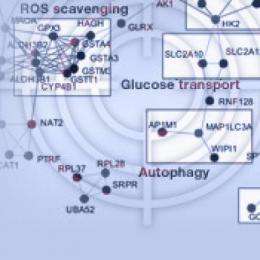
The scientists used microarrays to measure gene expression in breast cancer cells with and without treatment with Lapatinib. Computational analysis of more than 15000 gene interactions revealed four major populations of genes that were regulated in a significant way. Three of these groups were the regular suspects related to drug resistance, such as genes involved in oxidation and reduction reactions or cell cycle processes. A fourth group comprised a network of reactions linked to the deprivation of glucose.
Analysis of the gene expression networks of ErbB2-positive breast cancer patients revealed that the glucose deprivation network is linked to low survival rates of the patients. Computational screening of a library of existing drugs for therapeutics that target the glucose deprivation response identified several drugs that could be effective in treating drug-resistant breast cancer.
"By developing novel gene expression analysis algorithms and integrating diverse data, we have been able to look beyond changes in the immediate molecular signaling pathways of breast cancer cells and to consider the wider system of molecular networks within the cell," remarked Ram. "Our approach predicts new uses for existing drugs that impact the metabolism of breast cancer cells and may offer an expedient route to improved treatments for breast cancer patients."
More information: The glucose-deprivation response network counteracts EGFR signalling in lapatinib resistant cells, doi: 10.1038/msb.2012.25


