Sugary sports drinks plentiful at U.S. schools: study
August 6, 2012 in Pediatrics

Sugary sports drinks plentiful at U.S. schools: study

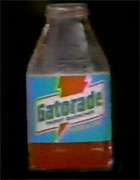
Fewer stock soda, but fruit beverages, Gatorade-like drinks are widely available.

(HealthDay) -- Although fewer middle and high schools in the United States make sugary sodas available to students today, other sweet beverages, particularly sports drinks, are still widely available, according to a new study.

High-calorie drinks are the main source of among children, and offering these drinks at school can significantly increase students' , the study from the Robert Wood Johnson Foundation said.

"Our study shows that, although schools are making progress, far too many students still are surrounded by a variety of unhealthy beverages at school," lead author, Yvonne Terry-McElrath, a researcher from the University of Michigan and co-investigator with Bridging the Gap, a research program of the Robert Wood Johnson Foundation, said in a foundation news release. "We also know that the problem gets worse as students get older."

The researchers surveyed more than 1,400 middle schools and more than 1,500 high schools to track beverages sold by these schools outside of meal programs over four academic years beginning in 2006. Specifically, they looked at places where students could buy high-calorie , such as vending machines, a la carte lines in the cafeteria, school stores and .

The study, published Aug. 6 in the , found one in four public could buy high-calorie soda during the 2010 school year. Four years earlier, sugary sodas were available to more than 50 percent of these students, the researchers said.

Meanwhile, the percentage of students in middle school who could buy regular soda dropped from 27 percent in the 2006-2007 school year to 13 percent four years later.

However, the investigators found many middle and high school students still have access to other sugary beverages, such as and . In the 2010 school year, 63 percent of middle school students and 88 percent of high school students could buy some type of high-calorie drink at school.

Sports drinks were among the biggest culprits, the researchers said. Although their availability declined from 2006, they were still available to 55 percent of middle school students. Meanwhile, 83 percent of high school students could buy these drinks at school in 2010. In addition to added sugar, the researchers said sports drinks contain an unhealthy amount of salt and are recommended only for serious athletes who engage in rigorous physical activity.

The study also showed that while students' access to higher-fat milk declined, in 2010 it remained available to 36 percent of and 48 percent of high school students.

C. Tracy Orleans, senior scientist at the Robert Wood Johnson Foundation, said the progress being made to remove sugary sodas from schools is encouraging. "But while this study does have good news, it also shows that we're not yet where we want to be," Orleans said in the news release. "It's critically important for the USDA [U.S. Department of Agriculture] to set strong standards for competitive foods and beverages to help ensure that all students across all grades have healthy choices at school."

More information:
The U.S. National Library of Medicine has more about sugar and other sweeteners.

Journal reference:

Copyright © 2012 HealthDay. All rights reserved.

not rated yet  

Rank not rated yet
Relevant PhysicsForums posts

More news stories

Rate of bicycle-related fatalities significantly lower in states with helmet laws

Existing research shows that bicyclists who wear helmets have an 88 percent lower risk of brain injury, but researchers at Boston Children's Hospital found that simply having bicycle helmet laws in place showed a 20 percent ...

Pediatrics created May 23, 2013 | popularity not rated yet | comments 0

More kids getting donor organs, but gaps persist, study finds

(HealthDay)—Over the last decade, the number of American children who die each year awaiting an organ donation dropped by more than half, new research reveals. And increasing numbers of children are receiving ...

Pediatrics created May 22, 2013 | popularity not rated yet | comments 0

Phthalates: Study links chemicals widely found in plastics, processed food to elevated blood pressure in children, teens

Plastic additives known as phthalates (pronounced THAL-ates) are odorless, colorless and just about everywhere: They turn up in flooring, plastic cups, beach balls, plastic wrap, intravenous tubing and—according to the ...

Pediatrics created May 22, 2013 | popularity not rated yet | comments 1 | with audio podcast

Less sleep associated with increased risk of crashes for young drivers

A study by Alexandra L. C. Martiniuk, M.Sc, Ph.D., of The George Institute for Global Health, Sydney, Australia, and colleagues suggests less sleep per night is associated with a significant increase in the risk for motor ...

Pediatrics created May 20, 2013 | popularity not rated yet | comments 0

Whole-cell vaccine was more effective than acellular vaccine during CA pertussis outbreak

Whole-cell pertussis vaccines were more effective at protecting against pertussis than acellular pertussis vaccines during a large recent outbreak, according to a new Kaiser Permanente study published in Pediatrics.

Pediatrics created May 20, 2013 | popularity not rated yet | comments 0 | with audio podcast


First drug to improve heart failure mortality in over a decade

Coenzyme Q10 decreases all cause mortality by half, according to the results of a multicentre randomised double blind trial presented today at Heart Failure 2013 congress. It is the first drug to improve heart failure mortality ...

Heart failure accelerates male 'menopause'

Heart failure accelerates the aging process and brings on early andropausal syndrome (AS), according to research presented today at the Heart Failure Congress 2013. AS, also referred to as male 'menopause', was four times ...

Seniors more likely to crash when driving with pet, study finds

(HealthDay)—Animals make great companions for senior citizens, but elderly people who always drive with a pet in the car are far more likely to crash than those who never drive with a pet, researchers have ...

New immune system discovered

(Medical Xpress)—A research team, led by Jeremy Barr, a biology post-doctoral fellow, unveils a new immune system that protects humans and animals from infection.

Brain can be trained in compassion, study shows

Until now, little was scientifically known about the human potential to cultivate compassion—the emotional state of caring for people who are suffering in a way that motivates altruistic behavior.

Death highest in heart failure patients admitted in January, on Friday, and overnight

Mortality and length of stay are highest in heart failure patients admitted in January, on Friday, and overnight, according to research presented today at the Heart Failure Congress 2013. The analysis of nearly 1 million ...