'Unhealthy' changes in gut microbes benefit pregnant women
August 2, 2012 in Medical research

'Unhealthy' changes in gut microbes benefit pregnant women

Enlarge

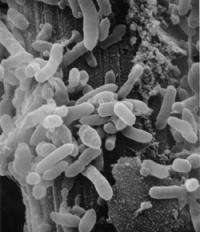
Bacteroides thetaiotaomicron, a beneficial gut bacterium. Image: Lars Angenent

The composition of microbes in the gut changes dramatically during pregnancy, according to a study published by Cell Press in the August 3rd issue of the journal Cell. Although these changes are associated with metabolic disease under most circumstances, they could be beneficial in pregnant women.

"This is the first in-depth characterization of the gut microbiota associated with ," says senior study author Ruth Ley of Cornell University. "The findings suggest that our bodies have coevolved with the microbiota and may actually be using them as a tool—to help alter the mother's metabolism to support the growth of the fetus."

In nonpregnant animals, changes to gut microbe composition can cause symptoms of metabolic syndrome, including weight gain, abnormal glucose metabolism, and inflammation—an immune response that normally protects the body but can cause health problems. These symptoms also appear during pregnancy, but the underlying causes have been unclear, and few studies have examined the potential link to gut microbiota during pregnancy.

To address this question, Ley and her team obtained stool samples from 91 . They found that gut changed in composition from the first trimester to the third trimester, becoming less "normal" and less diverse over time. Health-boosting bacteria decreased in abundance, while disease-related bacteria increased in number. In addition, signs of inflammation increased over the course of the pregnancy. "The changes in were not related to diet, so we think the immune system or hormones play a role," Ley says.

When gut microbes from pregnant women were transferred to healthy germ-free mice, animals that received microbes from the third trimester became fatter and had higher levels of inflammation markers and worse glucose metabolism than mice that received microbes from the first trimester.

"By the third trimester, the microbiota can induce changes in metabolism," Ley says. "In the context of pregnancy, these metabolic changes in the mother are healthy, because they promote energy storage in fat tissue and help support the fetus. Outside of pregnancy, however, these changes can lead to the development of type 2 diabetes and other health problems."

More information: Koren et al.: "Remodeling of the gut microbiome and metabolic changes during pregnancy." DOI:10.1016/j.cell.2012.07.008

Journal reference: Cell search and more info website

Provided by Cell Press search and more info website

not rated yet  

Rank not rated yet
Relevant PhysicsForums posts

More news stories

Now we know why old scizophrenia medicine works on antibiotics-resistant bacteria

In 2008 researchers from the University of Southern Denmark showed that the drug thioridazine, which has previously been used to treat schizophrenia, is also a powerful weapon against antibiotic-resistant bacteria such as ...

Medical research created 15 hours ago | popularity 3.7 / 5 (3) | comments 0 | with audio podcast

SUMO wrestling cells reveal new protective mechanism target for stroke

Scientists investigating the interaction of a group of proteins in the brain responsible for protecting nerve cells from damage have identified a new target that could increase cell survival.

Medical research created 20 hours ago | popularity 5 / 5 (1) | comments 0

How serotonin receptors can shape drug effects, from LSD to migraine medication

New findings by researchers carrying out experiments at the U.S. Department of Energy Office of Science's Advanced Photon Source (APS) help explain why some drugs that interact with two kinds of human serotonin ...

Medical research created 22 hours ago | popularity not rated yet | comments 0 | with audio podcast

Preventing blood poisoning

Peptide molecules derived from the body's natural immune system can help boost the body's defence against life-threatening blood poisoning, joint University research has uncovered.

Medical research created 23 hours ago | popularity 4 / 5 (1) | comments 0 | with audio podcast

New mechanism to prevent type 2 diabetes in obese individuals

A new Montréal study conducted by Dr. May Faraj, associate research professor at the Université de Montréal and invited scientist at the IRCM, along with her research team and medical collaborators, shows ...

Medical research created 23 hours ago | popularity not rated yet | comments 0 | with audio podcast


AIDS science at 30: 'Cure' now part of lexicon

Big names in medicine are set to give an upbeat assessment of the war on AIDS on Tuesday, 30 years after French researchers identified the virus that causes the disease.

For combat veterans suffering from post-traumatic stress disorder, 'fear circuitry' in the brain never rests

Chronic trauma can inflict lasting damage to brain regions associated with fear and anxiety. Previous imaging studies of people with post-traumatic stress disorder, or PTSD, have shown that these brain regions can over-or ...

Melon focus headband turns to Kickstarter for rollout plans

(Medical Xpress)—What if the quality of your work depends more on your focus on the piano keys or canvas or laptop than your musical or painting or computing skills? If target users can be convinced, they ...

Temporal processing in the olfactory system

The neural machinery underlying our olfactory sense continues to be an enigma for neuroscience. A recent review in Neuron seeks to expand traditional ideas about how neurons in the olfactory bulb might encode information about ...

Individuals who drink heavily and smoke may show 'early aging' of the brain

Treatment for alcohol use disorders works best if the patient actively understands and incorporates the interventions provided in the clinic. Multiple factors can influence both the type and degree of neurocognitive abnormalities ...

College women exceed NIAAA drinking guidelines more frequently than college men

In order to avoid harms associated with alcohol consumption, in 2009 the National Institute on Alcohol Abuse and Alcoholism issued guidelines that define low-risk drinking. These guidelines differ for men and women: no more ...