Researchers find multiple similarities between cancer cells and induced pluripotent stem cells
(Medical Xpress)—UC Davis investigators have found new evidence that a promising type of stem cell now being considered for a variety of disease therapies is very similar to the type of cells that give rise to cancer. The findings suggest that although the cells—known as induced pluripotent stem cells (iPSCs)—show substantial promise as a source of replacement cells and tissues to treat injuries, disease and chronic conditions, scientists and physicians must move cautiously with any clinical use because iPSCs could also cause malignant cancer.
The article, "Induced pluripotency and oncogenic transformation are related processes," is now online in the journal, Stem Cells and Development.
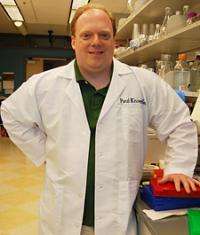
"This is the first study that describes the specific molecular pathways that iPSCs and cancer cells share from a direct comparison" said Paul Knoepfler, associate professor of cell biology and human anatomy, and principal investigator of the study. "It means that much more study is required before iPSCs can be used clinically. However, our study adds to a growing knowledge base that not only will help make stem cell therapies safer, but also provide us with new understandings about the cancer-causing process and more effective ways to fight the disease."
Since 2007, cell biologists have been able to induce specialized, differentiated cells (such as those obtained from the skin or muscle of a human adult) to become iPSCs. Like embryonic stem cells, iPSCs are a type of stem cell that is able to become any cell type. This "pluripotent" capability means that iPSCs have the potential of being used in treatments for a variety of human diseases, a fundamentally new type of clinical care known as regenerative medicine.
iPSCs are considered particularly important because their production avoids the controversy that surrounds embryonic stem cells. In addition, iPSCs can be taken from a patient's own skin and induced to produce other needed tissues, thereby evading the possibility of immunologic rejection that arises when transplanting cells from a donor to a recipient. In contrast to therapies based on ES cells, iPSCs would eliminate the need for patients to take immunosuppressive drugs.
Earlier research indicated that both ES cells and iPSCs pose some health risks. Increasing evidence suggests that pluripotency may be related to rapid cellular growth, a characteristic of cancer. iPSCs, as well as embryonic stem cells, are well known by scientists to have the propensity to cause teratomas, an unusual type of benign tumor that consists of many different cell types. The new UC Davis study demonstrates for the first time that iPSCs—as well as ES cells—share significant similarities to malignant cancer cells.
The investigators compared iPSCs to a form of malignant cancer known as oncogenic foci that are also produced in laboratories; these cell types are used by medical researchers to create models of cancer, particularly sarcoma. Specifically, the scientists contrasted the different cells' transcriptomes, comprised of the RNA molecules or "transcripts." Unlike DNA analysis, which reflects a cell's entire genetic code whether or not the genes are active, transcriptomes reflect only the genes that are actively expressed at a given time and therefore provide a picture of actual cellular activity.
From this transcriptome analysis, the investigators found that the iPSCs and malignant sarcoma cancer cells are unexpectedly similar in several respects. Genes that were not expressed in iPSCs were also not expressed in the cancer-generating cells, including many that have properties that guide a cell to normally differentiate in certain directions. Both cell types also exhibited evidence of similar metabolic activities, another indication that they are related cell types.
"We were surprised how similar iPSCS were to cancer-generating cells," said Knoepfler. "Our findings indicate that the search for therapeutic applications of iPSCs must proceed with considerable caution if we are to do our best to promote patient safety."
Knoepfler noted, for example, that future experimental therapies using iPSCs for human transplants would most often not involve implanting iPSCs directly into a patient. Instead, iPSCs would be used to create differentiated cells—or tissues—in the laboratory, which could then be transplanted into a patient. This approach avoids implanting the actual undifferentiated iPSCS, and reduces the risk of tumor development as a side effect. However, Knoepfler noted that even trace amounts of residual iPSCs could cause cancer in patients, a possibility supported by his team's latest research.
Encouragingly, the UC Davis team also found important differences between the cell types that could provide clues to making iPSCs safer. As part of this study, the researchers transformed tumor-generating cell types into iPS-like cells by manipulating their genetic make up. Although the reprogrammed cancer cells did not behave identically to iPSCs, and had reduced ability to produce different cell types, the findings are exciting because they suggest that cancer cells can be reprogrammed into more normal cell types, possibly opening the door to new cancer therapies.
"We found that we could reprogram the cancer cells to behave more akin to normal stem cells," said Knoepfler. "This suggests that such cancer cell reprogramming could become a new way of treating cancer patients, in essence telling their tumors to turn into normal stem cells."
Knoepfler said the team is continuing to study the differences and similarities between iPSCs and cancer cells, as well as investigate possible ways to make iPSCs safer. It appears that targeting specific metabolic pathways may enhance iPSC formation, while modulating other pathways may improve safety.
More information: online.liebertpub.com/doi/abs/ … 0.1089/scd.2012.0375


