Lose fat faster before breakfast
January 24, 2013 in Health

Lose fat faster before breakfast

Enlarge

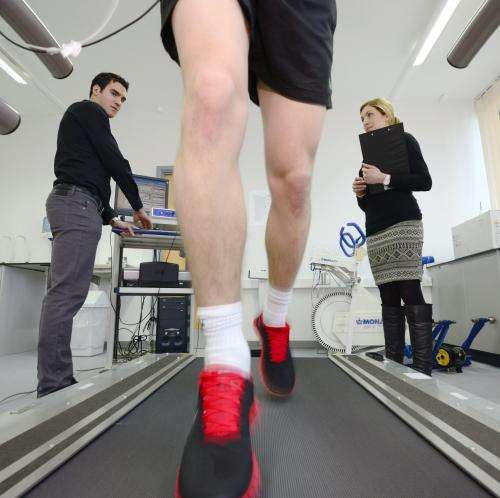
Javier Gonzalez with Dr Emma Stevenson in the Sport Nutrition Lab.

People can burn up to 20% more body fat by exercising in the morning on an empty stomach, according to new research from Northumbria University.

In a study published online in the British Journal of Nutrition today (24 January), academics sought to find out whether the known benefits of exercising after an overnight fast were undermined by an increased appetite and eating more food later in the day.

Researchers, led by Dr Emma Stevenson and PhD student Javier Gonzalez, asked twelve physically active male participants to perform a bout of at 10am, either after they had eaten breakfast or in a fasted state having not eaten since the evening before.

Following the exercise all participants were given a chocolate milkshake recovery drink. Later in the day, participants were provided with a pasta lunch which they were asked to consume until they felt 'comfortably full'. Their lunchtime consumption of energy and fat was assessed and calculated, taking into account the amount of energy and fat burned during the morning period.
Lose fat faster before breakfast
Enlarge

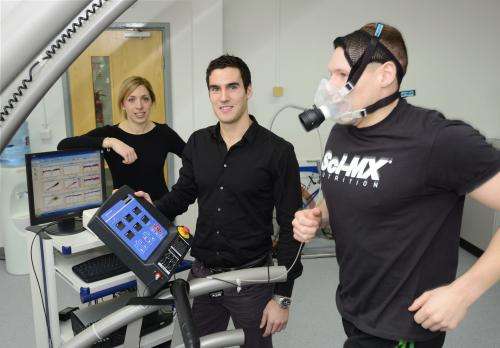
Dr Emma Stevenson with Javier Gonzalez and volunteer Ben Green.

The researchers discovered that those who had exercised in the morning did not consume additional or experience increased appetite during the day to compensate for their earlier activity.

They also found that those who had exercised in a fasted state burned almost 20% more fat compared to those who had consumed breakfast before their . This means that performing exercise on an empty stomach provides the most desirable outcome for fat loss.

Javier Gonzalez, who is currently undertaking a PhD in Exercise and Metabolism, said: "In order to lose body fat we need to use more fat than we consume. Exercise increases the total amount of energy we expend and a greater proportion of this energy comes from existing fat if the exercise is performed after an overnight fast.

"Our results show that exercise does not increase your , or later in the day and to get the most out of your session it may be optimal to perform this after an overnight fast."

Dr Emma Stevenson, Senior Lecturer in Sport and Exercise Nutrition and Associate Director of Northumbria University's Brain, Performance and Nutrition Research Centre, added: "This research is very important in helping to provide practical guidelines relating to food intake to individuals who are exercising to maximise fat mass loss. It must be highlighted that this is a short-term study and we can only speculate on the longer term outcomes of such nutritional practices."

The research, titled 'Breakfast and exercise contingently affect postprandial and energy balance in physically active males', is published online today in the .

More information: British Journal of Nutrition: Breakfast and exercise contingently affect postprandial metabolism and energy balance in physically active males, doi:10.1017/S0007114512005582

Journal reference: British Journal of Nutrition search and more info website

Provided by Northumbria University search and more info website

4 /5 (3 votes)  

Filter


Move the slider to adjust rank threshold, so that you can hide some of the comments.


Display comments: newest first

kevinrtrs
Jan 24, 2013

Rank: 2.5 / 5 (2)
So what else is new?

Cyclists have been doing this for years already - cycling at 70% max heartrate for 1 hour and then eating breakfast/meal immediately afterwards - or doing as they do here - drink the chocolate milk. This is known as training the body to burn the intramuscular fat or Intramuscular triglycerides.

So what's the beef here?
aroc91
Jan 24, 2013

Rank: 5 / 5 (1)
This has been the idea behind intermittent fasting for quite some time. Definitely not anything new. The body is forced to use fat when there's no intake of simple carbs and glycogen stores get depleted.
Rank 4 /5 (3 votes)
Relevant PhysicsForums posts

More news stories

New research identifies risks, interventions for children's GI health

An increasing number of U.S. children are experiencing gastrointestinal issues that require interventions to resolve, according to research presented at Digestive Disease Week (DDW).

Health created May 18, 2013 | popularity not rated yet | comments 0 | with audio podcast

Youth who have their first drink during puberty have higher levels of later drinking

Research shows that the earlier the age at which youth take their first alcoholic drink, the greater the risk of developing alcohol problems. Thus, age at first drink (AFD) is generally considered a powerful predictor of ...

Health created May 17, 2013 | popularity not rated yet | comments 0

British MPs concerned about parliamentary boozing

One quarter of British lawmakers believe there is an "unhealthy" drinking culture in the Houses of Parliament, according to a survey published on Friday.

Health created May 17, 2013 | popularity not rated yet | comments 0

Patient openness to research can depend on race and sex of study personnel

Researchers at the University of Cincinnati (UC) have found that the race and sex of study personnel can influence a patient's decision on whether or not to participate in clinical research.

Health created May 17, 2013 | popularity not rated yet | comments 0

Clinical support for patient self-management is rhetoric rather than reality

The processes to allow people to self-manage their own illness are not being used appropriately by health professionals to the benefit of their patients, new research suggests.

Health created May 17, 2013 | popularity not rated yet | comments 0


Researchers identify a potential new risk for sleep apnea: Asthma

Researchers at the University of Wisconsin have identified a potential new risk factor for obstructive sleep apnea: asthma. Using data from the National Institutes of Health (Heart, Lung, and Blood Institute)-funded Wisconsin ...

Study finds that sleep apnea and Alzheimer's are linked

A new study looking at sleep-disordered breathing (SDB) and markers for Alzheimer's disease (AD) risk in cerebrospinal fluid (CSF) and neuroimaging adds to the growing body of research linking the two.

'Gap' for HIV vaccine efforts after latest setback

The hunt for an HIV vaccine has gobbled up $8 billion in the past decade, and the failure of the most recent efficacy trial has delivered yet another setback to 26 years of efforts.

Computational tool translates complex data into simplified 2-dimensional images

In their quest to learn more about the variability of cells between and within tissues, biomedical scientists have devised tools capable of simultaneously measuring dozens of characteristics of individual ...

New theory on genesis of osteoarthritis comes with successful therapy in mice

Scientists at Johns Hopkins have turned their view of osteoarthritis (OA) inside out. Literally. Instead of seeing the painful degenerative disease as a problem primarily of the cartilage that cushions joints, ...

Ginger compounds may be effective in treating asthma symptoms

Gourmands and foodies everywhere have long recognized ginger as a great way to add a little peppery zing to both sweet and savory dishes; now, a study from researchers at Columbia University shows purified components of the ...