Novel treatment for bone marrow cancer
Multiple myeloma is a form of cancer in which the plasma cells in the bone marrow grow out of control, causing damage to bones as well as predisposing patients to anaemia, infection and kidney failure. A medical procedure called autologous hematopoietic stem cell transplantation, commonly known as a stem cell transplant, can often be an important treatment option for many patients. Unfortunately, multiple myeloma continues to progress even after a transplant. Within this domain, European researchers have been looking into alternative treatment and in particular at marine extracts and active substances in their search for new methods to fight this disease.
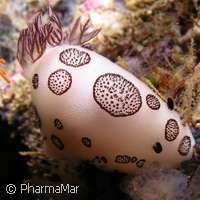
The ocean has proved to be an interesting environment for researchers who are already mining our seas for news drugs. Oceans are also home to other treasures able to inspire researchers worldwide. However, there is fierce competition in the ocean habitat, and to survive there marine organisms use an entire arsenal of chemical weapons to defend themselves against their rivals. With the help of these chemicals they can attack hostile cells by overcoming their defence system. Researchers have discovered that these organisms produce an interesting active substance that could be a great candidate for use in cancer research. Indeed, natural marine-based substances have been found to penetrate a tumour's protective shield. The EU-funded OPTATIO project takes its inspiration from marine organisms and in particular the active substance they produce.
Two-thirds of cases of multiple myeloma develop in older patients (average age at diagnosis is 69 years) and the cancer is nearly always incurable. This immune system tumour develops from mature antibodies which produce B cells. It begins as a single degenerative cell which multiplies on a massive scale and infiltrates the bone marrow and beyond.
Multiple myeloma cells grow in niches in the bone marrow. They are surrounded by tissue cells, bone marrow cells (osteoblasts and osteoclasts), blood vessel cells and immune cells. These cells stimulate each other in a highly interactive way, and there is regular interplay and exchange of messenger substances, e.g. cytokines. Genes are activated so that even more cytokines are produced to create a self-strengthening cycle. This helps the cancer cells to 'hide' and avoid cell death which normally results from medication. One of OPTATIO's main aims is to explain this resistance mechanism.
Until now, research on multiple myeloma cancer cells has often considered them as isolated entities. However, this tends to disregard the fact that the bone marrow environment, in particular the stromal bone tissue, the immune cells and the connective tissue cells, protects cancer cells with the aid of different substances in a so-called niche. In this biochemical 'shelter', drugs are often not effective in patients although they may have been successful in laboratory tests on isolated cancer cells. They have been found to be ineffective in the long term because the cancer cells become resistant.
OPTATIO is pursuing a unique strategy to break through this protective shield to enable better cancer treatment. In so doing, marine-based active substances are proving to be particularly attractive candidates as through evolution they have proven their capacity to survive in the chemical battles against marine organisms.
Oncotyrol, one of the consortium partners, has developed test systems comprising cancer as well as connective tissue cells to better replicate the actual conditions in the human body. Scientists from Prof. Lukas Huber's team have recently used 'in-vivo-like assays' to test hundreds of marine extracts as well as pure substances produced by Spanish biopharmaceutical company PharmaMar, another consortium partner. Of most importance in the screening process was the fact that the candidates kill the cancer cells while leaving the niche cells intact, according to Winfried Wunderlich of Oncotyrol. "We are looking for substances which disable the protective influence of the stroma on the cancer cells but do not destroy the connective tissue cells themselves," explained Mr Wunderlich to members of an international consortium. Thus, researchers have made good progress in achieving promising screening results. Indeed, the results revealed that a considerable part of the examined extracts and pure substances selectively affect the tumour cells, that is to say they broke through the protective shield.
The aim of the project is to exploit the importance of interactions between multiple myeloma cells and the bone marrow micro-environment. These interactions play a vital role in the survival of tumour cells, the development of drug resistance and the progression of the disease. Principally, OPTATIO will develop new and innovative multiple myeloma treatment strategies by targeting not only the 'seed', but also the 'soil' of myelomagenesis, searching for compounds that have the capacity to interfere with this complex biological network.
The project team's next step is to make their test systems even more realistic and investigate the promising candidates in further co-culture and animal models, in co-operation with other partners, including the University of Würzburg.
More information: OPTATIO: www.optatio.eu/about-us/profile/


