Stopping arthritis before it starts
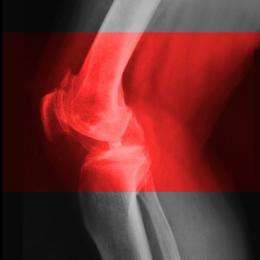
About 27 million Americans suffer from arthritis, and more than three million of those cases result from a joint injury, often in the knee, that provokes slow and steady cartilage deterioration.
A new study from MIT suggests that a steroid drug currently used to treat inflammatory diseases could also prevent osteoarthritis from ever developing in those people, if given soon after the injury.
“In essence, it’s repurposing an existing drug,” says Alan Grodzinsky, senior author of the study, a professor of biological, mechanical and electrical engineering, and the director of MIT’s Center for Biomedical Engineering.
Grodzinsky and his colleagues report their findings in the Sept. 2 issue of the journal Arthritis Research and Therapy. Other authors of the paper are Yihong Lu, a recent MIT biological engineering PhD recipient, and Christopher Evans, the Maurice Edmond Mueller Professor of Orthopedic Surgery at Harvard Medical School.
Severe joint injuries are more common in younger people, who are likelier to participate in sports such as basketball or skiing in which they are at a higher risk of tearing ligaments such as the anterior cruciate ligament (ACL). Military service and car accidents are also common sources of joint injuries in young people.
In most cases, the patient is treated with non-steroidal anti-inflammatory drugs (NSAIDs) such as ibuprofen to reduce pain and swelling. Weeks or months later, they might have surgery to stabilize the joint.
In about 50 percent of those cases, the patient’s cartilage steadily breaks down after the injury, eventually leading to arthritis, says Martin Lotz, professor of molecular and experimental medicine at the Scripps Research Institute, who was not involved in this study. Currently there is no way to prevent this cartilage degradation.
“There’s an opportunity here,” Lotz says of the MIT strategy of immediate intervention. “If you go in during this time, you would not only improve joint pain and swelling, you could actually reduce the risk of arthritis developing.”
In the new study, the MIT researchers tested the effects of glucocorticoids — steroids that can help reduce swelling and pain in arthritic joints. Doctors have been prescribing such drugs to treat chronic rheumatoid arthritis in the elderly for decades.
The researchers experimented on human and bovine cartilage tissue. First they damaged the tissue, then flooded it with inflammatory proteins called cytokines, which are typically released after a joint injury. Cytokines hasten cartilage breakdown.
In damaged tissue treated immediately with the glucocorticoid dexamethasone, cartilage breakdown was halted. The drug also worked when given a day or two after the injury, which is important because people who suffer joint injuries might not get to see a doctor right away, Grodzinsky says.
The researchers don’t yet know if dexamethasone could reverse cartilage damage that has already occurred, but plan to test that in future studies. They are also planning animal studies to determine how many joint treatments are necessary to maintain the protective effect. If those animal studies yield positive results, the findings could be rapidly translated to human treatments, Grodzinsky says, because the drug is already approved for human use.
The research team also investigated how dexamethasone exerts its protective effects. Though the process is not yet fully understood, they found some evidence that it blocks the degradation of aggrecan, a protein-carbohydrate complex that is a major structural and biomechanically functional component of cartilage. Appropriate drug delivery localized to joint cartilage is also under study.
This story is republished courtesy of MIT News (web.mit.edu/newsoffice/), a popular site that covers news about MIT research, innovation and teaching.


