Combination treatment in mice shows promise for fatal neurological disorder in kids
Infants with Batten disease, a rare but fatal neurological disorder, appear healthy at birth. But within a few short years, the illness takes a heavy toll, leaving children blind, speechless and paralyzed. Most die by age 5.
There are no effective treatments for the disease, which can also strike older children. And several therapeutic approaches, evaluated in mouse models and in young children, have produced disappointing results.
But now, working in mice with the infantile form of Batten disease, scientists at Washington University School of Medicine in St. Louis and Kings College London have discovered dramatic improvements in life span and motor function by treating the animals with gene therapy and bone marrow transplants.
The results are surprising, the researchers say, because the combination therapy is far more effective than either treatment alone. Gene therapy was moderately effective in the mice, and bone marrow transplants provided no benefit, but together the two treatments created a striking synergy.
The research is online in the Annals of Neurology.
"Until now, this disease has been refractory to every therapy that has been thrown at it," says senior author Mark Sands, PhD, professor of medicine and of genetics at the School of Medicine. "The results are the most hopeful to date, and they open up a new avenue of research to find effective therapies to fight this devastating disease."
The combination therapy did not cure the disease, the scientists caution, but mice that received both treatments experienced significant, lasting benefits.
Mice that got gene therapy and a bone marrow transplant lived nearly 18.5 months, more than double the lifespan of untreated mice with the disease. (Healthy laboratory mice live about 24 months.) And for a significant portion of their lives, motor skills in mice that got both therapies were indistinguishable from those in normal, healthy mice.
While bone marrow transplants carry significant risks, especially in children, the researchers say they may be able to combine gene therapy with another treatment to achieve the same results. This same approach potentially could be used to treat other forms of Batten disease.
Batten disease is an inherited genetic disorder that strikes fewer than five of every 100,000 U.S. children but is slightly more common in northern Europe. There are several forms of the disease, diagnosed at different ages, and all are related to the inability of cells to break down and recycle proteins.
The infantile form is caused by mutations in the PPT1 gene that codes for an enzyme needed to remove these proteins from cells. Without a working copy of the gene, the proteins build up in cells, causing seizures, brain atrophy and dementia. The disease progresses most rapidly when it is diagnosed in infants. By age 2, most live in an unresponsive, vegetative state.
In the new study, the researchers tested various therapies in four groups of newborn mice with infantile Batten disease. One received only gene therapy; another received only bone marrow transplants; a third was treated with gene therapy and bone marrow transplants; and a fourth group received no treatment. As a comparison, the study included healthy mice without the disorder.
Gene therapy to replace the PPT1 enzyme was delivered directly into the brain. Bone marrow transplants were given with the intent that donor cells would migrate to the brain and deliver additional enzyme to regions of the brain not reached by gene therapy.
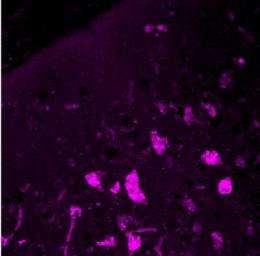
But that's not what happened, Sands says. Although gene therapy delivered relatively high levels of PPT1 enzyme, the bone marrow transplants did not supply any additional enzyme. Rather, he and his colleagues discovered that mice receiving both therapies experienced a dramatic reduction in brain inflammation.
"We suspect that the normal immune cells from the bone marrow transplant substantially reduce inflammation in the brain because we just don't see much of it in mice that got both therapies," Sands says. "This helps the PPT1 enzyme to do its job inside cells."
The study's results show no increase in life span for mice receiving bone marrow transplantation alone compared to untreated mice – animals in both groups lived a median of 8.9 months. Mice that got only gene therapy lived 13.5 months, while those that got the combination therapy lived for 18.5 months.
The researchers noted similar effects of the therapies when they evaluated motor function. By 6 months, both untreated mice and those that received only a bone marrow transplant had experienced significant declines in motor skills. Mice that got gene therapy alone experienced a decline in motor function beginning at 10 months, and in those that got combination therapy, motor skills did not begin to decline until 13 months and did so more gradually than in the other mice.
Mice that got the combination therapy also had higher levels of active PPT1 enzyme in the brain, a thicker cerebral cortex and fewer accumulated proteins in brain cells, all indicators that the treatment is working.
Sands is now repeating the experiment and investigating other ways to reduce inflammation in the brain that would not involve the risks of a bone marrow transplant. One possibility, he says, involves anti-inflammatory drugs that have effects in the brain.
"We may be able to achieve the same results with a less invasive anti-inflammatory treatment," Sands says. "We're very excited now to move forward."
More information: Macauley SL, Roberts MS, Wong AM, McSloy F, Reddy AS, Cooper JD and Sands MS. Synergisitc effects of CNS-directed gene therapy and bone marrow transplantation in the murine model of infantile neuronal ceroid lipofuscinosis. Annals of Neurology. Online ahead of print, Feb. 24, 2012.


