Scientists map genetic evolution of leukemia
The diagnosis of myelodysplastic syndrome, a blood cancer, often causes confusion. While some patients can be treated with repeated blood transfusions, others require chemotherapy, leaving some uncertainty about whether the syndromes actually are cancer.
Now, using the latest DNA sequencing technology, scientists at the Washington University School of Medicine in St. Louis have shown that the blood disease is an early form of cancer with characteristics that are very similar to the fatal leukemia to which it often progresses. And by mapping the genetic evolution of cancer cells in seven patients with myelodysplastic syndromes who later died of leukemia, they have found clues to suggest that targeted cancer drugs should be aimed at mutations that develop early in the disease.
The research, by a large team of Washington University researchers at the Siteman Cancer Center, appears online March 14 in the New England Journal of Medicine.
The scientists sequenced all the DNA – the genome – of tumor cells from the patients over time. While some cancer cells in each patient acquired new mutations as they evolved, they always retained the original cluster of mutations that made the cells cancerous in the first place.
This discovery, which must be confirmed in larger studies, suggests that drugs targeted to cancer mutations might be more effective if they are directed toward genetic changes in the original cluster of cancer cells called the founding clone. Drugs that target mutations found exclusively in later-evolving cancer cells may kill those cells but likely wouldn't damage founding clones that do not carry the later mutations.
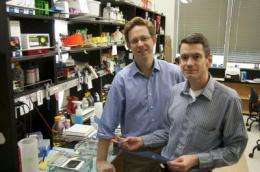
"It's probably not enough to know that a particular mutation exists in cancer cells," says senior author Timothy Graubert, MD, associate professor of medicine at the School of Medicine who also treats patients at Barnes-Jewish Hospital. "We likely will need to dig deeper to find out whether a mutation is in the founding clone that initiated the cancer or in a later-evolving clone."
In other words, think of this cancer as a tree, Graubert says.
"To kill a tree, you have to pull out the roots," he says. "If you only cut off a limb, it will just grow back. We're saying that to be effective, targeted cancer drugs probably need to attack mutations at the root of this disease."
About 28,000 Americans are diagnosed with myelodysplastic syndromes each year, most over age 60. They occur when blood cells produced in the bone marrow don't fully develop and immature cells crowd out healthy ones. In about one-third of patients, the disease progresses to a fatal form of leukemia.
As part of the new research, Graubert and his colleagues teamed with researchers at Washington University's Genome Institute who sequenced the genomes of cancer cells after the patients developed acute myeloid leukemia. Then, they determined whether the mutations they found were present when the same patients were first diagnosed with myelodysplastic syndromes.
They identified every mutation, typically hundreds, that developed in each patient's bone marrow cells as the cancer evolved. They also showed that about 85 percent of the patients' bone marrow cells were cancerous, regardless of whether they had myelodysplastic syndromes or leukemia.
Even in the earliest stages of myelodysplastic syndromes, when typically only a small number of immature blood cells populate the bone marrow, roughly 85 percent of bone marrow cells were part of the malignant clone.
"These results clearly establish that myelodysplastic syndromes are truly an early form of cancer," says first author Matthew Walter, MD, assistant professor of medicine, who also treats patients at Barnes-Jewish Hospital. "But until now, there were a lot of people – patients and physicians included – who questioned this."
That such a high percentage of bone marrow cells are malignant so early in the course of myelodysplastic syndromes that progress to leukemia may help improve the diagnosis of the disease and aid in determining prognosis, Walter says.
In the current study, funded in part by a federal stimulus grant from the National Institutes of Health (NIH), the researchers also identified 11 mutations in the patients' cancer cells that were later found to occur in other patients with acute myeloid leukemia, an indicator of the mutations' significance. Four of these mutations had never before been linked to myelodysplastic syndromes or leukemia.
To track the evolution of cancer cells, the researchers captured segments of DNA involved in every mutation and repeatedly sequence those regions more than 600 times each. Using this deep sequencing approach, developed at The Genome Institute, they could identify not only the founding clone in each patients' bone marrow cells, but also "breakaway" secondary clones that contributed to both the progression of myelodysplastic syndromes and acute leukemia. In all cases, the secondary clones could be traced back to the founding clone.
"This tells us that the secondary clones were not distinct cancers, but that they all evolved from the founding clone," Walter says.
The researchers say that sequencing the entire genomes of the cancer cells was essential to piecing together a picture of the way cancer evolved. While this technology is not yet routinely available to cancer patients, Graubert and Walter say reduced sequencing costs and improved analytical approaches should make it easier for more scientists to get a sense of the clonal nature of a patient's tumor cells.
More information: Walter MJ, Shen DS, Ding LD, Mardis ER, Ley TJ, Wilson RK, Graubert TA et al. Clonal Architecture of Secondary Acute Myeloid Leukemia. New England Journal of Medicine. Online March 14, 2012.


