Immune cells in the gut may improve control of HIV growth
June 11, 2012 in HIV & AIDS

Immune cells in the gut may improve control of HIV growth

Enlarge

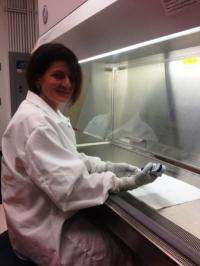
The study was led by researchers at the University of California, San Francisco and included Kristina Abel, Ph.D., an assistant professor in the department of microbiology and immunology at UNC, at the time of the study a faculty member at the University of California, Davis. Credit: UNC School of Medicine

The findings of a new study in monkeys may help clarify why some people infected with HIV are better able to control the virus. They also may pinpoint a target for treatment during early HIV infection aimed at increasing the supply of certain immune cells in the gut, which the study shows could be an important factor in limiting HIV growth in cells throughout the body.

The study was led by researchers at the University of California, San Francisco (UCSF) and included Kristina Abel, PhD, an assistant professor in the department of microbiology & immunology at UNC, at the time of the study a faculty member at the University of California, Davis (UCD). "The research involved a rhesus macaque model of , monkeys who were infected with simian immunodeficiency , SIV" Abel said. "The course of SIV infection in these is quite similar to that of HIV in humans."

Both HIV and SIV infections cause severe CD4 T cell loss in the during early infection. As a result, the intestinal mucosal barrier, which is like the body's second skin or front line of defense against pathogens, is compromised. The "leaky gut" causes bacteria that are normally located in the gut (the normal flora) to migrate out and activate the immune system throughout the body with disastrous health consequences. "The immune activation contributes to higher replication of the virus. And so the question is, why do some patients progress from infection to AIDS faster than others?" Abel asks.

This new study looked at the balance between certain immune cell populations that might influence disease outcome. The study shows the presence of a subtype of CD4-positive called Th17 (T helper 17) in the gut "could influence disease outcome."

A report of the research appeared in the May 30, 2012 on-line issue of Science Translational Medicine.

Th17 cells are commonly found at mucosal surfaces and activate epithelial or outer layer barrier cells to secrete antimicrobial molecules, thus blocking disease-causing bacteria from entering. Abel points out that they also stimulate the production of "tight junction" proteins that keep all the cells that make up the intestinal barrier in close contact, "so that bacteria of the normal flora or their products cannot leak out."

The researchers wondered if there are more Th17 cells in the gut, would infection with the AIDS virus still have that early massive effect on gut permeability? And if you could keep the intestinal barrier intact during early infection with HIV, would it have an impact on the severity of disease progression, on having less severe disease in the long run?

Results of the study suggest that the answers may be yes. Rhesus macaques with higher numbers of Th17 cells in blood and intestinal tissue before they are infected with SIV subsequently have lower SIV viral loads. "It appears they're more able to control the infection," Abel said.

The study also found that among animals given a drug that increases regulatory T cells and thereby suppresses Th17 cell development, disease progression occurred more rapidly, and they had higher levels of SIV virus six months after infection.

"The main message of the study is that the frequencies of certain immune cell populations in the normal, still uninfected individual are important in subsequent and outcome," Abel said. "The paper also suggests that treatment aimed at increasing Th17 cells may improve the control of HIV growth by promoting an environment in which T cells having more anti-viral capabilities are produced."

Journal reference: Science Translational Medicine search and more info website

Provided by University of North Carolina Health Care search and more info website

5 /5 (1 vote)  

Rank 5 /5 (1 vote)
Relevant PhysicsForums posts

More news stories

AIDS science at 30: 'Cure' now part of lexicon

Big names in medicine are set to give an upbeat assessment of the war on AIDS on Tuesday, 30 years after French researchers identified the virus that causes the disease.

HIV & AIDS created May 18, 2013 | popularity 5 / 5 (1) | comments 0

Peer-referral programs can increase HIV-testing in emergency departments

Researchers at the University of Cincinnati (UC) have found that incorporating a peer-referral program for HIV testing into emergency departments can reach new groups of high-risk patients and brings more patients into the ...

HIV & AIDS created May 17, 2013 | popularity not rated yet | comments 0

HIV no barrier to getting liver transplant, study finds

(HealthDay)—Liver transplants to treat a common type of liver cancer are a viable option for people infected with HIV, according to new research.

HIV & AIDS created May 17, 2013 | popularity not rated yet | comments 0

Twin epidemics: HIV and Hepatitis C in the urban Northeast

A new Yale study looks at the scope and consequences of a burgeoning health problem in the cities of the U.S. Northeast: concurrent infection with both HIV and Hepatitis C (HCV). The study appears online ...

HIV & AIDS created May 17, 2013 | popularity not rated yet | comments 0

Russia has 'no anti-AIDS strategy', official says

There is no government strategy to fight the spread of AIDS in Russia, where the number of deaths caused by the disease continues to grow, a senior healthcare official said on Thursday.

HIV & AIDS created May 16, 2013 | popularity not rated yet | comments 0


Consuming coffee linked to lower risk of detrimental liver disease, study finds

Regular consumption of coffee is associated with a reduced risk of primary sclerosing cholangitis (PSC), an autoimmune liver disease, Mayo Clinic research shows. The findings were being presented at the Digestive Disease ...

Ketamine shows significant therapeutic benefit in people with treatment-resistant depression

Patients with treatment-resistant major depression saw dramatic improvement in their illness after treatment with ketamine, an anesthetic, according to the largest ketamine clinical trial to-date led by researchers from the ...

Research examines new methods for managing digestive health

Research presented at Digestive Disease Week (DDW) explores new methods for managing digestive health through diet and lifestyle.

New smartphone application improves colonoscopy preparation

The use of a smartphone application significantly improves patients' preparation for a colonoscopy, according to new research presented today at Digestive Disease Week (DDW). The preparation process, which begins days in ...

New research identifies practice changes to improve value and quality of GI procedures

There are significant cost and risk factors associated with two procedures commonly used to diagnose or treat gastrointestinal problems, according to research presented at Digestive Disease Week (DDW).

New research identifies risks, interventions for children's GI health

An increasing number of U.S. children are experiencing gastrointestinal issues that require interventions to resolve, according to research presented at Digestive Disease Week (DDW).