Drinking green tea with starchy food may help lower blood sugar spikes
November 9, 2012 in Health

green tea

Enlarge

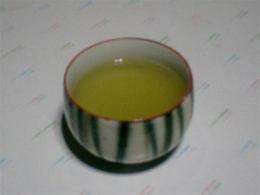
Green tea. Credit: Wikimedia Commons

An ingredient in green tea that helps reduce blood sugar spikes in mice may lead to new diet strategies for people, according to Penn State food scientists.

Mice fed an antioxidant found in green tea—epigallocatechin-3-gallate, or —and had a significant reduction in increase in their —levels compared to mice that were not fed the compound, according to Joshua Lambert, assistant professor of in agricultural sciences.

"The spike in is about 50 percent lower than the increase in the blood glucose level of mice that were not fed EGCG," Lambert said.

The dose of EGCG fed to the mice was equivalent to about one and a half cups of green tea for a human.

Lambert, who worked with Sarah C. Forester, postdoctoral fellow, and Yeyi Gu, graduate student, both in food science, said EGCG was most effective when the compound was fed to the mice simultaneously with corn starch. For humans, this may mean that green tea could help them control the typical blood sugar increases that are brought on when they eat starchy foods, like breads and bagels that are often a part of typical breakfasts.

"If what you are eating with your tea has starch in it then you might see that ," Lambert said. "So, for example, if you have green tea with your bagel for breakfast, it may reduce the spike in blood glucose levels that you would normally get from that food."

The EGCG had no significant effect on blood sugar spikes in mice that were fed glucose or maltose, according to the researchers who released their findings in the online version of Molecular Nutrition and . Lambert said that the reason blood sugar spikes are reduced when the mice ate starch, but not these sugars, may be related to the way the body converts starch into sugar.

An enzyme called alpha-amylase that is produced in both the mouth and by the pancreas helps break down starch into maltose and glucose. EGCG may inhibit the enzymes ability to break down the starch, the researchers indicated, since they also found that EGCG reduced the activity of alpha amylase in the pancreas by 34 percent.

If the mechanism holds in humans, this may mean that people who want to limit the blood sugar spike should skip adding sugar to their cup of green tea.

"That may mean that if you add sugar into your green tea, that might negate the effect that the green tea will have on limiting the rise in blood glucose level," Lambert said.

Lambert added that the and the starch would need to be consumed simultaneously. For example, drinking a cup of tea well after eating a piece of toast would probably not change the blood sugar spike.

For the study, researchers separated mice into several groups based on body weight. After a fasting period, the mice were given common corn starch, maltose, or sucrose. One group of mice received EGCG along with the feed, while a control group was not fed the compound.

The researchers then tested the blood sugar levels of both groups.

Lambert said the researchers next step is to test the compound on people.

"The relatively low effective dose of EGCG makes a compelling case for studies in human subjects," the researchers said.

Provided by Pennsylvania State University search and more info website

5 /5 (6 votes)  

Rank 5 /5 (6 votes)
Relevant PhysicsForums posts

More news stories

Parent and teacher support protects teens from sleep problems and depression

A new study suggests that disturbed sleep in adolescents is associated with more symptoms of depression and greater uncertainly about future success. However, perceived support and acceptance from parents and teachers appears ...

Health created 45 minutes ago | popularity not rated yet | comments 0

Study shows that insomnia may cause dysfunction in emotional brain circuitry

A new study provides neurobiological evidence for dysfunction in the neural circuitry underlying emotion regulation in people with insomnia, which may have implications for the risk relationship between insomnia and depression.

Health created 50 minutes ago | popularity not rated yet | comments 0

Calcium supplements linked to longer lifespans in women

Taking a calcium supplement of up to 1,000 mg per day can help women live longer, according to a recent study accepted for publication in The Endocrine Society's Journal of Clinical Endocrinology & Metabolism (JCEM).

Health created 53 minutes ago | popularity not rated yet | comments 0

Fish oil may help the heart beat mental stress

Why is fish oil good for the heart? A new study suggests that this omega 3 fatty acid-rich nutrient could blunt some cardiovascular effects of mental stress.

Health created 1 hour ago | popularity not rated yet | comments 0

US health care: Does more spending yield better health?

(Medical Xpress)—Health care spending is much higher for older Americans than for younger adults and children, on average, and analysts have said that increasing spending leads to longer life expectancy.

Health created 5 hours ago | popularity not rated yet | comments 0


Enzyme-activating antibodies revealed as marker for most severe form of rheumatoid arthritis

In a series of lab experiments designed to unravel the workings of a key enzyme widely considered a possible trigger of rheumatoid arthritis, researchers at Johns Hopkins have found that in the most severe ...

Research offers promising new approach to treatment of lung cancer

Researchers have developed a new drug delivery system that allows inhalation of chemotherapeutic drugs to help treat lung cancer, and in laboratory and animal tests it appears to reduce the systemic damage ...

Researchers analyse hunting behaviour of fish larvae in virtual reality

Moving objects attract greater attention – a fact exploited by video screens in public spaces and animated advertising banners on the Internet. For most animal species, moving objects also play a major ...

Overeating learned in infancy, study suggests

In the long run, encouraging a baby to finish the last ounce in their bottle might be doing more harm than good.

Study details genes that control whether tumors adapt or die when faced with p53 activating drugs

When turned on, the gene p53 turns off cancer. However, when existing drugs boost p53, only a few tumors die – the rest resist the challenge. A study published in the journal Cell Reports shows how: tumors that live even i ...

Children of married parents less likely to be obese

Children living in households where the parents are married are less likely to be obese, according to new research from Rice University and the University of Houston.