Mouse study offers clues to obesity-diabetes link
December 6, 2012 by Lisa Esposito, Healthday Reporter in Medical research
Researchers hope to cut the connection between fatty diet and insulin resistance, but it's complicated.
(HealthDay)—Obesity and type 2 diabetes are clearly intertwined, but researchers say they've found a way to weaken the connection between the two—at least in mice.
The key, they say, is blocking the body's inflammation response to high-fat foods.
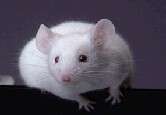
In this study, published online Dec. 6 in the journal Science, the researchers turned off the JNK (pronounced "junk") genetic pathway in mice, and fed the rodents high-fat diets. Even though the mice became obese, they didn't develop insulin resistance, a forerunner to diabetes.
Other similarly stuffed mice with intact JNK pathways, however, became insulin resistant.
Although the results look promising, it's too early to say whether the findings might apply to humans.
"Everybody has these genes, and they're present within all cells of your body all the time," said study author Roger Davis. "What they do is respond to the diet that you're eating. So if you eat a high-fat, cafeteria diet, it leads to the activation of the protein products—the enzymes—of these genes."
Davis, a professor at the University of Massachusetts Medical School and investigator at the Howard Hughes Medical Institute in Worcester, Mass., and his colleagues studied hundreds of mice over multiple years to examine the relationship between inflammation and diabetes.
"What we discovered is the JNK genes in the macrophages are critical for the ability of macrophages to cause inflammation, specifically in response to feeding or eating a high-fat diet," Davis said.
Macrophages—white blood cells—attack foreign invaders of the body. They fight infection but their inflammatory response can be harmful too. Inflammation has been linked to conditions such as arthritis, heart disease and cancer.
In the study, mice, "by not having the JNK genes in the macrophages, it prevents the inflammation that takes place in the body in response to feeding and diet, and that in turn prevents the development of symptoms of prediabetes, like insulin resistance," Davis said.
Dr. Joel Zonszein, director of the Clinical Diabetes Center at Montefiore Medical Center in New York City, who was not associated with the study, said science in this area has gone beyond realizing that having more body fat—particularly more "central" or waistline body fat—is a risk factor for diabetes.
"We have the so-called healthy obese who have less fatty tissue, they have less inflammation, they have less macrophages," Zonszein said. "And we have some people who don't look very obese but their [fat] tissue is loaded with macrophages, particularly bad macrophages."
The new mouse study, Zonszein said, "is one unique pathway that they identified in a very nice way—because we always have associated obesity with insulin resistance, but in their model [the mice] develop obesity but their insulin's healthy."
Zonszein added, however, that what goes on in the human body is much more complex. "Nonetheless, this is science—something that we need to learn from. But from this to drug-development implications in humans, there is a big, big stretch," he said.
Study author Davis acknowledged the gap between animal research findings and clinical benefits, but said it might be bridged.
"One possible scenario—and obviously our work is on mice, so there's a big leap of faith here to establish [this] in humans—but the work we've done would suggest that drugs that are targeted to JNK kinase genes would be useful for the treatment of diabetes," he said. "But this is definitely a big step beyond the point of our own work."
One take-away message, Davis said, is that eating unhealthy foods immediately affects your body.
"It's useful for people to recognize that the foods they eat have these very direct biochemical effects," he said. "Sometimes people think that you eat a poor diet and at some later time there are some bad effects that secondarily occur. But some of these things can be much more direct."
More information: "JNK Expression by Macrophages Promotes Obesity-Induced Insulin Resistance and Inflammation," by M.S. Han, Science, 2012.
The U.S. National Library of Medicine has more about dietary fat.
Journal reference:
Science
Copyright © 2012 HealthDay. All rights reserved.
-
Killing 'angry' immune cells in fat could fight diabetes
Oct 07, 2008 |
not rated yet |
0
-
Improving obesity-induced insulin sensitivity
Jun 01, 2012 |
not rated yet |
0
-
Obesity and diabetes: Immune cells in fat tissue explain the link
Aug 16, 2010 |
not rated yet |
0
-
Scientists identify target that may reduce complications of obesity
Feb 03, 2010 |
not rated yet |
0
-
Low testosterone levels could raise diabetes risk for men
May 04, 2012 |
not rated yet |
0
-
Motion perception revisited: High Phi effect challenges established motion perception assumptions
Apr 23, 2013 |
3 / 5 (2) |
2
-
Anything you can do I can do better: Neuromolecular foundations of the superiority illusion (Update)
Apr 02, 2013 |
4.5 / 5 (11) |
5
-
The visual system as economist: Neural resource allocation in visual adaptation
Mar 30, 2013 |
5 / 5 (2) |
9
-
Separate lives: Neuronal and organismal lifespans decoupled
Mar 27, 2013 |
4.9 / 5 (8) |
0
-
Sizing things up: The evolutionary neurobiology of scale invariance
Feb 28, 2013 |
4.8 / 5 (10) |
14
-
Why is zone 1 in liver more prone to ischemic injury?
19 hours ago
-
How can there be villous adenoma in colon, if there are no villi there
May 22, 2013
-
How can there be a term called "intestinal metaplasia" of stomach
May 21, 2013
-
Pressure-volume curve: Elastic Recoil Pressure don't make sense
May 18, 2013
-
If you became brain-dead, would you want them to pull the plug?
May 17, 2013
-
MRI bill question
May 15, 2013
- More from Physics Forums - Medical Sciences
More news stories
Study reveals new mechanism for estrogen suppression of liver lipid synthesis
By discovering the new mechanism by which estrogen suppresses lipid synthesis in the liver, UC Irvine endocrinologists have revealed a potential new approach toward treating certain liver diseases.
Medical research
7 hours ago |
not rated yet |
0
|
MRI-based measurement helps predict vascular disease in the brain
Aortic arch pulse wave velocity, a measure of arterial stiffness, is a strong independent predictor of disease of the vessels that supply blood to the brain, according to a new study published in the June issue the journal ...
Medical research
7 hours ago |
not rated yet |
0
Antibiotics: A new understanding of sulfonamide nervous system side effects
Since the discovery of Prontosil in 1932, sulfonamide antibiotics have been used to combat a wide spectrum of bacterial infections, from acne to chlamydia and pneumonia. However, their side effects can include serious neurological ...
Medical research
9 hours ago |
not rated yet |
0
|
Scientists discover molecule triggers sensation of itch
Scientists at the National Institutes of Health report they have discovered in mouse studies that a small molecule released in the spinal cord triggers a process that is later experienced in the brain as ...
Medical research
9 hours ago |
5 / 5 (2) |
0
|
Discarded immune cells induce the relocation of stem cells
Spanish researchers have discovered that the daily clearance of neutrophils from the body stimulates the release of hematopoietic stem cells from the bone marrow into the bloodstream, according to a report published today ...
Medical research
10 hours ago |
5 / 5 (2) |
0
Controlling mood through the motions of mitochondria
(Medical Xpress)—Regulating the distribution of power in neurons is done by a system that makes the national electric grid look simple by comparison. Each neuron has several thousand mitochondria confined ...
Multiple research teams unable to confirm high-profile Alzheimer's study
Teams of highly respected Alzheimer's researchers failed to replicate what appeared to be breakthrough results for the treatment of this brain disease when they were published last year in the journal Science.
Motion quotient: IQ predicted by ability to filter motion (w/ video)
A brief visual task can predict IQ, according to a new study. This surprisingly simple exercise measures the brain's unconscious ability to filter out visual movement. The study shows that individuals whose ...
Researchers find common childhood asthma unconnected to allergens or inflammation
Little is known about why asthma develops, how it constricts the airway or why response to treatments varies between patients. Now, a team of researchers at Weill Cornell Medical College, Columbia University Medical Center ...
Diabetes' genetic underpinnings can vary based on ethnic background, studies say
Ethnic background plays a surprisingly large role in how diabetes develops on a cellular level, according to two new studies led by researchers at the Stanford University School of Medicine.
When oxygen is short, EGFR prevents maturation of cancer-fighting miRNAs
Even while being dragged to its destruction inside a cell, a cancer-promoting growth factor receptor fires away, sending signals that thwart the development of tumor-suppressing microRNAs (miRNAs) before it's dissolved, researchers ...